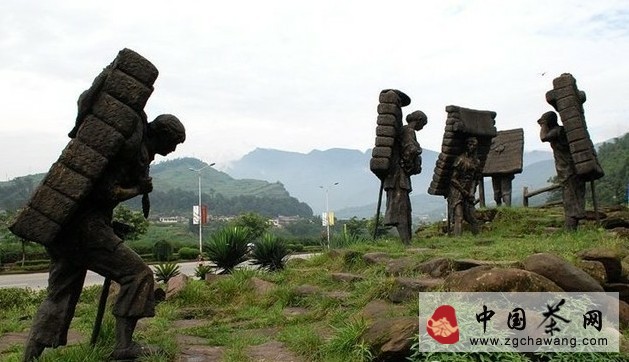
Since its recorded origins in the Tang Dynasty, Chinese Tibetan tea has been a millennia-old beverage. It serves as the primary daily drink for nearly three million Tibetan compatriots and is historically known as the "tea of livelihood" for the Tibetan people. Throughout different eras and regions, it has been called by various names such as big tea, horse tea, black tea, coarse tea, Southern Road border tea, brick tea, strip tea, compressed tea, lump tea, and border tea. Harvested from mountains over 1,000 meters above sea level, it uses mature tea leaves and red moss from the current year, processed through special techniques to create a fully fermented tea. Tibetan tea is a typical dark tea, characterized by its deep brown color and complete fermentation.
The production technique of Ya'an Tibetan tea mainly consists of three parts: harvesting, initial processing of raw tea, and finished product processing.
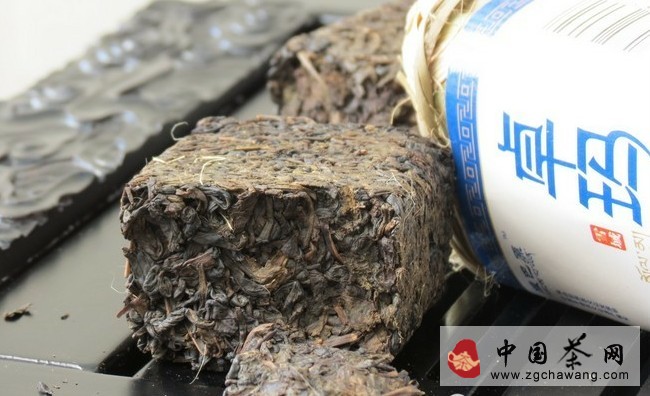
Production Process
1. Harvesting: Traditional Ya'an Tibetan tea is uniquely harvested using a "tea knife" to "cut" the leaves. Raw materials are categorized into Mountain Tea, Upper Road Tea, and Cross Road Tea.
① Mountain Tea: Grown in the Zhougong Mountain area of Yucheng District, harvested twice a year around the Dragon Boat Festival and White Dew, leaving a 3.5 cm stub.
② Upper Road Tea: Produced in mountainous areas like Dahe, Yanqiao, and Zhongli in Yucheng District, harvested once between Great Heat and Beginning of Autumn, leaving a 3.5 cm stub.
③ Cross Road Tea: Sourced from Mingshan, Tianquan, and Yingjing counties, often involving both fine and coarse tea production—harvesting fine tea in spring and border tea between Great Heat and Beginning of Autumn.
④ Strip Tea: A key ingredient for brick tea, harvested between Grain Rain and the Dragon Boat Festival.
⑤ Loose Tea: An important material for Maojian, Yaxi, and brick teas, harvested after Qingming and before Beginning of Summer. The standard is one bud with two to four leaves. Ancient ceremonies were held to mark the start of each tea harvest.
2. Initial Processing: Divided into Raw Tea and Processed Raw Tea, featuring multiple pile-fermentation stages at high temperatures (50–75°C). Traditional processing involves 18 steps.
3. Finished Product Processing: Involves sorting, blending, and packing to transform raw tea into the final product. Strip-packed brick tea is a distinctive feature of Ya'an Tibetan tea.
4. Raw Tea Sorting: Includes sieving, winnowing, picking, cutting, drying, and storage to remove stems and impurities, adjust moisture content, and grade by quality.
5. Blending: Mixed in proportions according to product requirements and raw tea quality.
6. Pressing (Packing): Steps include weighing, steaming, compacting, and stacking to compress the tea into bricks.
7. Packaging: After cooling, bricks are removed from bamboo wrappers, wrapped in yellow paper, labeled, packed in kraft paper, tied with bamboo strips, and re-packed into bamboo containers.
8. Inspection: Finished tea is stored in small stacks to promote ventilation and natural post-fermentation after passing quality checks.
Basic Characteristics
The production technique of Ya'an Tibetan tea is a great creation of working people, a traditional treasure of Chinese civilization, and a crystallization of national wisdom.
1. Fermentation: Pile-fermentation for color transformation occurs during initial or final processing, depending on raw material and quality.
2. Packing-Pressing: Unique pressing technique ensures bricks are neither too loose nor too tight, facilitating long-distance transport and ventilation for post-fermentation.
3. Post-Fermentation: Tea quality continues to evolve from semi-finished to finished product and during storage.
4. Unique Packaging and Appearance: Pressed bricks are wrapped in yellow paper, labeled, and packed in bamboo containers after cooling.
5. Sensory Quality of Main Products:
Kangzhuan Tea: Rectangular with rounded edges, smooth and compact surface, obvious sprinkled layers, brown color. Pure aroma, reddish-brown clear liquor, rich flavor, brown coarse leaves. Jinjian Tea: Rectangular with rounded edges, fairly compact, no delamination, brown color. Pure aroma, yellow-red clear liquor, mellow taste, dark brown coarse leaves. Kangjian Tea: Square with rounded edges, smooth and compact, brown color. Rich pure aroma, bright red liquor, mellow and sweet taste, brown relatively coarse leaves.
6. Quality Differentiation:
High-quality Tibetan tea has a deep brown, even, glossy black color; pure aroma without off-flavors; liquor starts light yellow-red turning transparent red, with lingering fragrance; sweet, smooth taste without astringency or bitterness. Inferior or fake tea appears dull brown, unclean, possibly with black or gray mold and musty smell; liquor is murky liver-red with moldy, bitter, and harsh flavors.
Brewing Method
With a history of over a thousand years, Tibetan tea remains less known due to historical, political, and production factors. In Tibet, harsh conditions and health needs preserve the ancient practice of boiling tea before drinking, which enhances both flavor and health benefits beyond those of steeped teas.
Boiling Tibetan tea is simple: add tea when water reaches about 80°C (no lid), boil for 1 minute after reaching a rolling boil, turn off heat, cover and steep for 5–8 minutes, then strain and serve.
Given its aged and mellow character, storing boiled tea in a thermos for 1–2 hours improves aroma. Leaving it overnight allows deeper fermentation, enhancing health benefits, taste, and yielding a brighter, translucent red liquor.