【Text】Tea plant varieties include what the market calls pure Tieguanyin and non-pure Tieguanyin. Pure Tieguanyin is also known as Red Heart Guanyin or Red Variety Guanyin. Others, such as Red Hero Guanyin, White Heart Tail Guanyin, White Variety Guanyin, and Thin Leaf Guanyin, are not pure Tieguanyin.
Pure Tieguanyin is a shrub type with a spreading tree posture and slanting branches. The leaves grow horizontally. The leaf shape is oval, with sparse and blunt serrations on the edge. The leaf surface is wavy and raised, with a distinct rib shape, slightly curled backwards. The leaf flesh is thick, the leaf color is dark green and glossy. The leaf base is somewhat blunt, the leaf tip is slightly concave, leaning slightly to the left and drooping a bit. The tender buds are purplish-red, hence the name "Red Bud Crooked Tail Peach," which is a characteristic of the pure breed.
Tieguanyin is the finest of Oolong tea. Its quality characteristics are: tea strips curled, plump, round, and tight, heavy and even, with a sand-green color. The overall shape resembles a dragonfly head, spiral body, and frog legs. After brewing, the liquor is golden and rich like amber, with a natural, rich orchid fragrance. The taste is mellow, sweet, and fresh, with a long-lasting sweet aftertaste, commonly known as having "Yin Yun" (the rhyme of Guanyin). Tieguanyin tea aroma is high and lasting, truly "still fragrant after seven brews."
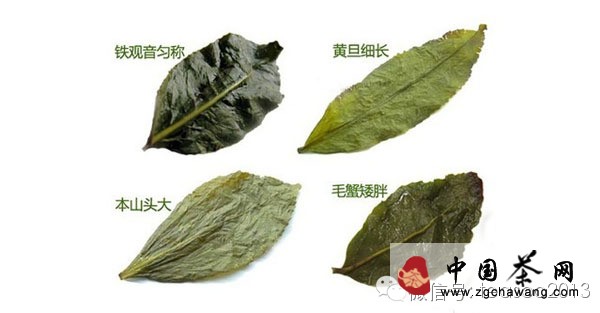
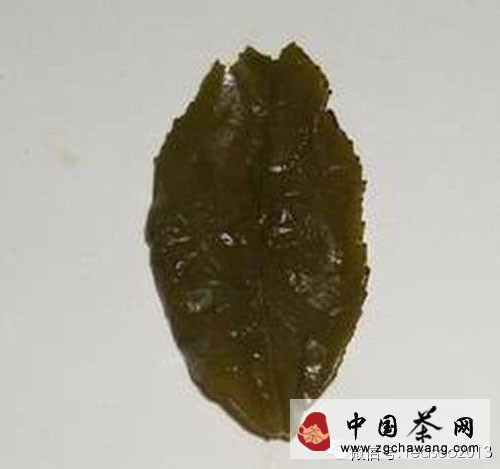
Tieguanyin is even and symmetrical.
Huangdan (Yellow Dawn)
Huangjingui (Golden Osmanthus) is an Oolong tea made from the tender shoots of the Huangdan variety tea plant. It is named for its golden-yellow liquor color and a remarkable aroma resembling osmanthus flowers! Among existing Oolong tea varieties, it is one of the earliest to sprout. The Oolong tea made from it has an exceptionally high aroma, so in the production area, it is called "Qingming Tea" (Tomb-Sweeping Day Tea) and "Tou Tian Xiang" (Heaven-Piercing Fragrance), praised for being "early and remarkable."
Early refers to budding early, being picked and processed early, and coming to market early; Remarkable refers to the finished tea's appearance being "fine, even, yellow" – the strips are slender and even, with a yellow-green, bright luster; the inner quality is "fragrant, remarkable, fresh" – meaning high aroma, mellow taste, elegant and unique. Thus, it is often said, "Before tasting the clear, sweet flavor, first smell the heaven-piercing fragrance."
The Huangdan plant is a small tree type, medium-leaf variety, early bud species. The tree posture is semi-spreading, branches are relatively dense, internodes are short; leaves are relatively thin, the leaf surface is slightly curled, leaf teeth are deep and sharp, leaf color is yellow-green with a glossy sheen, sprouting rate is high; it can flower, but bears little fruit. The annual growth period is 8 months. It has wide adaptability, relatively strong resistance to pests and diseases, and high yield per unit area. Suitable for making Oolong tea, also suitable for black and green tea. When made into Oolong tea, it has a unique aroma and excellent taste, golden liquor, and yellow-bright infused leaves, creating a unique style.
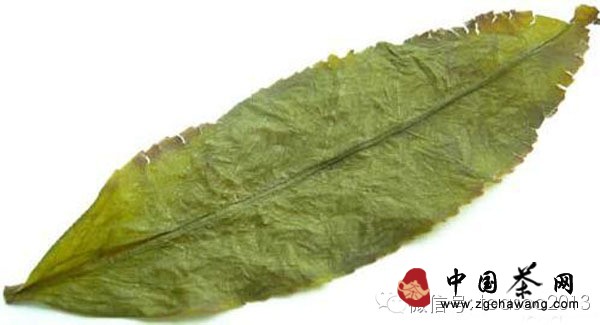
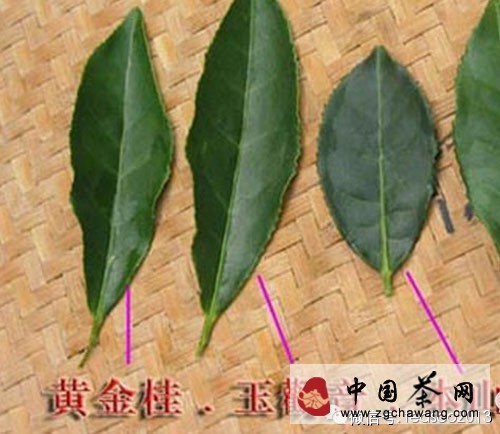
Huangjingui is slender and long.
Benshan (Original Mountain)
Tea strips are sturdy and heavy, stems are bright, relatively thin and slender; like a "bamboo joint," the tail is slightly pointed, color is fresh and moist like banana peel color; tea liquor is orange-yellow; infused leaves are yellow-green, the leaf blades are pointed and thin, oblong, the leaf surface is raised, the main vein is obvious; taste is pure and slightly strong; aroma resembles Tieguanyin but is lighter.
The Benshan plant is a shrub type, medium-leaf variety, medium bud species. Tree posture is spreading, branches are slanting, branching is fine and dense; leaf shape is oval, leaves are thin and brittle, the leaf surface is slightly curled inward, the leaf edge has obvious waves, leaf teeth are uneven in size, buds are dense and stems are long and thin, flowers and fruits are quite numerous. The annual growth period is about 8 months. It is a "close relative" of Tieguanyin, but its growth vigor and adaptability are stronger than Tieguanyin. When made into Oolong tea, the quality is excellent, with high aroma and mellow taste. Good quality Benshan is similar to Tieguanyin. When made into black or green tea, the quality is medium.
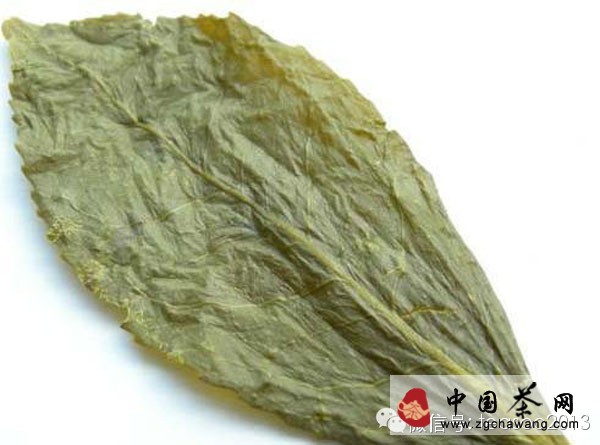
Benshan has a large head.
Maoxie (Hairy Crab)
Tea strips are tight and compact, stems are round, large head and pointed tail, buds and leaves are tender, with many white hairs, color is brownish-yellow-green, still fresh and moist. Tea liquor is greenish-yellow or golden yellow. Infused leaves have small, round blades, wide in the middle, pointed at head and tail, serrations are deep, dense, sharp, and hook downwards, leaves are somewhat thin, the main vein is slightly visible. Taste is pure and slightly thick, aroma is high and clear, with a slight jasmine floral note.
The Maoxie plant is a shrub type, medium-leaf variety, medium bud species. Tree posture is semi-spreading, branching is dense; leaf shape is oval, tip is pointed, leaf blade is flat; leaf color is dark green, leaf is thick and brittle, serrations are sharp; buds and shoots are plump, stems are thick and internodes short, the back of the leaf has many white hairs, it flowers quite a lot but basically does not bear fruit. The annual growth period is 8 months. It has strong budding ability but poor tenderness retention. It sprouts densely and evenly, has many picking batches, the tree crown forms quickly, establishes a tea garden rapidly, has wide adaptability, strong stress resistance, is easy to cultivate, and has high yield. Suitable for making Oolong tea, it is the raw material for high-grade "Color Varieties"; when made into black or green tea, the hair color is apparent, the appearance is beautiful, and the quality is still good.
Maoxie is short and stout.
How to Distinguish Tieguanyin, Maoxie, Benshan, and Huangjingui
Speaking of Fujian, speaking of Anxi, what immediately comes to a tea person's mind must be Anxi Tieguanyin. Tieguanyin, with its elegant orchid fragrance, is already famous far and wide. In its hometown, the southern Fujian region, there are many other Oolong tea varieties, such as Maoxie, Benshan, and Huangjingui, etc. They are all national-level fine tea products and also belong to the Southern Fujian Oolong tea category. From the tea samples, just by the naked eye, it is generally difficult for ordinary people to tell the difference between the four. In terms of tea liquor and aroma characteristics, they each have their own quality style.
Tea Samples: Tieguanyin, Maoxie, Benshan, Huangjingui
Tea Sample Quick Notes: The tea sample varieties are pure and single. In appearance, all four types of tea have a curled shape, and the color is basically dark green.
Tasting Equipment: Scale, 110ml bell-shaped white porcelain lidded bowl, 150ml Oolong tea evaluation set, tap water, electromagnetic stove, stainless steel teapot.
Tasting Method: Weigh 5g of tea samples from each of the 4 finished teas using a scale. Place the tea samples into the white porcelain lidded bowl. To evaluate the tea leaves' aroma, liquor color, and taste, do not rinse the tea, brew directly with tap water.
Also in Anxi, the Tieguanyin or Huangjingui produced on each tea mountain may have different aromas and tastes. This article only distinguishes based on common characteristics.
Tasting Report
Tieguanyin, originally produced in Songyantou and Yaoyang, Xiping, created between 1725 and 1736 AD.
Appearance: Strips are plump, rounded into a dragonfly head shape, heavy, branch heart is hard, branch bark is neat, most leaves curl towards the back, color is black and oily, sand-green is obvious (in new processes, the red edge is mostly removed).
Inner Quality: Aroma is rich and lasting, Yin Yun is obvious, with orchid fragrance or raw peanut flavor, coconut fragrance, and other fresh fragrances; tea liquor is golden, orange-yellow, taste is mellow, sweet, and fresh, slightly honeyed, refreshing with a sweet aftertaste. Infused Leaves: Branch body is round, stem bark is red and bright, leaf stalk is wide and thick (palm leaf base), leaf blade is thick, soft, and bright, leaf surface is wavy, called "satin surface."
Most Core Characteristics: Dry tea is heavy, color is dark green; tea liquor has obvious Yin Yun, with great layers and thickness; evaluated infused leaves should be thick, soft, and bright.
Huangjingui, also known as Huangdan (Yellow Dawn), originally produced in Luoyan, Anxi, created during the Xianfeng period of the Qing Dynasty (1850-1860 AD). Leaves are very thin, and the leaf color is already yellowish before picking.
Appearance: Strips are slender, pointed, and relatively loose, body is lighter, not heavy, leaf stems are small and thin, color is yellowish-nanmu color, emerald yellow, or yellow-green, with luster. Known as "Yellow, Thin, Fine."
Inner Quality: Liquor color is golden yellow bright or light yellow clear. Aroma is exceptionally high, fragrant and elegant, often with a peach or pear fragrance, taste is mellow, delicate, fresh, and brisk, with a sweet aftertaste, refreshing and invigorating. Known for being "Fragrant, Remarkable, Fresh."
Infused Leaves: Yellow-green, leaf tip is slightly protruding,呈狭长形 (呈狭长形 - presenting a narrow, long shape), main vein is visible, leaves are relatively thin, leaf edge serrations are relatively shallow.
Most Core Characteristics: Dry tea is relatively light; traditional Huangjingui tea liquor has a peach fragrance; evaluating infused leaves reveals thin leaves,呈狭长形 (呈狭长形 - presenting a narrow, long shape).
Benshan, originally produced in Yaoyang, Xiping, Anxi County, discovered around 1870 AD.
Appearance: Strips are still plump, tight, relatively heavy, leaf stems are red and bright, thin, slender, and neat, tail is slightly larger, branch bones are thin and red bright, called "bamboo branches" (but stems are mostly trimmed off in finished tea,基本见不到了 - basically cannot be seen), leaf color is black and moist like the color of a ripe banana peel, sand-green is relatively fine.
Inner Quality: Liquor color is orange-yellow or clear yellow, taste is pure, slightly strong, aroma is similar to Tieguanyin with orchid or osmanthus fragrance, but lighter.
Infused Leaves: Yellow-green, leaf tip is thin, oblong, leaf surface is raised, main vein is relatively thin and slightly浮白 (floating white).
Most Core Characteristics: Although the appearance and liquor color are closest to Tieguanyin, it lacks the unique Guanyin Rhyme of Tieguanyin. Evaluating infused leaves reveals the leaf main vein is small, and at the leaf base, the leaf shape is sharply pointed, whereas Tieguanyin has an arc-rounded waist-drum shape.
Maoxie, originally produced in Daqiulun, Fumei, Anxi, during the Guangxu period of the Qing Dynasty. During the Republic of China era, it was also called "Mao Wai".
Appearance: Tea strips are tight, stems are round, large head and pointed tail, buds and leaves are tender, with many white hairs, commonly called "White Heart Tail", color is black-green, slightly lustrous.
Inner Quality: Liquor color is clear yellow or orange-yellow, taste is clear and mellow, slightly thick, aroma is high and clear, called "Qing Hua Wei" (clear flower taste), similar to jasmine fragrance.
Infused Leaves: Leaf blades are small and round, wide in the middle, pointed at head and tail,呈椭圆形 (呈椭圆形 - oval-shaped). Leaf edge serrations are deep, dense, sharp, and the serration points hook downward, resembling the serrations on a crab shell, leaves are relatively thin, the main vein is slightly visible.
Most Core Characteristics: Looking at the shape of the dry tea, it is easy to see星点的白毫 (starry points of white down) among the pile of dry tea; evaluating infused leaves reveals obvious leaf serrations, with red serration points.