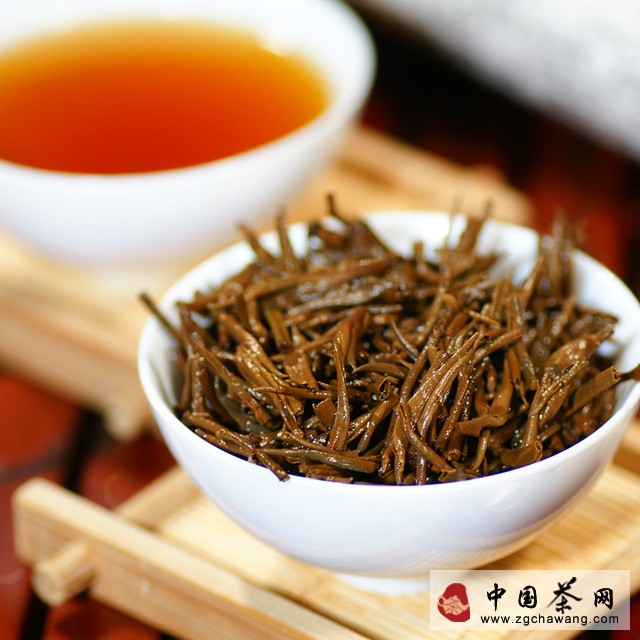
Black Tea Origin
Black tea originated in the Tongmu Guan area of Wuyi Mountain, Fujian Province during the mid-Ming Dynasty (around the 16th century). The earliest variety was called Lapsang Souchong. In the 17th century, trade between China and European countries brought black tea to Britain, the Netherlands, and others, where it became highly popular among Europeans. The British royal aristocracy particularly favored black tea over other beverages.
In the 18th century, the British brought black tea cultivation techniques to their colony, India, prompting India and Sri Lanka to become major black tea producers. India is now the world's largest black tea producer. Today, black tea has become a global beverage, accounting for 70% of worldwide tea sales.
Differences Between Black Tea and Other Tea Types
First, the main difference lies in the fermentation process during tea production. Green tea is unfermented, oolong tea is semi-fermented, while black tea is fully fermented, resulting in significant differences in their aroma and color.
Second, in terms of blending techniques, green tea and oolong tea are typically single-origin teas without blending processes. However, black tea comes not only as single-origin varieties but also as blends of several teas to create new varieties. There are also methods of blending with various spices to form different flavors.
Third, there are differences in drinking methods. Green tea and oolong tea are mostly consumed plain. Besides plain consumption, black tea has more drinking methods, such as adding sugar, milk, alcohol, fruit jam, etc., offering diverse forms that are beloved by various groups of people.
Classification of Black Tea
Based on production techniques, black tea can be divided into three categories: Souchong black tea, Congou black tea, and broken black tea, primarily distinguished by leaf size and color.
1. Souchong black tea is produced only in the Wuyi Mountain area, possessing unique longan and smoky flavors;
2. Congou black tea constitutes the majority in China, produced from East China to Yunnan;
3. Broken black tea is processed into fine tea particles, mostly packaged as tea bags.
World's Four Major Black Teas
Keemun black tea, Darjeeling black tea, Assam black tea, and Ceylon black tea - the world's four major black teas are all named after their regions of origin. Other famous varieties include Dianhong, Chuanhong, Yihong, Yuehong, as well as Ilam, Kenyan, etc.
Blended Tea
Unlike other teas, black tea has another classification method based on blending. For example, Britain's Earl Grey, Prince of Wales, Germany's flavored black teas, and Russian black tea are all produced by blending several teas or incorporating spices. There are also classifications based on different drinking methods, such as milk tea, lemon black tea, bubble black tea, fruit-flavored black tea, royal black tea, etc.
Black Tea Culture
China has a long and profound tea culture. As a relatively late branch of Chinese tea, black tea's cultural characteristics in China share many similarities with other tea cultures. In Britain, black tea culture differs somewhat, mainly influenced by blending techniques and drinking methods. The often-mentioned "afternoon tea" culture refers to the black tea culture that spread from Britain. Other countries like India, Sri Lanka, Kenya, Germany, and Russia also have their own culturally distinct characteristics.
Bone China, Born for Black Tea
Along with the rise of black tea, black tea utensils have formed a unique culture. Influenced by the British royalty, Britain improved upon Chinese porcelain technology to create "bone china," which became the best tea set for enjoying black tea.
Similarly adapting to local conditions is Yixing in China. Locally, Yixing clay teapots were originally used for brewing and drinking Yixing black tea.
In Germany and Italy, with their variety of flavored black teas and superb glass craftsmanship, people are more enthusiastic about using glass tea sets to drink black tea.
The Rise of Black Tea in Britain
In 1662, Spanish Princess Catherine married into the British royal family. Her dowry included many then very precious black teas and sugar. She daily drank black tea with large amounts of sugar. Influenced by Catherine, this way of drinking tea began to流行 among the nobility, and from then on, black tea became盛行.
Wars Sparked by Black Tea
Later, Britain, dissatisfied with the Dutch East India Company's monopoly on all black tea trade, launched a war against the Netherlands. Britain ultimately won this war. From then on, Britain seized the Netherlands' black tea trade rights in Asia and began black tea trade based in Xiamen, Fujian, China.
In 1689, Chinese black tea was directly shipped to Britain. When the tea was unloaded from the ships, cries of vendors filled the streets and alleys of London. Possessing black tea at home often displayed the owner's身份 and status. Why did hostesses often prepare the tea in noble households? There were two reasons: first, to show the host's hospitality, and second, to prevent某些 guests from "helping themselves" - showing the value of black tea.
Boston Tea Party
By the second half of the 18th century, black tea had crossed the oceans to America and was greatly loved. Britain, then colonially ruling America, coveted this huge emerging black tea consumer market and specifically enacted a law imposing high taxes on black tea trade - the Stamp Act, enforced starting in 1765. This act was resisted by the American people upon announcement and sparked a movement in America to boycott British goods.
Eventually, although Britain repealed the act under pressure, it still retained high tea taxes. Britain's approach further intensified the American anti-high tax movement.
Finally, in 1773, the Boston Tea Party erupted. Some American youths boarded a British merchant ship docked in Boston Harbor and dumped 342 chests of black tea into the sea. Starting with the Boston Tea Party, other American ports followed suit with similar events, ultimately leading to the outbreak of the American Revolutionary War.
Assam Black Tea
In 1823, a new page in black tea history was unveiled. British explorer Robert Bruce discovered wild tea trees in the Assam region of India. This is today's Assam black tea, a completely new variety different from Chinese black tea. In 1839, the全新的 Assam black tea was officially born.
Subsequently, in 1845, the British discovered that Assam tea leaves were larger and more suitable for mass production compared to Chinese black tea at the time.所以他们 hybridized Assam black tea with Chinese black tea and人工 planted this new variety in the British colonies - India and Sri Lanka. From then on, British tea culture spread widely.