61. What are the grades of Keemun black tea?
Answer: Keemun black tea is divided into 6 grades: Special grade and grades 1 to 5.
62. What are the quality characteristics of Keemun black tea?
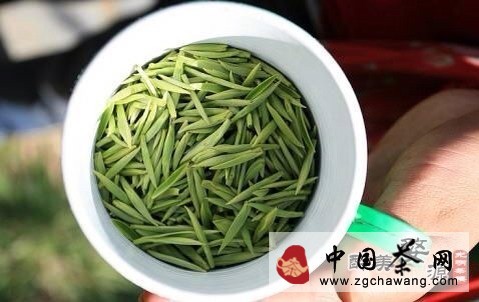
Answer: High-quality Keemun black tea has tender, straight, and elegant strips, with golden buds apparent, and a dark, oily color. Its aroma is highly fragrant, mellow, and sweet. Depending on the roasting level, some present a sugar aroma, some a sweet floral or apple aroma. The aroma is clear, high, and persistent, unique in its own right, referred to by industry insiders as the "Keemun aroma." The taste of Keemun black tea is fresh and mellow, with a lasting, pleasant aftertaste. The flavor contains aroma, and the aroma carries sweetness, earning it the reputation as the "most fragrant among all."
63. What honors has Keemun black tea received?
Answer: In 1915, it won the Gold Award at the Panama-Pacific International Exposition; in 1983, it won the National Gold Award and was listed as a national gift tea; in 1986, it was rated as a National Famous Tea, and in the same year, it won the International Gold Award again at the 26th World Selection of Quality Food held in Brussels.
64. What other famous black teas are there in China?
Answer: Besides Lapsang Souchong and Keemun black tea, other famous black teas include the large-leaf variety Gongfu black tea (Dianhong) produced in Yunnan Province; Tanyang Gongfu, Zhenghe Gongfu, and Bailin Gongfu black teas produced in Fujian; Yingde black tea and Lychee black tea from Guangdong; and Hainan's CTC black tea from Hainan Province.
65. What is Oolong tea?
Answer: Oolong tea belongs to the partially fermented tea category. It is a semi-fermented tea produced through basic processes such as plucking, withering, shaking/turning, fixation, rolling, and drying. It is also called "Blue Tea" by Taiwanese people.
66. Into what categories can Oolong tea be divided?
Answer: Oolong tea is divided by main production area into four categories: Northern Fujian Oolong, Southern Fujian Oolong, Guangdong Oolong, and Taiwan Oolong. Currently, some also categorize Oolong tea produced using altered processes in green tea production areas separately, called "Green-to-Oolong" Oolong tea.
67. What is Northern Fujian Oolong? What are its representative varieties?
Answer: Oolong tea produced in the five cities and five counties of northern Fujian is collectively called Northern Fujian Oolong. It includes two main categories: Wuyi Rock Tea and Northern Fujian Shuixian. The main varieties of Wuyi Rock Tea include Da Hong Pao, Rougui, Shuixian, Huang Guanyin, Jin Guanyin, Dangui, Tie Luohan, Shui Jin Gui, Bai Ji Guan, and Ban Tian Yao. Northern Fujian Shuixian refers to Shuixian Oolong tea produced in Jian'ou City and adjacent counties (cities).
68. What is Wuyi Rock Tea? How is it further subdivided?
Answer: Oolong tea produced within the 2800 square kilometers of Wuyishan City using traditional techniques is called Wuyi Rock Tea. Wuyi Rock Tea was previously divided into three subcategories: Zhengyan Tea, Banyan Tea, and Zhou Tea. The national standard implemented on August 1, 2002, categorizes Oolong tea into Mingyan and Danyan. (Tea produced within the 70 square kilometer scenic area of Wuyishan City is called Mingyan; Oolong tea from other areas is called Danyan).
69. What is Southern Fujian Oolong? What are its representative varieties?
Answer: Oolong tea produced in the southern region of Fujian Province (now Zhangzhou City, Quanzhou City, Xiamen City) is called Southern Fujian Oolong. Main varieties include Tieguanyin from Anxi County, Huangjin Gui, Benshan, Maoxie, and Se Zhong; Baiya Qilan produced in Pinghe County; Baxian tea produced in Zhao'an County; Foshou tea produced in Yongchun County; and Southern Fujian Shuixian.
70. What is Guangdong Oolong? What are its representative varieties?
Answer: Oolong tea produced in Guangdong Province is called Guangdong Oolong. Its representative varieties include Fenghuang Dancong, Lingtou Dancong, Xingning Large Leaf Qilan Tea, Dapu Xiyan Oolong Tea, etc.
71. What is Taiwan Oolong? How is it categorized? What are the representative varieties for each category?
Answer: Oolong tea produced in Taiwan Province, China, is called Taiwan Oolong Tea, also known as Blue Tea. Taiwan Oolong Tea is divided into three categories according to its degree of fermentation.
1. Baozhong Type: Belongs to lightly fermented Oolong tea. Representative varieties include Wenshan Baozhong Tea (strip-shaped) and Dongding Baozhong Tea (hemispherical).
2. Oolong Tea Type: Belongs to medium-fermented Oolong tea. Representative varieties include Muzha Tieguanyin, Shimen Tieguanyin, etc.
3. Taiwan Oolong Tea Type: Belongs to heavily fermented Oolong tea. The representative variety is Oriental Beauty, also known as Baihao Oolong, Champagne Oolong, Five Color Tea, Pengfeng Tea, etc. Additionally, Taiwan Oolong is often made into flavored tea, such as American Ginseng Oolong, Ginseng Oolong, etc.
72. What kind of tea are Taiwan's famous teas, Jin Xuan and Cui Yu?
Answer: Jin Xuan and Cui Yu are both excellent new tree varieties selected and bred in Taiwan. Taiwan Tea No. 12 is called Jin Xuan, and Taiwan Tea No. 13 is called Cui Yu. Both Jin Xuan and Cui Yu are suitable for making Oolong tea and can also be made into Baozhong tea.
73. What is the historical relationship between the Taiwanese tea industry and mainland China?
Answer: Taiwan has had wild tea species since ancient times, but its tea production technology and fine tea plant varieties both originated from Fujian Province. According to the "General History of Taiwan," in the 15th year of Jiaqing (1810), mainland tea merchant Ke Chaoshi brought tea seeds from Wuyi Mountain, Fujian, and successfully trial-planted them in Wenshan County. Later, they were spread and planted mutually, promoting the development of Taiwanese tea. Other historical records indicate that it was the Qing Dynasty provincial graduate Lin Fengchi who introduced tea seedlings from Wuyi Mountain to Lugu Township, Taiwan.
74. What is Shuixian tea? Why is old bush Shuixian of better quality?
Answer: Shuixian is a variety of tea plant, belonging to the semi-arbor type. Its mother tree is located near Zhutaoxiandong in Xiaohu Township, Jianyang, northern Fujian, hence the name "Zhuxian" derived from the place name. Because the local dialect pronounces "Zhu" similarly to "Shui," later generations called it "Shuixian." After liberation, Shuixian tea was designated as a national-level fine tea variety and widely promoted. Because Shuixian is a semi-arbor type with very developed root systems, the older the tree, the deeper and wider its roots spread, absorbing more minerals and nutrients. Therefore, old bush Shuixian is of superior quality.
75. How many grades does Wuyi Shuixian have, and what are its quality characteristics?
Answer: Wuyi Shuixian was created in 1821. The national standard implemented on August 1, 2002, divides Wuyi Shuixian into four grades: Special grade and grades 1 to 3. High-quality Shuixian has strong, tightly knotted, oily, and even strips; a rich, sharp, and fresh aroma; a clear, golden-yellow liquor; a strong, refreshing, and sharp taste with a distinct rock rhythm (Yan Yun). The brewed leaves are tender, soft, and bright, showing green leaves with red edges.
76. What honors has Wuyi Shuixian received?
Answer: In the second year of the Qing Dynasty Xuantong period, it won the Excellence Award at the Nanyang Commodity Exposition. In 1915, it won the First Prize at the Panama-Pacific International Exposition. It is a historical famous tea with a century-long reputation, especially renowned among overseas Chinese in Southeast Asia.
77. What is Rougui? When was it first created? Where is it produced?
Answer: Rougui is a leading variety in Wuyi Rock Tea, originally named Yugui. In 1942, the contemporary Tea Sage Wu Juenong discovered the Yugui variety while serving as the director of the Fujian Provincial Demonstration Tea Farm. After decades of careful cultivation and selection, it wasn't until the 1980s that it developed into a national-level fine variety. Rougui originally came from Huiyuan Rock within the Wuyishan Scenic Area.
78. How many grades does Rougui have?
Answer: The national "Wuyi Rock Tea Standard" implemented on August 1, 2002, divides Rougui into three levels: Special grade, First grade, and Second grade.
79. What are the quality characteristics of high-quality Rougui?
Answer: The strips are stout, tightly knotted, and heavy, with an oily color, obvious sand-green and red spots. The aroma is rich and persistent, resembling notes of cream, honey peach, or cinnamon. The liquor is clear, bright, and golden-yellow. The taste is mellow, thick, fresh, and brisk, with a pronounced rock rhythm. The brewed leaves are thick, soft, and bright, with obvious red edges.
80. What honors has Rougui received?
Answer: From 1989 to 1993, Rougui tea won first place in the Oolong tea category for five consecutive years at the National Ministry of Agriculture's National Famous Tea Appraisal.