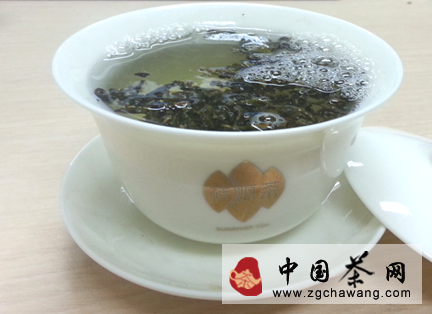
When brewing tea, a layer of "foam" is often seen floating on the surface of the tea soup, and there is more "foam" in the first two or three brews. What is this "foam"? Some people believe it is pesticide residue or remnants of impurities in the tea leaves, thinking it indicates poor tea quality. But in fact, the production of foam in the tea soup is mainly due to a substance called tea saponin in the tea leaves. Scientific research shows that tea saponin has effects such as antibacterial, anti-inflammatory, and analgesic properties, so it is not only harmless to the human body but actually beneficial.
1. What is Tea Saponin?
As early as ancient times, people noticed the foam produced when brewing tea and regarded this "white foam" as an essence. In the poem "Ode to Chuǎn" by Du Yu of the Jin Dynasty (265-420 AD), it is written: "At its initial formation, the foam sinks and splendor floats. Bright like accumulated snow, radiant as spring blooms." This describes how after the initial brewing of tea, the fine, light tea froth floats up, shining brightly like dazzling snow and as splendidly as thriving spring flowers.
Modern scientific research has further proven that the substance capable of producing this "white foam" is called tea saponin. Tea saponin, also known as saponin or glycoside, gets its name because its aqueous solution can produce persistent, soap-like foam when shaken. Saponins are widely found in plants across more than 90 families and 500 genera. These plants include common oil crops like soybeans and oil-tea camellia, as well as precious medicinal herbs like ginseng, Codonopsis pilosula, Paris polyphylla, licorice, Adenophora, and Pulsatilla chinensis. Additionally, some marine organisms such as starfish can also secrete saponin-like substances.
Tea saponin is a type of natural glycoside compound found in plants of the Theaceae family, a mixture of oleanane-type pentacyclic triterpenoid saponins. Its basic structure consists of sapogenin, sugar moieties, and organic acids. Tea saponin shares the general properties of saponins from Camellia plants; it is a colorless, ash-free micro-columnar crystal with a melting point of 223~224°C, tastes bitter and pungent, can foam, and has hemolytic effects. Tea saponin crystals are insoluble in ether, chloroform, acetone, benzene, petroleum ether, and other solvents, poorly soluble in cold water, absolute ethanol, and absolute methanol, but slightly soluble in warm water, carbon disulfide, and ethyl acetate, and easily soluble in aqueous methanol, aqueous ethanol, n-butanol, as well as glacial acetic acid, acetic anhydride, and pyridine. Its solubility significantly increases in dilute alkaline aqueous solutions.
Tea saponin is distributed in the roots, stems, leaves, and seeds of the tea plant, but its molecular structure varies, leading to differences in physical properties. In terms of content alone, tea seeds have the highest saponin content, and different tea plant seeds contain varying amounts of tea saponin relative to the whole seed.
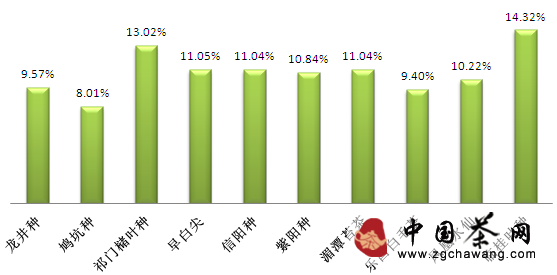
Tea Saponin Content in Different Tea Plant Seeds (Tian Jiehua, 1988)
The content of tea saponin in tea seeds, like other plant constituents, is influenced by the geographical location, environmental conditions, tea plant type, variety, seed maturity, and even the pattern of bumper and lean years. China's tea regions are vast, and the complex ecological conditions profoundly affect the tea saponin content in seeds.
2. Application Fields of Tea Saponin
Regarding the utilization of tea saponin, ancient laborers in China很早 knew how to use tea seed cakes soaked in water for washing clothes and hair. The "Compendium of Materia Medica" published in 1590 records "tea seeds, pounded and washed, remove grease," which refers precisely to the action of tea saponin in tea seed cake. Since its first isolation and discovery by Japan's Aoyama Jiro in 1931, tea saponin has been thoroughly and deeply studied by science. Modern medical research shows that tea saponin has hemolytic and piscicidal effects, anti-pest and antibacterial effects, as well as pharmacological functions such as anti-permeability, anti-inflammatory, expectorant, cough suppressant, analgesic, and anti-cancer properties. It also promotes plant growth. Furthermore, tea saponin exhibits excellent surface activity, including emulsification, dispersion, wetting, detergency, and foaming, making it a high-performance natural surfactant. Thus, tea saponin is widely used in detergents, wool spinning, knitting, medicine, daily chemicals, construction, and other fields.
1. Application in Daily Chemicals
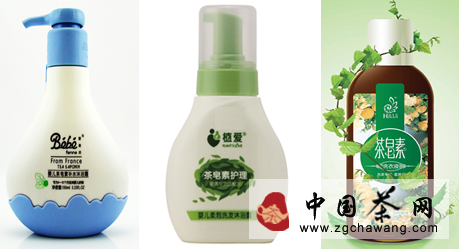
Using tea seed cakes soaked in water for washing clothes and hair has existed since ancient times. Folklore generally believes that washing hair with tea seed cake water can make hair soft, shiny, remove dandruff, and relieve itching. In modern times, as a natural product, tea saponin is a rare surfactant material for the daily chemical industry.
Utilizing the surface activity of tea saponin, it can be used in shampoos and cleansing shampoos, etc., not only making hair shiny and feel good but also being practically non-toxic, safe to use, with hair care and skin care effects, and pharmacological functions such as anti-inflammatory, itching relief, and dandruff removal; as a base component, tea saponin can be applied to sunscreen, anti-inflammatory moisturizing creams, soaps, shower gels, etc.
Tea saponin can also be used for washing clothes. The natural properties of tea saponin and its non-damaging effect on proteins and cellulose give it unparalleled advantages in washing wool, silk, down, etc., such as low stripping ability, no felting, and fabrics not losing luster. Therefore, in recent years, daily chemical products containing tea saponin have continuously emerged.
2. Development and Application in Medicine
Tea saponin has expectorant and cough suppressant effects, can treat senile bronchitis and various edemas; developed tea seed syrup has obvious effects in treating senile chronic bronchitis; according to a Japanese patent (Patent No. JP07061988), tea saponin can be used as an anti-influenza drug, and by chemically modifying it into α-glycosyl tea seed saponin, it can be used in various medicines or health beverages and foods.
3. Application in Aquaculture
In prawn farming, utilizing the hemolytic and piscicidal effects of tea saponin, it can be used as a pond-clearing agent to kill harmful fish without affecting prawns. Moreover, since saponin is not absorbed by the human gastrointestinal tract, people can use it with confidence; feed additives formulated with tea saponin (trade name: Ts9005) are effective alternatives to antibiotics, can reduce zoonotic diseases, elevate the entire aquaculture industry, and ultimately allow people to eat safe meat.
4. Applications in Other Areas
In construction, TW301, mainly composed of tea saponin, can be used as a foaming agent and foam stabilizer in the production of aerated concrete; in pesticides, tea saponin can serve as a wetting agent and suspending agent in solid pesticides, a synergist and spreading agent in emulsifiable concentrate pesticides, and can also be directly used as a biopesticide. Tea saponin can also be applied in foam drilling, foam drainage, etc.
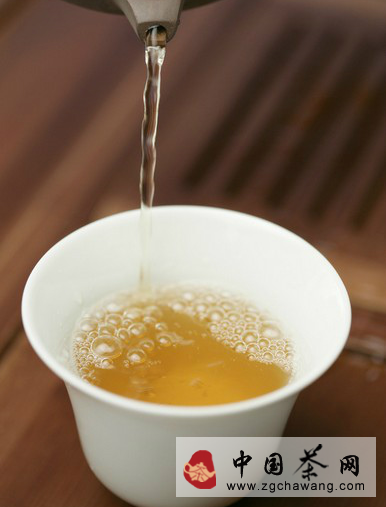
In summary, the "foam" seen by tea drinkers on the surface of the tea soup is not pesticide residue or impurities in the tea leaves but is instead tea saponin, which is beneficial to human health. Sometimes, when a pot of steaming hot water is poured into the cup, admiring the dancing tea leaves and the foam that is "bright like accumulated snow, radiant as spring blooms" can also be a wonderful experience.