Yu Qiuyu: The Core Secret of What Makes Pu'er Tea Attractive
Many people trying Pu'er tea for the first time encounter some obstacles. These obstacles come from comparison. The most powerful comparator is green tea.
A cup of high-quality green tea delivers the vast, aromatic fragrance of mountains and fields right to your lips and teeth. The tea leaves remain green, standing upright and stretching out, floating and sinking leisurely in the hot water—a pleasure just to look at. Take a sip, and there's a slight astringency from the plant, but more so, a unique fragrance belonging solely to this year's spring, so fresh you can almost hear the swallows and sparrows chirping among the clouds in the mountain valleys.
My hometown produces top-grade Longjing tea, and Ma Lan's hometown produces even better Houkui tea, so we are well aware of green tea's magic. Later, when we tasted "Tieguanyin" from Oolong tea and the rock tea "Dahongpao", we felt that while green tea is excellent, it seems too ethereal; the flavor barely registers before fading away, soon disappearing without a trace. Oolong tea is much deeper. While it lacks the vibrant freshness of green tea, it hides its aroma within, making the drinker feel suddenly more mature. By comparison, "Tieguanyin" is rich and uniquely aromatic, while "Dahongpao" is full-bodied and steady; we prefer the latter. Not far from where they grow, the black tea "Jin Jun Mei" also displays a high level of elegance, which we drink quite often.
Just as we were evaluating teas like this, we abruptly encountered Pu'er tea. Its appearance was wrong at first glance: a mass of dark, 'coarse branches and large leaves,' haphazardly pressed into a cake shape. Bringing it to your nose, there's no distinct fresh fragrance. Scrape some off and brew it in hot water; a light brown color infuses, and a sip reveals a somewhat stale flavor. People are accustomed to choosing fresh foods, so they often have an instinctive guard against stale tastes. Moreover, there are indeed some poorly made, improperly stored Pu'er teas on the market carrying an odor近似ly close to a 'moldy pot lid,' causing aspiring tea drinkers to turn away.
However, those who turn away hesitate and pause, because they know that many people in the world who love Pu'er tea have a high quality of life. Could it be that they are all blindly loving 'moldy pot lids'? Furthermore, these individuals have their own professional achievements and lack the motive to 'hype' or 'hoodwink' people about Pu'er. So, the departing tea drinkers begin to doubt themselves, turn back, try to find some knowledgeable people, and follow them in drinking some proper Pu'er tea.
This turning back is crucial. If they still possess the physiological flexibility to expand their dietary habits, if they still retain the life's delight of discovering supreme taste sensations, then the situation can become rather serious. These once hesitant tea drinkers soon become hooked, unable to put it down again.
What is going on here?
First, efficacy.
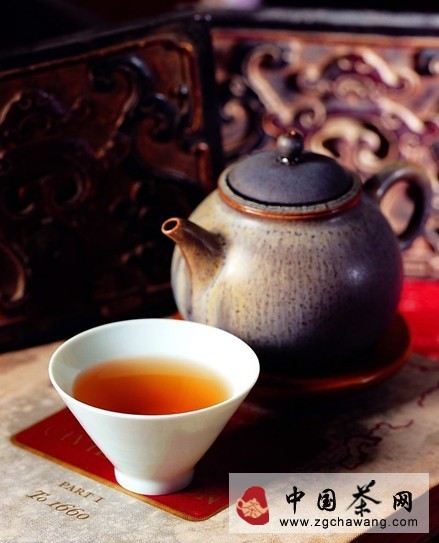
Almost all tea drinkers have this experience: a few cups of premium Pu'er tea enter your mouth, the taste still indescribable, yet your back is already slightly sweating. Soon after, your stomach rumbles, your chest feels clear, and saliva wells under your tongue. I previously used the word 'ethereal' to describe green tea; for Pu'er tea, it trades its own non-ethereal appearance for the tea drinker's bodily 'lightness.'
This is remarkable. Think back to the Qing Dynasty emperors who, having dismounted their horses for palace life, found their biggest burden was their increasingly portly bodies. Therefore, when they inadvertently drank Pu'er tea, they were overjoyed. By the Yongzheng era, considerable amounts of Pu'er tea were already being tribute to the court. Emperor Qianlong, after drinking this brown stems-and-leaves that made him feel light, looked it up in the 'Classic of Tea' but didn't find it clearly mentioned, so he mocked Lu Yu for being 'clumsy' too. It's said he even wrote a poem about it: 'Brewing a bowl of golden stem dew, Lu Yu should feel ashamed judging springs.' His poems were always poorly written, so I certainly won't verify it, but if he really used 'golden stem dew' to refer to Pu'er tea, it's somewhat acceptable.
'Dream of the Red Chamber' does indeed mention that whenever someone overeats, someone else suggests 'steep some Pu'er tea to drink.' Palace memoirs also note: 'When serving tea, first offer a cup of Pu'er tea, because it's warming and cuts through grease.' Thinking from the capital to the Ancient Tea Horse Road, those long roads starting from Pu'er Prefecture mostly led to high, cold regions with much meat and few vegetables. There, one would expect more digestive and cardiovascular diseases, but实际情况ly, that wasn't the case. People eventually found the reason in the tea cakes and bricks carried by horse caravans: 'Pu'er tea tastes bitter and is potent, it cuts grease and neutralizes beef and mutton toxins'; 'Tea as a substance, the Western Rong and Tubo peoples, ancient and modern, all rely on it; with a diet of腥meat, without tea it cannot be digested'; 'One day without tea leads to stagnation, three days without tea leads to illness'...
In today's China, with abundant food, more and more people face the same problems as the Qing royalty and the highland mountain folk. Therefore, Pu'er tea's popularity is fully justified.
Second, flavor.
If Pu'er tea's benefit was merely making the body light and healthy, it would just be a health product. But what most attracts tea drinkers is its taste. Describing Pu'er's taste is difficult. Commonly used terms like camphor aroma, orchid fragrance, lotus scent, etc., are merely analogies, and analogies using smell to describe taste.
The world's few basic taste types don't quite match Pu'er tea. Even within the world of tea, the relatively stable,公认 taste profiles embodied by green tea, oolong tea, black tea, and scented tea series don't align with Pu'er either. In short, compared to these typified, quasi-typified taste stereotypes, Pu'er seems ambiguous, vague, introverted, and thus hard to put into words.
Humans are severely 'typed' animals; without types, we don't know how to settle our sensations. I often see literati using phrases like 'the best tea is supremely mild' or 'true tea is tasteless' to describe Pu'er, essentially mistaking a loss of sensation for philosophy, which is somewhat misleading. No matter what, Pu'er is definitely not 'supremely mild' or 'tasteless'; it has a 'profound flavor.' If we must use Chinese words to describe it, two terms are more appropriate: Aged Mellow, Translucent Moistness.
Pu'er tea changes infinitely under the基调 of Aged Mellow and Translucent Moistness. Moreover, each important variation enters the tea drinker's sensory memory, slowly accumulating into a quiet 'psychological repository.'
In this 'psychological repository,' the various flavors of Pu'er tea are all organized, yet still cannot be accurately described. One can only use metaphors and associations to定位 them. I once conducted a literary experiment to see what metaphors and associations could勉强 convey the different Pu'er flavors in my mind.
Thus emerged:
This one is the dry, crisp breath of autumn leaves sun-dried for half a month, lying beside a clump of lemongrass, while a light breeze blows from an orchard near an earthen wall;
That one is the medicinal aroma smelled from an arrow's distance away, of three parts licorice, three parts eaglewood, two parts Chinese angelica, and two parts winter jujube, simmered over a slow fire for three hours. The person smelling it is softly chanting scriptures amidst the sound of ritual bells and cymbals;
This one is the pine fragrance emanating from the wooden windows and walls of a cold mountain hut, continuously warmed by a stove fire for several winters. Bows, arrows, and saddles hang on the wooden walls, full of rustic霸气;
That one is not a scent anymore, but the pure smile and incomprehensible language of a kind-eyed elder. Though you don't understand the meaning, it brings peace to your body and mind, filters out the worldly noise, and stops your漂泊;
This one is two plain-faced, elegant ladies quietly opening a tidy sandalwood hall, while outside the corridor, brilliant ginkgo leaves are just beginning to turn from yellow to brown;
...
These metaphors and associations are so 'nonsensical,' but whenever a similar signal is encountered, they can be immediately retrieved and matched.
Once the 'psychological repository' for Pu'er tea is established, it cannot tolerate inferior products in the same domain. This causes some trouble in life. For example, someone as broad-minded as I am, who can accept almost any drink when traveling, can no longer casually accept just any Pu'er tea. Because the 'psychological repository' has developed a keen alertness; drinking the wrong mouthful feels like betraying the entire potential system, and your whole being complains.
This rejection, to put it grandly, extends a small 'tea character' structure at the edge of one's moral character structure, and drags out a small 'tea persona' form beyond the periphery of one's personality形态. Whether 'character' or 'persona,' both seek to maintain等级 through negation and elimination. For tea matters, while this is unrelated to spiritual morality, it does relate to one's quality of life.
Third, depth.
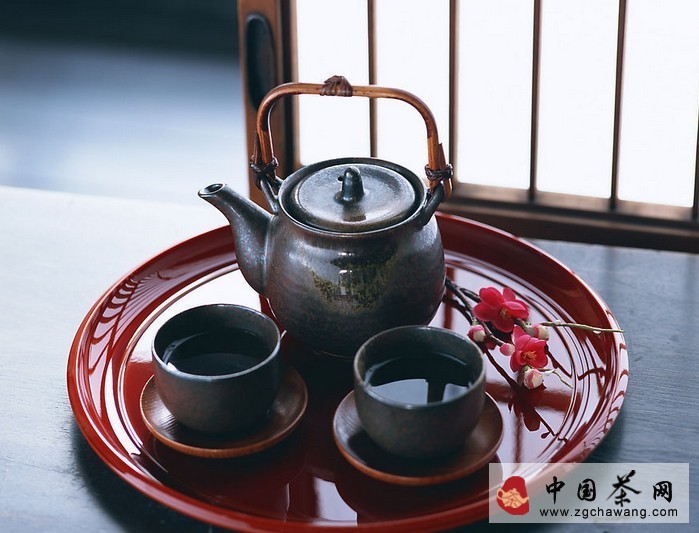
Unlike memories of other fine foods and drinks, the 'psychological repository' for Pu'er tea is spatially deep, with intricate lanes and subtle flavors. This provides room for meandering and exploration, an object for endless discussion, and the possibility of sustained engagement. By comparison, only French red wine offers a similar situation.
Look, in the broadest classification, Pu'er has generational distinctions like 'Hao-level tea,' 'Yin-level tea,' 'Seven-sons cake,' etc.; distinctions in production and storage like aged tea, ripe tea, raw tea; distinctions in raw material like large-leaf variety, ancient tree tea, terrace tea; and distinctions in origin like Yi Wu Mountain, Jing Mai Mountain, Nan Nuo Mountain. Among these, even if you just take 'Hao-level tea,' it hides a large number of tea numbers and brands. Even within the same tea number and the same brand, there are still many significant differences that no one can fully describe.
In my experience, the first to painstakingly try to describe these differences in writing was Mr. Deng Shihai from Taiwan; the first to provide real tea samples and let us sensibly understand what top-grade aged Pu'er is through numerous late-night brewing sessions was Mr. He Zuoru from the Philippines; the first to impart various identification tips based on decades of Pu'er tea trading experience was Mr. Bai Shuiqing from Hong Kong. I have drunk countless teas with them. Years and months of quiet tasting at the tea table have made everyone repeatedly marvel at the profound depth contained within cups and pots.
Actually, even the brewing itself holds great complexity. Once at Mr. Zhang Qiming's Daketang in Shanghai, Mr. Wang Jiaping, whom I jokingly called the 'Number One Brewer of the North' from Tangshan, Mr. Su Rongxin, the 'Number One Brewer of the South' from Zhongshan, and several other outstanding tea art masters were all brewing the same tea. Cup by cup was brought to another room, and I could tell just by tasting who had brewed it. The amount of tea, water, speed, temperature, and rhythm formed a kind of cadence, recognizable upon the first sip.
Such complex differences become connected with the life forms of individual friends; that realm acquires a humanistic depth that makes one reluctant to leave.
The three aspects above roughly summarize the reasons why Pu'er tea is so attractive. However, to truly explain Pu'er tea clearly, we cannot remain solely within the realm of sensation. The 'core secret' of Pu'er tea should lie beyond people's immediate feelings.