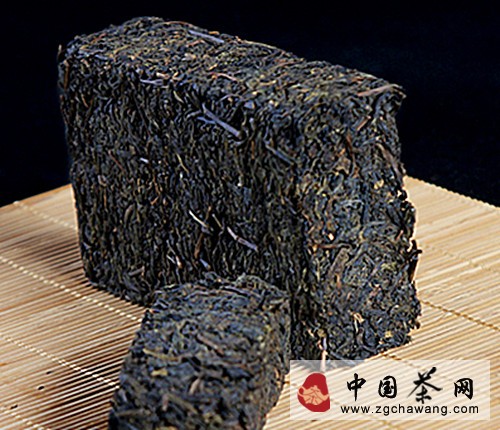
Pu-erh Tea and Dark Tea are two different concepts. Pu-erh tea specifically refers to the name of a type of tea, belonging to one variety within the dark tea category; while dark tea refers to a general classification of tea, being one of China's six major tea classes. Although Pu-erh tea is categorized under dark tea, they share similarities as well as differences. Some also argue that Pu-erh does not belong to dark tea and is a separate category. Looking at the production process, Pu-erh tea's processing techniques are not entirely the same as those of dark tea. Below, we explore the differences in production processes between Pu-erh tea and dark tea! Overall, drinking tea serves to hydrate the body, is a method of health preservation, and also a way to cultivate one's character. Therefore, as long as the tea suits one's constitution, taste, preferences, and the season, it is a good tea—one worth purchasing and savoring.
(1) The Processing Technique of Pu-erh Tea Is Not That of Dark Tea
Pu-erh tea is classified under the dark tea category in textbooks, based on the rationale that both are post-fermented teas. However, there is a fundamental difference between the processing of Pu-erh tea and that of dark tea. In dark tea processing, the transformation from fresh leaves to finished product is continuous. Depending on the tenderness of the raw materials, the processing time varies. Research on Yunnan Pu-erh tea's techniques shows that although Pu-erh processing involves post-fermentation, its raw material base is different, and the process from fresh leaves to finished product is discontinuous. The predecessor of Yunnan Pu-erh tea is sun-dried green tea. Therefore, Pu-erh tea's technique is not that of dark tea. If we view Pu-erh tea continuously, it belongs to a category distinct from the existing six major tea classes.
(2) Differences in Raw Materials and Methods from Dark Tea
In terms of raw materials, the primary raw material for dark tea processing is small to medium-leaf varieties, whereas Pu-erh tea uses sun-dried green tea processed from Yunnan large-leaf varieties. Regarding fermentation humidity, the moisture in dark tea processing comes from the residual water in the leaves after fixation, with pile temperature derived from residual heat after fixation, residual enzymatic respiration heat, and the characteristics of dark tea are formed during primary processing. Pu-erh tea processing involves artificial humidification and microbial fermentation after primary processing. The amount of moisture added is a key indicator affecting temperature and fermentation speed. Proper moisture addition, pile fermentation, and natural microbial inoculation are crucial for quality formation.
(3) Chemical Differences in Pu-erh Tea Production Compared to Dark Tea
Since the raw material for dark tea processing is small to medium-leaf varieties, its intrinsic substance content is relatively low, particularly the beneficial chemical components such as caffeine, tea polyphenols, and tea polysaccharides. The microbial action time is relatively short, resulting in less transformation of beneficial components. Moreover, the chemical components of dark tea raw materials are not exposed to light, so there is no involvement of photochemistry. In contrast, Yunnan large-leaf varieties are rich in intrinsic substances, especially tea polyphenols, tea polysaccharides, oligosaccharides, and statins, which constitute the effective substances for the health benefits of Yunnan Pu-erh tea and are related to its mellow, smooth, and sweet qualities. Additionally, the formation of Pu-erh tea's quality, besides the tea plant variety, is directly influenced by photochemistry and beneficial microorganisms, which is also a key point differentiating Pu-erh tea quality formation from that of dark tea.
The main differences in production processes between Pu-erh tea and dark tea are summarized in the above three points. We hope this helps in understanding Pu-erh and dark tea. At the same time, we remind everyone to choose tea that suits them personally and not blindly follow others or market hype. Tea drinking offers many benefits, such as health preservation, character cultivation, and beauty care, so it is important to be careful and deliberate in selecting tea.