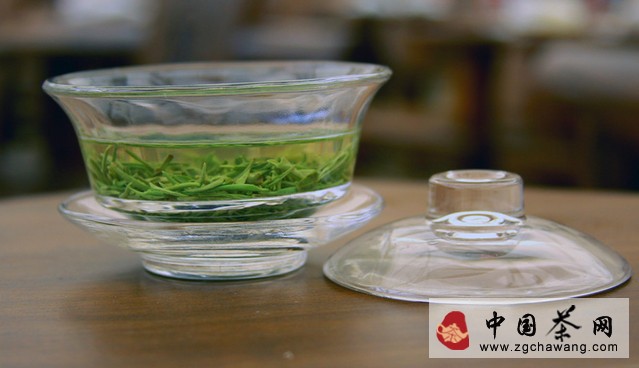
 Tea has the most extensive family, including extremely precious varieties such as West Lake Longjing, Lushan Yunwu, Taihu Biluochun, and Liuan Guapian, as well as extremely ordinary ones—so ordinary they have no specific name, much like an individual among the common populace whom one might have seen but does not know by name. Green tea does not require fermentation; it only involves simple processes like deactivation, rolling, and drying of the tea leaves. Therefore, even ordinary farming families can produce it by hand without complex machinery. The resulting tea retains a fresh, tender color, and when brewed, it has a light taste, better preserving the chlorophyll and nutrients of the fresh leaves.
"The jade essence is brewed in the morning before the Grain Rain; this spring tea is the freshest." Appreciating green tea emphasizes the character "fresh." In ancient times, the romantic ideal of "a fair sleeve adding fragrance" or "lifting the tray to eyebrow level" likely stemmed from the grace scholars and literati perceived when a beauty served tea. Without even looking at the person, merely gazing into the cup brings a touch of intoxication. The emerald-green liquor resembles a beauty in her blooming youth of sixteen, restraining her bright fragrance, concealing her sweet and crisp mellowness, waiting for her beloved to arrive. Only when infused with his scorching warmth does she gradually reveal and bloom. The tea leaves are shaped like sword tips, with two leaves embracing a bud—crisp and tender yet upright, possessing an elegant, cold, and fragrant demeanor. The green tea leaves float, first enticing you to gaze upon them lovingly on the water's surface. Taking a gentle sip feels like receiving a wisp of her essence, immersing one in a state where self and surroundings are gradually forgotten.