Tea practitioners say:
I once heard an old tea master say: Strong is not rich, light is not thin.
Original title: The Thinness & Lightness vs. Richness & Strength of Pu-erh Tea
When brewing tea, if the extraction is insufficient, the tea soup will taste watery. However, if the tea continues to steep after sufficient extraction, it will become too strong. What is the optimal way to brew tea? It is when the tea and water have just fully integrated, and there is no hint of wateriness. If we can maintain consistent extraction with each infusion, keeping the strength uniform, then this tea can yield the most infusions, or in other words, is the most durable. Brewing a tea rich in intrinsic substances in this way will result in each infusion having a different taste, offering a multi-layered enjoyment. The richer the tea's intrinsic substances, the more pronounced and numerous the layers. The main reason is that the tea's components extract at different rates across infusions, and the proportions of each substance extracted also vary.
In most cases, the tea peak (climax) occurs around the sixth infusion. At this point, the leaves have fully opened and舒展, extraction is at its best, the tea soup is full, rich, and smooth, the tea's potency is robust and澎湃,令人眼前一亮,为之一振. A tea with rich layers provides享受 layer upon layer of different享受,令人回味无穷. Achieving a tea with rich layers requires two conditions: first, the tea must have abundant intrinsic quality; second, skilled brewing technique. Within tea, there are two concepts: richness and strength, which are easily confused. Clarifying these two concepts is beneficial for correctly understanding tea. Without careful analysis, one might think richness and strength are similar, or even the same thing. Actually, they are quite different.
Using music as an analogy, consider a symphony with上百件 instruments playing simultaneously, yet the sound from each instrument remains清晰可辨, providing a立体 auditory享受. This is especially true when appreciating a live performance. Why? Because each instrument has a different frequency and range, so they do not interfere with each other and remain清晰可辨. Overlapping the different frequencies of various instruments creates a厚重 auditory sensation. If the same instrument plays the same frequency, no matter how many are added, it only increases the volume but cannot produce a厚重 effect. The same frequency only allows for changes in volume; different frequencies create the distinction of厚不厚. In tea, 'richness' refers to a richness of flavors, where多种不同的味道 harmoniously combine to give a饱满厚实的感受; 'strength' refers to the intensity of a particular flavor. If a tea is not strong enough, one can increase the amount of tea leaves, raise the water temperature, or extend the steeping time to achieve it, but this only stacks the original flavor, i.e., increases its concentration, without adding other flavors. The richness of a tea is innate, meaning it originally contains abundant substances that析出丰厚的滋味.
Sometimes we say a tea is 'light,' but what we really mean is that the tea lacks sufficient flavor, is not rich enough. Those who misunderstand, or those who intentionally误导, might brew a tea that is not rich to be even stronger. Not understanding the difference between richness and strength容易走进一个误区,容易被人忽悠,或被人忽悠而不自知. Thinness & lightness are relative to richness & strength. Understanding richness and strength makes it easy to understand thinness and lightness. 'Thin' refers to being单薄,寡,单一; 'light' refers to not being strong,清淡.
Thinness and lightness are not easy to distinguish in practice, especially for those not deeply knowledgeable about tea,容易混淆. Perhaps more people prefer light,清雅 tea; many tea friends also often speak of drinking tea清心. There's also the common saying, 'a cup of清淡的茶.' A light tea indeed allows one to drink more frequently, in larger quantities, or perhaps more健康. Just think, can one drink a lot of浓烈的茶? And who can enjoy it long-term? A light tea, without losing its flavor richness, is可口, and people will like drinking it;相反, if a light tea has a单一,寡口 flavor, people will not enjoy it. Thin and light are two different things. Thinness is innate, determined by the茶质; lightness is man-made, determined by brewing. A thin tea can be brewed strong; it can also be brewed light. Light tea, however, has distinctions of richness and thinness. Tea底, or叶底, refers to the fully brewed tea leaves after干茶叶 have been充分冲泡. Made from fresh leaves into dry毛茶, the color and shape change, making it difficult for non-professionals to discern tea quality from the dry毛茶.
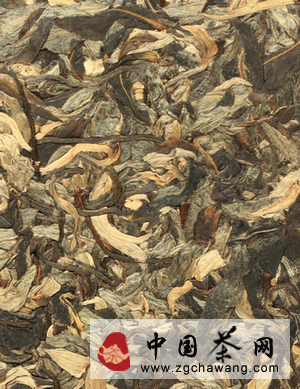
The tea底 provides a basic还原 of the fresh leaves and a corresponding color还原. Relatively speaking, examining the tea底 is easier for辨别. Good tea must be made from good fresh leaves; this is essential. Fresh leaves and tea底 correspond. Good fresh leaves, used to make tea, produce tea底 with common characteristics; poor fresh leaves produce tea底 with their own common characteristics. Good fresh leaves have sufficient nutrients, rich intrinsic substances, thick leaves, high tenderness retention, and a long growth period; the corresponding tea底 will also be thick,富有弹性和光泽. Poor fresh leaves are the opposite, with thin leaves and high fiber content; the corresponding tea底 will be thin, stiff, and暗哑. Judging tea by its tea底 is relatively直观容易. Of course, evaluating a tea requires considering multiple aspects, and one can also make a综合判断 from various angles. It's just that starting by looking at the tea底 is easier and more直观. Once familiar, one will find that all perspectives are ultimately相通.