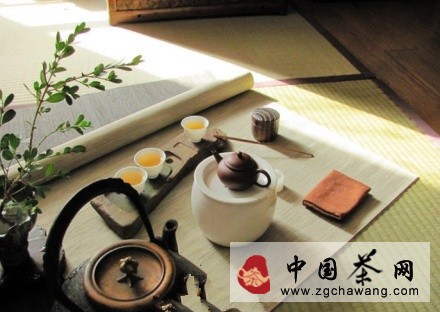
Using different tea sets to brew different teas may seem like pretentious behavior to non-tea drinkers; for those who primarily drink tea to quench thirst, they often say self-deprecatingly: "I'm not that particular." Only a minority pay attention to tea sets—not to show off, nor out of mere fastidiousness, but because when one reaches that level, the palate truly becomes refined.
A friend once made a classic remark: "I don't understand the difference between making instant Nescafé at home and going to Starbucks, just as you don't understand the difference between drinking tea from a thermos and brewing it Gongfu style."
So, I've summarized some of the best brewing tools for various teas based on personal experience, for your reference!
【Green & White Tea】
Both green tea and white tea are made from buds and leaves, with only a few exceptions using other parts of the plant, which are not discussed here.
Green and white teas made from buds are best brewed in glass cups, primarily to appreciate the sight of tender buds unfurling and dancing in the water. Sometimes, holding a cup of white tea by the window can lead to an entire afternoon of peaceful contemplation.
Tea brewed in a glass cup tastes fresh and sweet, likely due to the small amount of tea leaves and their bud-like quality. However, the downside is that they don't withstand multiple infusions well—after two cups, the flavor usually fades. I typically find one cup sufficient; it's hard to imagine anyone drinking a third cup after two, as that would require a remarkable capacity.
Green and white teas can also be brewed in covered bowls or purple clay teapots, but the taste will be stronger than when brewed in a glass cup. The main issue is that the amount of tea leaves is harder to control, which can lead to bitterness, so this method is not recommended for beginners.
【Oolong Tea】
The most common oolong teas on the market today are Tieguanyin, Dahongpao, Fenghuang Dancong, etc., and no further details will be provided here.
The brewing tools for oolong tea are primarily covered bowls and purple clay teapots. The brewing methods are largely similar, with control over the amount of tea leaves, water temperature, and steeping time—much like a chef cooking, adjusting the amount of salt, heat level, and timing. More advanced tea masters simply enrich the process with more elaborate movements and emotional expression.
So, under the same conditions, what differences arise between brewing with a covered bowl and a purple clay teapot?
In my opinion, the main difference lies in the material. Those who use purple clay teapots may have noticed that the water brewed in them feels hotter than in a covered bowl. This is because purple clay dissipates heat more slowly than a covered bowl, so when brewing tea in a purple clay teapot, the leaves are exposed to heat for a longer time, resulting in a stronger tea flavor.
As for the drawbacks of brewing with a purple clay teapot, I believe it's also due to the material, which absorbs some of the tea's aroma. This may detract from the experience when brewing light, fragrant teas.
The covered bowl is arguably the ultimate versatile tea-brewing tool. As long as you understand the characteristics of each tea, you can brew excellent tea. Brewing with a covered bowl is likely the closest method to capturing the tea's original flavor, which is why it's widely used in Tieguanyin evaluations today. It offers strong operability, makes it easy to assess the tea's aroma, and allows clear observation of the spent leaves. This method minimizes objective factors that could affect the tea's quality.
【Black Tea】
Black tea can also be brewed in a covered bowl—in fact, there's hardly any tea that cannot be brewed in one.
What I want to mention here is the glass filter teapot. It's quite popular nowadays because it's simple and convenient, yet produces a better taste than a thermos. Compared to fast-brewing kettles, it also boasts a crucial advantage: it's stylish and aesthetically pleasing, without sacrificing charm.
The glass filter teapot's strengths are convenience and visual appeal, allowing direct observation of both the tea liquor and spent leaves. Of course, the downside is also evident: it doesn't withstand multiple infusions well. With a large water volume, you can't increase the amount of tea leaves to avoid bitterness, so typically, after three infusions, the flavor diminishes significantly.
【Pu'er Tea】
Pu'er tea can be brewed in various ways, with the most common being purple clay teapots and covered bowls. Some even summarize: "Use a covered bowl for raw Pu'er and a purple clay teapot for ripe Pu'er." This is because raw Pu'er emphasizes aroma, while ripe Pu'er focuses on flavor—an undeniable distinction.
Here, I'd also like to introduce a niche brewing method: brewing with a silver pot. Note that iron pots are unsuitable for brewing tea, as the iron content can affect the tea's taste. Silver pots don't seem to have this issue, and brewing tea in a silver pot can enhance the water's activity, resulting in a more layered tea liquor and richer flavor profile.
【Conclusion】
I often feel that brewing tea is much like culinary art—it involves understanding the ingredients, mastering the tools, careful preparation, and incorporating the environment and vessels used for tasting, all infused with the brewer's state of mind. As Lu Xun said: "Having good tea and knowing how to enjoy it is a blessing."