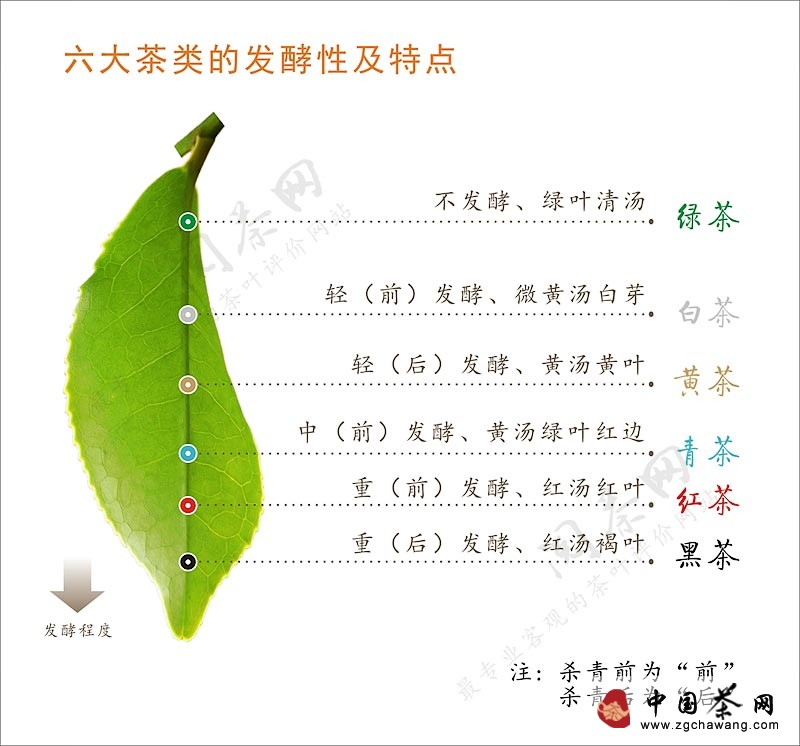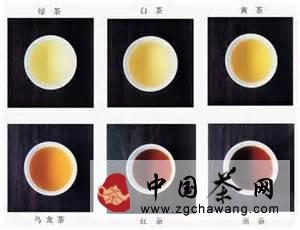
Editor's Note: "Tea Observations" will periodically address and clarify confusing tea knowledge circulating among the public, distinguishing truth from falsehood! As previously explained, China's six major tea categories are fundamentally distinguished by their processing techniques. So, what about the commonly heard concepts like "semi-fermented tea" and "fully fermented tea"? We must point out: the concepts of non-fermented tea, slightly fermented tea, semi-fermented tea, fully fermented tea, and post-fermented tea are valid. Their essence lies in "whether there is a subjective intention to include a fermentation process during tea production." For instance, we call green tea non-fermented not because its fermentation (oxidation) degree is zero, but because there is no subjectively intended fermentation step in its processing—it goes directly to fixation (kill-green). However, from picking to fixation, there is inevitably a period where active enzymes naturally promote some oxidation. Yellow tea and white tea are called slightly fermented teas because there is a subjectively intended "slight" fermentation process during production. The withering process for white tea aims partly to induce slight fermentation, reducing the raw, grassy taste. The "menhuang" (smothering) process for yellow tea also functions to promote some oxidation. Oolong tea is called semi-fermented because there isn't a strictly independent "fermentation" step, but enzymatic fermentation naturally occurs during the "zuoqing" (making/tossing) process, hence it's only partial. Black tea (Hongcha) is called fully fermented not because its oxidation degree is necessarily the highest, but because it has the most complete, subjectively intended fermentation process, and it skips fixation. The primary process determining its aroma and taste is "fermentation." Dark tea (Heicha) and ripe pu-erh are called post-fermented teas because of the "wo dui" (pile fermentation) process, which occurs *after* fixation. This means the fermentation here is not "enzymatic fermentation" but "microbial fermentation," which is the key difference from black tea fermentation. The term "post" fermentation refers to fermentation occurring *after* fixation. Therefore, yellow tea could also be considered a post-fermented tea. Of course, we can still consider the degree of fermentation when evaluating tea. The extent of fermentation is directly related to the quality of the process and results in noticeable differences in aroma, liquor, and taste. This relates to tea evaluation, which we will detail in the future.