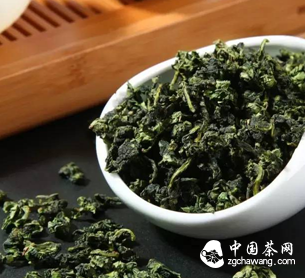
What is Tieguanyin Tea?
Tieguanyin originated in Anxi County, Fujian Province.
According to the "Qingshuiyan Chronicle": "At the peak of Qingshui, clouds and mist emerge. The monks planted tea, nourished by the mountain's aura, bathed in the essence of the sun and moon, and imbued with the haze of mist. Drinking it can cure a hundred illnesses. The tea from old temples and other places cannot match its fragrance. At Guikongkou, there are two or three plants from the Song Dynasty whose flavor is especially fragrant and efficacy great. Drinking it, one unconsciously feels a breeze under the arms. If one encountered Lu Yu, he would use it to supplement his tea discourse." This indicates tea production in Anxi during the Tang Dynasty.
By the Ming Dynasty, tea production flourished somewhat. The "Anxi County Chronicle" records: "In areas like Changle and Chongshan, the goods (referring to tea) sold are very numerous." In the late 18th century, Anxi tea production developed significantly. The poet Ruan Xi wrote in "Anxi Tea Song": "Anxi's mountains are lofty and steep, their shade often damp, producing clusters of tea. The people pick tender leaves during Qingming, very cheap, supporting ten thousand households..." Subsequently, tea farmers also selected and bred various excellent tea plant varieties, among which Tieguanyin produced the highest quality tea.
Tieguanyin was originally the name of a tea plant variety. Because it is suitable for making Oolong tea, the finished Oolong tea product was also named Tieguanyin. Thus, Tieguanyin tea refers to the Oolong tea made from the Tieguanyin variety tea plant.
The Tea Processing Technique of Tieguanyin
Anxi Tieguanyin production is meticulous and skillful. It is harvested in four seasons annually, with spring tea quality being the best. Autumn tea is next, known for its high aroma, commonly called "autumn fragrance," but the soup taste is somewhat lighter. Summer and summer-heat tea quality is inferior. The standard for fresh leaf picking is after the tender shoot has formed a dormant bud and the top leaf has just unfolded into a small or medium open stage, picking two or three leaves. Picking must achieve "five don'ts": do not break the leaf, do not fold the leaf, do not crush the leaf tip, do not include single leaves, and do not include fish leaves and old stems. Fresh leaves from tea plants growing in different areas must be separated, especially morning, noon, and evening greens must be strictly separated for processing, with noon green quality being the best.
The production process of Anxi Tieguanyin involves: cooling the greens, sun-withering, cooling again, making the greens (shaking and spreading), pan-firing, rolling, first roasting, second roasting, repeated wrapping and rolling, slow roasting over gentle fire, sorting and winnowing, and other steps before becoming the finished product.
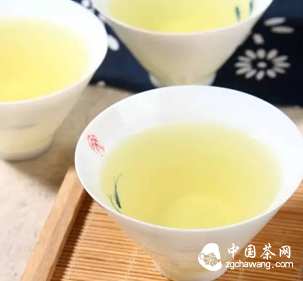
Premium Tieguanyin tea strips are tightly rolled, sturdy, and heavy, presenting a shape like "green stem, green belly, dragonfly head." The color is fresh and moist, with obvious sand-green and distinct red spots, the leaf surface covered with a white frost—this is undoubtedly one of the key characteristics of premium Tieguanyin. Tieguanyin liquor is golden, rich, and clear, with thick, bright leaves showing a satin-like luster. Brewed, the tea soup is mellow, sweet, and fresh, with a honey-like sweetness upon entry; the aroma is rich and long-lasting, praised as "having fragrance even after seven infusions."
The Therapeutic Effects and Value of Tieguanyin
1. The Weight Loss and Body Shaping Effect of Tieguanyin
Obesity is a nutritional disorder that appears alongside the continuous improvement of living standards. It is caused by excessive nutrient intake or insufficient utilization of stored energy in the body. Obesity not only brings many inconveniences to daily life but is also a cause of cardiovascular diseases and diabetes. In 1996, the Fujian Academy of Traditional Chinese Medicine conducted research on the weight loss effects of drinking Tieguanyin on 102 adults with simple obesity. Research showed that Tieguanyin contains a large amount of tea polyphenols, which can not only improve the action of fat-decomposing enzymes but also promote the metabolic activity of neutral fat enzymes in tissues. Therefore, drinking Tieguanyin can improve the body shape of obese individuals, effectively reduce subcutaneous fat and waist circumference, thereby reducing their weight.
2. The Heat-Clearing and Fire-Reducing Effect of Tieguanyin
Tea is a good beverage for preventing heatstroke and cooling down. Li Shizhen's "Compendium of Materia Medica" states: "Tea is bitter and cold in nature, most effective in reducing fire. Fire is the root of a hundred diseases; when fire is reduced, the upper body becomes clear. Drinking it warm causes fire to descend due to the cold nature; drinking it hot causes it to disperse by borrowing the fire's energy." In the height of summer, under the scorching sun with oppressive heat, drinking a cup of cool Tieguanyin or a hot cup of Tieguanyin makes one feel physically and mentally cool, producing fluids and relieving heat. This is because the tea soup contains tea polyphenols, sugars, amino acids, pectin, vitamins, etc., which react with saliva in the mouth, moisturizing the oral cavity, thus producing fluids and quenching thirst. Simultaneously, due to the action of caffeine in Tieguanyin, a large amount of heat is dissipated from the body's skin pores. It is reported that drinking a cup of hot tea dissipates heat equivalent to 50 times that of the tea through sweating from skin pores, thus making one feel cool and relieved from heat.
3. The Refreshing and Mind-Enhancing Effect of Tieguanyin
That drinking tea can refresh and enhance thinking is almost universally known. Many Chinese medical texts throughout history record this, and generations of literati, poets, and eminent monks have also wielded their brilliant pens to praise tea's power to refresh and enhance thinking. Bai Juyi wrote in his poem "To Wang Shisan, My Eastern Neighbor": "Hand in hand by the pond under the moon, open-hearted under the bamboo in the breeze. Dispelling sorrow knows wine's power; breaking sleep sees tea's merit." The poem clearly mentions tea's merit in refreshing and breaking sleep. Su Dongpo wrote: "Thirty pieces of Jian tea, I wonder how they taste. I present them to layman Bao, to battle the sleep demon in the monk's chamber." He said giving Jian tea to Layman Bao allows him to avoid dozing during meditation. Drinking tea can enhance thinking, hence it is beloved by people, especially by writers, poets, and other mental workers. For example, the great French writer Balzac, Chinese-American writer Han Suyin, and famous Chinese writer Yao Xueyin all loved drinking tea to aid literary thought.
Tieguanyin can refresh and enhance thinking, mainly due to the caffeine in the tea leaves. Caffeine stimulates the central nervous system, enhances thinking, and improves efficiency. Therefore, drinking tea can break sleep, refresh, dispel annoyance, relieve fatigue, clear the mind, enhance thinking, and significantly improve oral答辩 ability and mathematical thinking反应. At the same time, because Tieguanyin contains compounds like polyphenols, they counteract the adverse effects of pure caffeine on the human body. This is also one of the important reasons why tea drinking has a long history, remains enduring, and continuously develops.