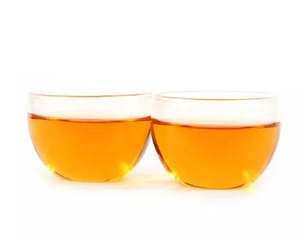
As is well known, "Lapsang Souchong" is now widely recognized as the ancestor of black tea, with a history of over 300 years. However, I am certain that a century ago, it was definitely not called by this name, at least there is no written record of it.
The terms "Souchong" and "Gongfu" first appeared in the 1717 work "Sequel to the Tea Classic" by Lu Tingcan, the county magistrate of Chong'an: "Wuyi tea grown on the mountains is called rock tea, that by the water is called shore tea... The best among them is named Gongfu tea. Above Gongfu, there is Souchong, which is named after the tree, each tree yielding only a few liang." Unfortunately, the term "black tea" never appears in his text.
Without delving into the exact genealogical relationship between the rock tea of that time and the later emergence of black tea, I can only understand it as follows: In the "Sequel to the Tea Classic," Gongfu tea refers to blended tea, and Souchong tea refers to single-tree tea.
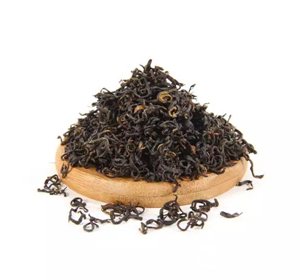
The distinction we make today between Souchong black tea and Gongfu black tea is closer to the classification between famous teas and bulk teas, or between off-grade and standard-grade teas. That is to say, Gongfu black tea is refined tea with national standards, generally consisting of numbered lots blended from large tea regions. The ones commonly heard of, such as Dianhong, Qihong, Ninghong, Yuehong, Yihong, and Chuanhong, etc., represent a province producing one type of black tea, with each province using its own set of standards. Souchong black tea, on the other hand, comes from smaller tea regions, sometimes referring to a single city or even a county area. It denotes small-variety black tea made from a single tea cultivar processed with distinctive techniques, somewhat akin to the concept of "pure material." Its regional scope is larger than that of a specific "tea garden" or "mountain" but much smaller than that of Gongfu black tea. Examples like Anji Red, Zhengshan Souchong, and Jiuqu Hongmei possess more localized characteristics in terms of region, cultivar, and processing. Therefore, some also understand Souchong black tea as the famous tea within the black tea category.
Many emerging black teas on the market today use enterprise brands and standards, yet lack distinctiveness in quality and craftsmanship. If one must categorize them, I'm sorry to say, I can only consider them as the rough tea of Gongfu black tea. Of course, there are still nuances involving seed-propagated vs. clonal varieties, and domestic sales vs. export, but these are not the key points and will not be elaborated here.
Recently, I heard a theory circulating online claiming that in "British tea culture," the nobility drank green tea called "afternoon tea," while workers drank black tea called "evening tea." I can only offer a gentlemanly "smiling hehe" to that. With a bit of knowledge about tea processing and tea evaluation, it's not hard to discover that the earliest Chinese tea exported to Europe was actually oolong tea, which could also be understood as "lightly oxidized black tea." Later, with the needs of mass production and the European preference for tea liquor taste and drinking methods, the degree of oxidation continuously increased, ultimately leading to the creation of black tea, which is now the tea category with the largest global sales.