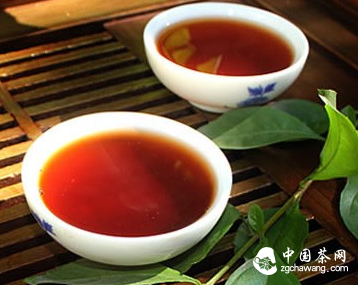
So-called Pu-erh tea being resistant to brewing refers to the fact that after multiple infusions, the tea's liquor color and taste do not change significantly. Pu-erh tea is indeed durable and resistant to brewing. What we see is only the surface; the reason it withstands brewing is due to the substances contained within the tea leaves. Arboreal Pu-erh tea trees have grown for hundreds or even thousands of years, accumulating rich nutrients in their leaf buds. When brewed, it necessarily takes many infusions to release these completely, which is why we perceive it as being long-lasting and resistant to brewing.
Generally, tea stems affect the aesthetic appearance of tea leaves, so people often overlook the advantages of stems and regard them with disdain. However, people do not realize that tea stems play a very important role in the quality of the tea.
Stems contain a considerable amount of aromatic substances. The aroma in tea leaves gradually decreases from the first leaf to the third leaf, while the aroma in the stem is the highest. The aromatic substances in tea are mainly in the stems and the main veins of young leaves. Moreover, the amino acid content in young stems is higher than in young leaves. The vascular bundles in the stems are the main conduits for nutrients and aroma. Most of the substances they contain are water-soluble. During tea processing, aroma transfers from the stems to the leaves along with water evaporation. After these substances transfer to the leaves, they combine with the effective compounds in the leaves, transforming to form a higher and richer fragrance quality. Therefore, having an appropriate amount of tea stem is necessary to produce tea with high aroma and rich taste. The required length of the stem varies according to the different varieties of Pu-erh tea.