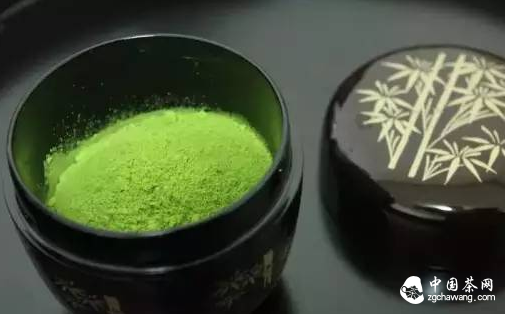
Matcha cake, matcha ice cream, matcha drinks... Because of their eye-pleasing color and refreshing taste, food lovers often pick matcha-flavored items first among a dazzling array of delicacies. However, many matcha foods on the market actually contain only green tea powder, and adding flavors and pigments has become an industry norm to ensure taste and color.
Green Tea Powder is Not Equal to Matcha
Powder ground from green tea can only be called green tea powder. Real matcha is not just about grinding; the process is much more complex. Its nutritional value far exceeds that of green tea, with an average price around 2000 yuan/jin, dozens of times higher than green tea powder. A cake costing a dozen yuan labeled 'contains pure matcha'? Don't be fooled; it wouldn't even cover the cost!
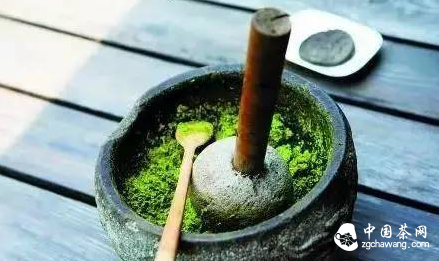
Currently, matcha production techniques are mainly concentrated in Japan, and the entire process is very meticulous. Tea tree varieties are introduced from Japan. To ensure the leaves' brightness and tenderness, the first shading treatment is done in spring when the tea leaves have grown one bud and two leaves. When the leaves grow to one bud and four or five leaves, they are harvested and undergo steam fixation (steaming to deactivate enzymes) on the same day. This is followed by multiple steps like cooling, roasting, and screening. Finally, the leaves are slowly ground by a stone mill at 60 revolutions per minute in a constant temperature of 19°C, producing the emerald green powder that is matcha.
In contrast, the raw material for green tea powder is basically ordinary roasted green tea (炒青), ground using metal crushers, invariably employing instant crushing methods.
The Difference Between Matcha and Green Tea Powder
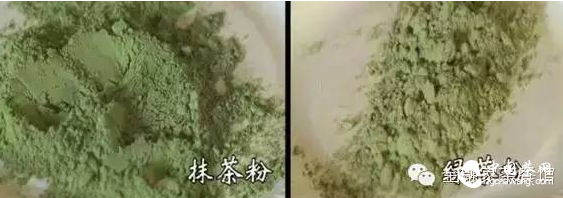
Color: Due to shading and steaming, matcha is deep green or墨绿 (dark green), while green tea powder is草绿 (grass green).
Taste: Matcha is not astringent and has little bitterness; green tea powder is slightly bitter and astringent.
Aroma: Matcha has seaweed or bamboo leaf (粽叶) aromas; green tea powder has a grassy scent.
Fineness: Matcha fineness reaches over 6000 mesh (2 micrometers). It can completely enter the pores when applied to the back of the hand. Green tea powder is around 100-300 mesh, much coarser than matcha.
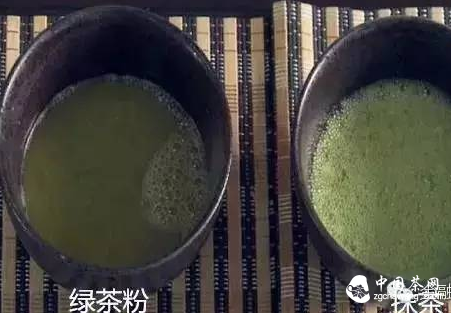
Foaming: Matcha is often whisked into a frothy drink. Compared to green tea powder, matcha particles are extremely fine, producing abundant foam and a bright color. Green tea powder, due to its much larger particles, produces very little foam.
Genuine matcha powder, when exposed to direct sunlight for half an hour, will noticeably fade in color, turning ashy like soil. In contrast, green tea powder with added pigments will not fade no matter how long it's sunned.
Bright Green Matcha Foods May Be Problematic
Tea research institutes have conducted experiments on adding matcha to foods. They found that whether using green tea powder or matcha, application in baked pastries, candies, and beverages is the most challenging, while use in ice cream, cold fresh milk, and cold noodles is relatively easier.
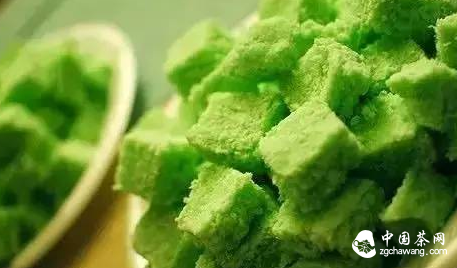
Green tea itself is a product prone to oxidation. After high-temperature baking, it turns yellowish and its aroma fades. During food processing, antioxidants like vitamins can be added to preserve color and prolong the natural oxidation process of green tea powder or matcha. However, even with color-preserving techniques, the anti-oxidation time is very limited.
When matcha or green tea powder is added to handmade noodles to make matcha cold noodles, although not subjected to high-temperature baking, the originally bright green noodles begin to turn yellow during the drying process, showing signs of natural oxidation. Therefore, in Japan, to extend shelf life, matcha is usually kept in a semi-finished form, i.e., as tea flakes, and only ground into powder when needed.