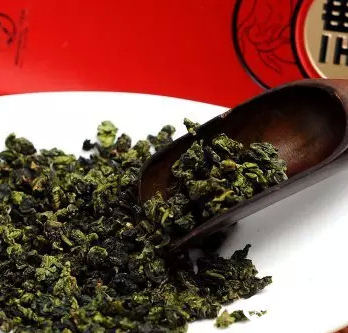
[The Broad Compatibility of Tieguanyin]
It can be lightly fermented, approaching the freshness of green tea; it can be moderately fermented, using traditional craftsmanship and charcoal roasting to find a warmth similar to Wuyi Rock Tea; it can undergo later fermentation, and with proper storage, develop the enduring, aged charm of vintage Pu-erh.
Tieguanyin production is strict and the craftsmanship is meticulous. It is harvested in four seasons a year: from Grain Rain to the Beginning of Summer (mid-late April to early May) for spring tea; from Summer Solstice to Slight Heat (mid-late June to early July) for summer tea; from the Beginning of Autumn to the End of Heat (early August to late August) for summer-autumn tea; and from the Autumn Equinox to Cold Dew (late September to early October) for autumn tea.
[Four Typical Characteristics of Tieguanyin]
1. The pure, red-hearted Tieguanyin tea bud is described as a 'red, crooked-tail peach'; 2. The Tieguanyin leaf surface has obvious raised veins and a smooth, glaze-like texture, with the leaf edge curling backward—characteristics not found in varieties like Benshan, Huangjingui, or Maoxie; 3. Tieguanyin leaves exhibit symmetrical structure up, down, left, and right; 4. In terms of aroma, Benshan often carries a tangerine peel scent, while Tieguanyin does not; in terms of liquor quality, other varieties' tea soup lacks the richness of Tieguanyin.
[Tieguanyin's 'Spring Water and Autumn Fragrance']
This means spring tea offers lingering charm and a subtle, elegant tea soup. Autumn tea boasts a high, distant aroma and a bold, expressive tea soup. The two can be said to have their own distinct features, like plum blossoms and white snow. Interestingly, most people prefer the rich aroma of autumn tea, while professional tea drinkers favor the delicate soup of spring tea.
[Basic Production Process of Tieguanyin]
Tieguanyin production is extremely refined, with the saying 'good to drink but hard to make.' It includes three parts: picking, primary processing, and refining. Picking requires mastering the picking period, standards, and techniques; primary processing requires proficiency in ten steps: sun-withering, indoor-withering, shaking/tumbling, pan-firing (kill-green), rolling, initial baking, wrap-rolling, re-baking, re-wrap-rolling, and final drying; refining involves six steps: sifting, sorting, blending, roasting, cooling, and packaging.
[What is Traditional Tieguanyin?]
Traditional Tieguanyin involves heavy sun-withering and light, multiple rounds of shaking/tumbling to promote even water loss and maintain the integrity of the tea leaves. The kill-green (pan-firing) is done the next morning.
[The Eight Basic Steps for Brewing Tieguanyin]
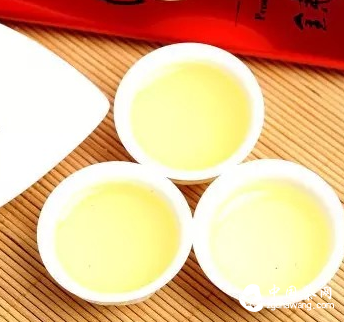
Brewing can be divided into eight steps according to its procedure: 1. White Crane Bathes (washing the cup) 2. Guanyin Enters the Palace (adding tea) 3. Pour from a High Pot (pouring water) 4. Spring Breeze Brushes the Face (skimming foam) 5. Lord Guan Patrols the City (pouring tea) 6. Han Xin Commands Troops (dripping the last drops) 7. Appreciate the Soup Color (observing the tea) 8. Sip the Sweet Dew (drinking the tea)
[Anxi Brewing Method for Tieguanyin]
Its characteristics emphasize aroma, sweetness, and purity. The tea soup is limited to nine infusions, with every three infusions as a stage. The first stage is to smell if the aroma is high, the second stage is to taste if the flavor is mellow, and the third stage is to observe the changes in the soup color. Hence there is a saying: infusions one, two, three—aroma is high; four, five, six—sweetness gradually increases; seven, eight, nine—taste the purity of the tea.
[How to Better Brew a Cup of Tieguanyin]
1. The filter should not be too fine. Not using one can result in a more fragrant aroma and better taste. 2. Lightly fermented Tieguanyin fears long steeping times; 1-minute or 3-minute steeps are for professional tea evaluation. 3. Rinsing the tea is for moistening and awakening the leaves; just let them slightly unfurl. 4. 'Spring water and autumn fragrance'—spring tea has better flavor, autumn tea has higher aroma. 5. For one serving of tea, the third and fourth infusions of light-fermentation Tieguanyin are the essence. 6. At least the first four infusions should not leave residual tea soup. Residual soup turns bitter and astringent.
[Tieguanyin Lid Aroma]
1. Types of lid aroma: First, what southern Fujian people often call 'Huangkou Xiang' (a robust, mouth-filling aroma); second, the elegant type of orchid fragrance, fragrant, elegant, and subtle like orchids; third, a light milky fragrance type. 2. The intensity of the lid aroma: Good Tieguanyin is not characterized by an overpoweringly high aroma; it is more often elegant, fragrant, and lasting like orchids. 3. The persistence of the lid aroma: Good tea can maintain a consistent lid aroma from start to finish.
[Why Do Most Tieguanyin Teas You See No Longer Have 'Green Leaves with Red Edges'?]
They mostly used to have green leaves with red edges. Now, lightly fermented Tieguanyin is popular. Tea drinkers, especially new enthusiasts, pursue a pleasing soup color and a clear, noticeable fragrance. Factory production, coupled with the market-driven addition of a 'de-edging' process to prevent the Tieguanyin soup from appearing 'reddish,' means most Tieguanyin leaves on the market have broken,残缺 edges, naturally without the red镶边.