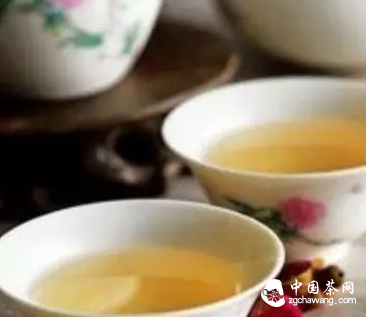
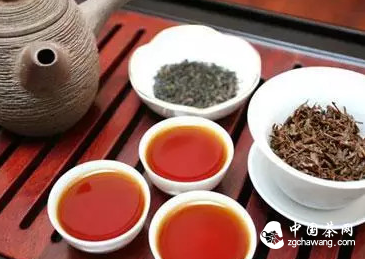
"Savoring" Pu-erh tea versus "drinking" Pu-erh tea—from a literal perspective, the former seems to carry more cultural connotations, evoking images of literati gathering to drink and converse; while drinking Pu-erh tea more readily brings to mind the scene of Granny Liu drinking tea at Miaoyu's residence after entering the Grand View Garden.
With this comparison, it becomes clear: "savoring" requires ample time and a certain mood, whereas "drinking" is more about life's necessities, about quenching thirst! Or, one could say the former pursues spiritual enjoyment, emphasizing the cultural depth and flavor nuances of Pu-erh tea, while the latter is more down-to-earth, more about the pursuit of daily life. Of course, this is a very perceptual view of the difference between "savoring" and "drinking" Pu-erh tea; perhaps different people will have different feelings.
To illustrate this point, one could roughly give this example: Why is there a distinction between "savoring" and "drinking" for Pu-erh tea, while no one says plain water needs to be "savored"? This is a matter of Pu-erh tea's inherent depth. Pu-erh tea contains many intrinsic qualities that require slow "savoring" to appreciate, whereas plain water only needs to be drunk—no matter how much you savor it, it still tastes the same, so there's no need to "savor" it. In other words, plain water only serves the function of quenching thirst and lacks the function of being "savored." Conversely, for those who drink Pu-erh tea, its thirst-quenching function is most important; they simply regard Pu-erh tea as a beverage to quench thirst.
Looking further, the character for "savor" (品) has three "mouths" (口), which can imply the following situations: 1. A person is very idle, with nothing to do, so idle that they have plenty of time to chat, talk, and converse—thus people might think they have three mouths, i.e., "three openings"; 2. Several people together, at least three, could have three mouths. Therefore, savoring Pu-erh tea might involve these scenarios: 1. Someone with ample time and little to do will sit down and slowly "savor"; 2. Several people sit together, savoring while talking!
As for "drinking" (喝) Pu-erh tea, by analogy, there is only one mouth. Next to the mouth is another component of the character meaning "thirst." This suggests that those who "drink" Pu-erh tea do so to quench thirst. They drink whenever they feel thirsty, unlike savoring, which requires either company or sufficient time. Think about it: in everyday life, common folks say "have a cup of tea," no one says "savor tea"—saying that might even invite ridicule from others.
Analyzing it this way, the difference between "savoring" Pu-erh tea and "drinking" Pu-erh tea seems quite clear and straightforward.