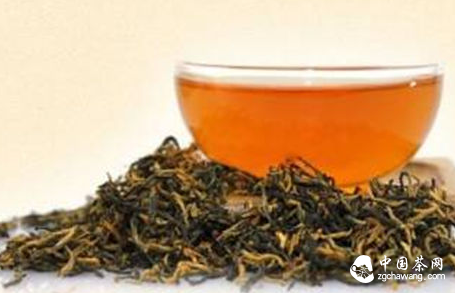
Maggu Tea
Shunde City Network Comprehensive News We are all familiar with famous teas like Black Tea and Green Tea, Pu'er Tea and Tieguanyin. But have you ever heard of Maggu Tea? With such a unique name, Maggu Tea must have its own origins and stories. Would you like to know how Maggu Tea came to be?
Why is it called Maggu Tea?
Since ancient times, Maggu Mountain has been listed among China's famous mountain ranges. "Records of Famous Mountains" once stated: "China has thirty-six Grotto-Heavens and seventy-two Blessed Spots, distributed across the nine regions and four seas. Only Maggu Mountain uniquely possesses both a Grotto-Heaven and a Blessed Spot, standing out magnificently in the southeast." Here, the mountains are majestic, with overlapping peaks, cascading waterfalls, swirling clouds and mist, numerous clear springs, and beautiful scenery. The mountain features scenic spots and historical sites such as Shengong Spring, Longmen Bridge, Danxia Cave Heaven, Xunzhen Temple, Banshan Pavilion, and Xiandu Pavilion. Throughout history, many renowned figures and scholars have gathered here.
During the Qin Dynasty, the great scholar Hua Ziqing came to the mountain to write books; in the Jin Dynasty, the medical scholar Ge Hong came here to refine elixirs; during the Tang Dynasty, the calligrapher Yan Zhenqing wrote the famous stele inscription "Record of the Maggu Immortal Altar" here; in the Ming Dynasty, the dramatist Tang Xianzu's teacher, Luo Rufang, founded the "Conggu Mountain Studio" here, and so on. Many wonderful tales are also recounted here. The legend of Maggu Tea's origin is particularly interesting. It is said that during the Eastern Han Dynasty, an immortal maiden named Maggu attained enlightenment here. She often picked tender tea leaves, drew upon the clear, sweet, and beautiful mineral-rich water from Shengong Spring, and brewed tea to entertain guests. The flavor of this tea was exceptionally fresh and fragrant. It was also used as a tribute for the Jasper Pool Banquet and the Peach Banquet to worship the Queen Mother of the West. The tea from Maggu Mountain has been called Immortal Tea since ancient times.