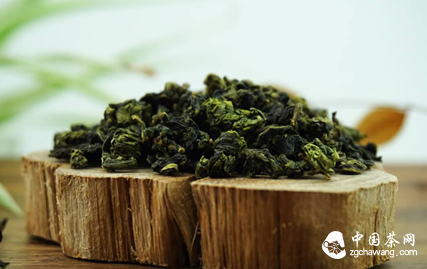
1. Zhengchao Tea: Kill-green (shaqing) is performed between 11-12 noon on the day after picking. The raw tea has tightly rolled strips, dark green and moist color, strong and high aroma with orchid fragrance, mellow taste with a slight astringency, clear 'Yin Yun' (rhyme), and golden-yellow liquor color.
2. Huiqing Method: Kill-green is performed between 3-6 PM on the day after picking. The raw tea has tightly rolled strips, green and moist color, strong and high aroma, pure and mellow taste, clear 'Yin Yun', with peanut and sweet-sour notes, but the taste is somewhat lighter. The liquor color is golden-green-yellow.
3. Xiaoqing Method: Kill-green is performed between 10 PM-12 AM on the day after picking. The raw tea has relatively tightly rolled strips, dark green color, high aroma, relatively pure taste with 'Yin Yun', sweet-sour notes, and yellow or deep golden-yellow liquor.
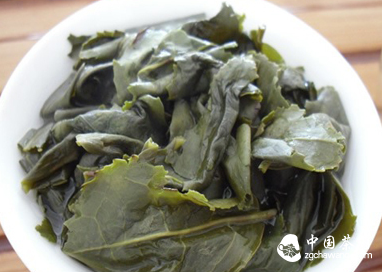
4. Tuobu Method: Kill-green is performed between 6-10 AM on the third day after picking. The raw tea has a slightly less heavy and tight appearance, dark green color, relatively high but not entirely pure aroma, light 'Yin Yun', mellow taste with a strong sour/fermented note. If steeped for a long time, the liquor turns orange-yellow, and the brewed leaves are stiff and dark green.
Among them, Zhengchao is the closest to traditional craftsmanship, and Tuobu is the most common:
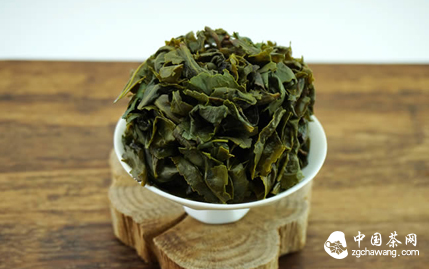
Zhengchao Method: The Zhengchao method basically follows the traditional Tieguanyin production process. It involves more shaking (yaoqing) and less spreading/cooling (tanliang) to allow the tea leaves to fully complete the 'water removal' (zoushui) process, followed by timely kill-green. Hence it's called 'Proper Roasting.' Tea made with the Zhengchao method exhibits traditional Tieguanyin characteristics: the dry leaves show a distinct sandy green color; due to sufficient water removal, the liquor is yellow-green, bright, and translucent; the taste is smooth, lively, and thick. High-grade tea has a rich floral and fruity aroma, pronounced 'Guanyin Yun' (rhyme), a sweet aftertaste, and lingering fragrance; the brewed leaves are yellow-green, glossy, and soft. Most Anxi tea farmers keep this type of tea for their own consumption. Therefore, Zhengchao Tieguanyin suits tea drinkers with some experience and is also suitable for tea competitions. The Zhengchao method involves more shaking and less spreading. The shaking time is long, and the resting/cooling time is short, commonly referred to as 'water removal.' The first shaking usually lasts 2-3 minutes, the second 5-10 minutes, and the third shaking should be appropriately controlled, ranging from 5-10 minutes to 20-60 minutes. Of course, this is not absolute and should vary according to weather and production conditions. The interval between each shaking is about 1 hour. The third shaking should continue until the grassy smell of the leaves basically disappears and a subtle floral/fruity fragrance emerges. For tea leaves processed with the Zhengchao method, the time from completing the shaking to kill-green must not exceed noon of the following day.
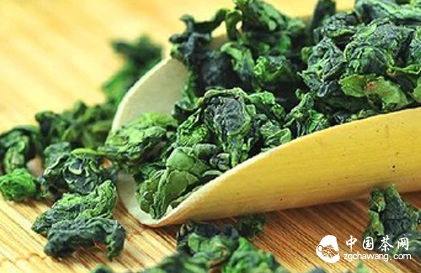
Tuobu Method: Why is it called 'Tuo' (delay)? It's because when the green leaves reach the normal time for kill-green, they haven't fully met the requirements for the 'making green' (zuoqing) process. Therefore, additional time beyond the norm is needed to continue the 'making green' process, hence the term 'delay.' Failure to complete the process is due to influences like weather and climate. Gradually, this style of tea formed. To 'delay,' air conditioning and dehumidifiers are needed to complete the process. Thus, it involves less shaking and more resting, not removing water through shaking but through static water loss. This gives rise to 'Tuoqing' (delayed green) and 'Tuosuan' (delayed sour) tea products. When done well, this process yields a refreshing green fragrance and sour fragrance or clean sour taste, but it largely lacks the 'Yin Yun' of Tieguanyin. When poorly made, it has a harsh, raw grassy smell, a stuffy green smell, or a foul, stuffy sour smell. Because water removal is insufficient and fermentation is low, this type of tea requires quick brewing; otherwise, the liquor appears turbid green, and the taste has a noticeable grassy astringency. Similarly, due to insufficient water removal and low fermentation, the brewed leaves of this tea are green or dark green, the leaf surface is stiff, and the green taste is evident. However, the dry leaves of this tea are emerald green and have a strong, captivating aroma when the lid is opened, easily attracting tea drinkers new to Tieguanyin. The Tuobu method involves less shaking and more spreading: short shaking times and long resting/cooling times, commonly called 'water loss.' The first shaking lasts about 2 minutes, the second 2-3 minutes, and the third about 3-5 minutes. After the third shaking, the processed leaves are placed in an air-conditioned room and left to rest until the afternoon of the next day or later, only starting kill-green after the raw grassy smell completely disappears. Because the resting time for the leaves is long, and kill-green is delayed until the evening of the second day, it's called Tuobu, also known as Tuoqing.
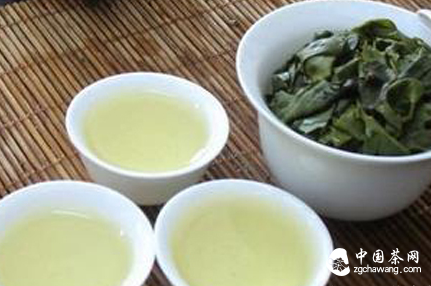
There is another popular classification based on sourness: Tuo (Wai) Suan (Delayed/Off Sour) and Zheng Suan (Proper Sour).
Anxi tea farmers have two descriptions for 'sour':
First, Wai Suan (Off Sour): During the shaking and resting stages, if the maker uses delaying (tuoqing) and stifling (menqing) techniques, it can produce 'sourness'; between rolling and baking, if the tea balls wrapped in cloth are left to rest and the timing is not well controlled, it can produce 'sourness'; in south wind weather, when it's humid and sultry, hindering water dissipation from the leaves, it can also produce 'sourness.' In fact, the formation of 'sourness' can occur throughout the entire process if the fermentation control of the green leaves is improper. This 'sour' taste is actually a spoiled flavor mistakenly recognized as sourness. 'Tuo Suan' is a type of tea that has appeared in the Tieguanyin market in recent years, with a taste completely different from traditional ones. It is lightly fermented, and the interval from picking to kill-green is much longer than traditional Tieguanyin, resulting in an intense taste. Initially, 'Tuo Suan' appeared when tea farmers made Tieguanyin and, due to mistakes or delays, accidentally produced 'Tuo Suan' tea. Unexpectedly, this tea was well-received when introduced to the market, and demand was high. Thus, tea farmers specializing in producing 'Tuo Suan' tea emerged. 'Tuo Suan' tea has a stronger taste, providing stronger stimulation to the nerves. Many people, due to staying up late, drinking alcohol, or smoking, have dulled taste buds. They may feel traditional, properly made tea has no flavor, and only by drinking 'Tuo Suan' tea do they get a sensation.
Second, Zheng Suan (Proper Sour): The 'proper sourness' produced by traditional Tieguanyin is greatly related to the weather, proper production, and the inherent quality of the tea leaves themselves. 'Observe the leaves to make the tea' (kanqing zuoqing) means adjusting the intensity of 'making green' according to the changes in water removal of the leaves, controlling the degree of fermentation; the suitability of the tea's growing environment; and the appropriate temperature and humidity during production. Only the harmonious unity of 'heaven, earth, and man' can produce a superb Tieguanyin! Tea with proper sourness is very rare.
Terms like Qinghuang Suan (Green Imperial Sour), Zheng Suan (Proper Sour), and Qing Suan (Green Sour) are also 'terms of praise' used by tea farmers for high-quality Tieguanyin. They are not found in books but are often heard in tea regions. In fact, these terms affirm high-grade Tieguanyin made with traditional, proper methods, generally high-grade tea made with the Xiaoqing method (rarely appearing with other methods). The names are different, but the meaning is the same. Tea that can achieve Zheng Suan or Qing Suan has impeccable raw materials, craftsmanship, and weather conditions. The so-called 'sour' is actually a sensory manifestation of a special flavor when the Tieguanyin rhyme reaches its peak. For such sour Tieguanyin, after several infusions, a floral rhyme usually appears, and finally, a pronounced Guanyin rhyme emerges. This indicates that the sour taste in the first few brews is a concentration of the Guanyin rhyme, the essence, and a sign of the highest grade of Tieguanyin. Other abnormal sourness is characterized by a single, monotonous note without fragrance or rhyme. It's just a singular 'sour' from start to finish, with a smooth, flat, unchanging tea liquor. This is Wai Suan, tea that cannot be considered high-quality.
The Qinghuang (Green Imperial) taste is also what is called 'Huangkou Xiang' (Imperial Mouth Fragrance) in the Southern Min dialect. It is also the taste of the rhyme. It is a flavor where floral and sour-fruity aromas are well blended! Because it smells sour, many who don't understand tea mistake it for Wai Suan, i.e., Tuo Suan! When this type of tea is well-made, it has a refreshing green fragrance and sour fragrance or clean sour taste. When poorly made, it has a harsh, raw grassy smell, a stuffy green smell, or a foul, stuffy sour smell! Because water removal is not thorough and fermentation is low in this tea, even if it seems high, it's falsely high. Therefore, this type of tea requires quick brewing; otherwise, the liquor color tends to be dark and the taste astringent and bitter! This tea has a strong, captivating aroma when the lid is opened, easily attracting those new to Tieguanyin! This type of tea is extremely不耐放 (不耐储存,不耐放). Under natural conditions, its fragrance and flavor completely disappear in less than a month. It is generally stored frozen in refrigerators!