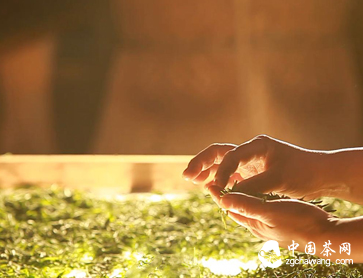
More Smothering, Less Tossing Makes Good Tea
The fixing, rolling, and drying processes of yellow tea are similar to those of green tea. Its most important step is the 'menhuang' (smothering and yellowing) process, which is key to forming the characteristics of yellow tea. The main method involves wrapping the fixed and rolled tea leaves in paper or piling them up and covering them with a damp cloth for periods ranging from tens of minutes to several hours. This promotes non-enzymatic autoxidation of the tea under hydrothermal conditions, resulting in the yellow color.
The temperature of the fixing wok is lower than that for green tea, generally between 120°C and 150°C. The fixing employs more smothering and less tossing, creating high-temperature, humid conditions. This causes more chlorophyll to be destroyed, deactivates polyphenol oxidase and peroxidase, and allows polyphenolic compounds to undergo autoxidation and isomerization under humid heat. Starch hydrolyzes into monosaccharides, and proteins decompose into amino acids, all creating conditions for the mellow taste and yellow color of yellow tea. The 'menhuang' process is the key step in forming the quality of yellow tea. Depending on when the smothering occurs for different yellow teas, it is divided into wet-pile smothering and dry-pile smothering.
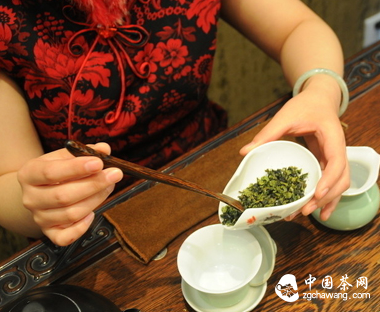
Wet-pile smothering involves piling the leaves after fixing or after hot rolling to induce yellowing. Due to the high moisture content of the leaves, the change occurs quickly. For Weishan Maojian, hot piling after fixing for 6-8 hours can cause yellowing. For Pingyang Huangtang, after fixing, rapid and heavy rolling while hot is followed by piling in a bamboo basket for 1-2 hours to turn yellow. For Beigang Maojian, after stir-frying and rolling, covering with cotton cloth for half an hour, commonly known as "sweating," promotes yellowing.
Dry-pile smothering, due to less moisture, changes more slowly, and the yellowing time is longer. For example, Junshan Silver Needle is initially dried to 60-70% dryness, piled for 40-48 hours for initial yellowing, then dried to 80% dryness, and piled again for 24 hours to meet the yellowing requirements. Huangda Tea is initially dried to 70-80% dryness, then while hot, packed into tall, narrow-mouthed bamboo baskets for piling, placed in a drying room for 5-7 days to promote yellowing. Huoshan Huangya needs to be dried to 70% dryness and piled for 1-2 days to turn yellow.
In summary, although the piling and yellowing times and methods vary for different types of yellow tea, the process is essentially one of 'menhuang' (smothering), which is the特殊性 of yellow tea production.
During the 'menhuang' process, due to the hydrothermal effect, the total amount of polyphenolic compounds decreases significantly, especially C-EGCG and L-EGC. Due to the autoxidation and isomerization of these ester-type catechins, the bitter and astringent taste of polyphenolic compounds is altered, forming the unique golden color and mellower flavor of yellow tea compared to green tea.
Yellow Tea Evaluation Has Its Techniques
Due to differences in varieties and processing techniques, the shapes of yellow teas vary noticeably. For example, Junshan Silver Needle is better if it resembles needles, with plump buds covered in fine hairs; thin, flat buds with few hairs are inferior. Mengding Huangya is superior if the strips are flat and straight with many hairy buds; curved strips with thin, less hairy buds are inferior. Luyuan Tea is better if the strips are tightly curled into rings and show fine hairs; loose, straight strips without fine hairs are inferior.
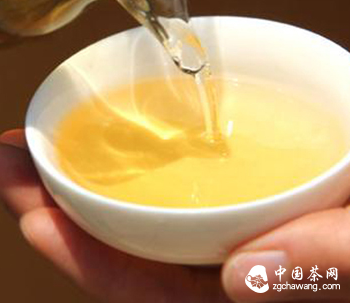
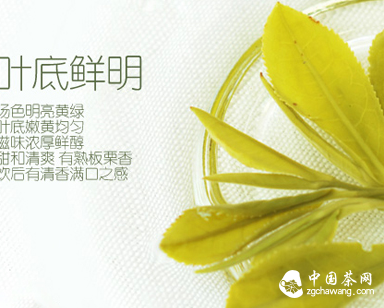
In terms of color and aroma, a bright, fresh golden-yellow is excellent, while a dull, dark color is poor. Cleanliness is evaluated based on the content of stems, flakes, dust, and non-tea impurities. For Huangda Tea, the dry aroma is better if the roasting is sufficient with a baked rice aroma; insufficient roasting is secondary, and a dull, stuffy or coarse green odor is poor. The infused liquor color is better if it's a bright yellow soup; a dull, dark, or turbid yellow is secondary. The aroma is better if it's clear and pleasant; stuffy and turbid odors are poor. The taste is better if it's mellow, fresh, smooth, sweet with a lingering aftertaste, and low astringency; bitter, astringent, bland, or stuffy tastes are inferior. The infused leaves are better if the buds and leaves are plump, even, and bright yellow; thin, dark yellow buds and leaves are inferior.
Teaware for Brewing Should Be Particular
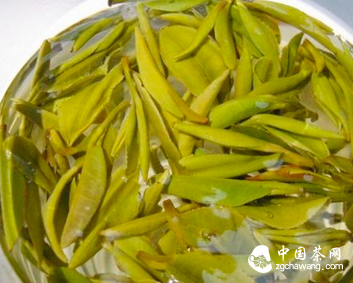
Use a glass cup or a lidded bowl (gaiwan). A glass cup is especially best for brewing Junshan Silver Needle, allowing one to appreciate the spectacle of the tea leaves resembling bamboo shoots breaking through the soil, slowly rising and falling, piling green upon green, with the wonderful and interesting view of "three rises and three falls."
Place one-quarter of the tea leaves relative to the capacity of the teaware. The water temperature is best kept around 85°C. The first infusion is for 30 seconds, followed by the second and third infusions for 60 seconds and 2 minutes respectively.
Small Yellow Tea, Great Effects
Yellow tea is a fermented (piled) tea. During the fermentation process, it produces a large amount of digestive enzymes, which are most beneficial for the spleen and stomach. Indigestion, poor appetite, lethargy, and obesity can all be alleviated by drinking it. Wenzhou Huangtang can better exert the original functions of yellow tea. Wenzhou Huangtang can more effectively penetrate fat cells, allowing fat cells to restore metabolic function under the action of digestive enzymes and break down fat.
Yellow tea is rich in nutrients such as tea polyphenols, amino acids, soluble sugars, and vitamins, and has a significant effect in preventing esophageal cancer. Yellow tea retains over 85% of the natural substances in fresh leaves. These substances have special effects in preventing cancer, fighting cancer, sterilizing, and reducing inflammation, surpassing other types of tea.