Chinese tea culture boasts a long and profound history, with every tea drinker holding their own understanding of tea.
Living in China is a great fortune, allowing one to enjoy natural, high-quality tea daily.
Tea is truly wonderful; if we treat her earnestly, she will care for us doubly in return.
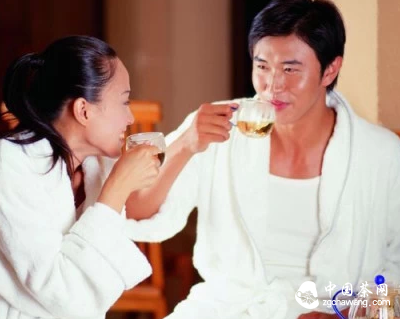
Tea serves all, from the imperial nobility to the common people.
"Nowadays, increasingly expensive teas not only meet people's demand for taste but also serve as a symbol of status," said Zhao Yingli, a renowned Chinese tea scholar.
Quality mainly refers to the tea's origin and variety. For example, Tieguanyin originally from Anxi is relatively expensive; even within Anxi, Tieguanyin from inner Anxi (higher altitude, often shrouded in clouds) typically costs more than that from outer Anxi.
Another example: Longjing tea from Hangzhou is pricier than Longjing from other regions; Longjing from Hangzhou's Shifeng Mountain is more expensive than other Hangzhou Longjing, with the "Eighteen Trees" Longjing being the aristocrat among Longjing teas.
Wang Qing, Vice President of the China Tea Marketing Association, believes: "Ordinary people don't need to buy such high-end tea; they can choose based on personal financial capability and taste preferences."
Tea can be for drinking, savoring, or contemplation.
We often speak of two kinds of tea: one is the tea in "firewood, rice, oil, salt, sauce, vinegar, and tea," and the other is the tea in "lute, chess, calligraphy, painting, poetry, wine, and tea." The first kind meets people's needs for "nourishing the body," such as quenching thirst, refreshing, reducing internal heat, or aiding digestion; the second kind can satisfy needs for "nourishing the heart," such as expressing emotion, observing rituals, or seeking enlightenment.
Zhao Yingli noted that tea's greatest value for people lies primarily in nurturing the heart, with physical nourishment being secondary. "Especially for middle-aged people, who are busy and stressed, they should give themselves some time to patiently brew and savor a pot of tea. When agitated, one easily makes wrong decisions; it's better to slowly enjoy a pot of tea before deciding."
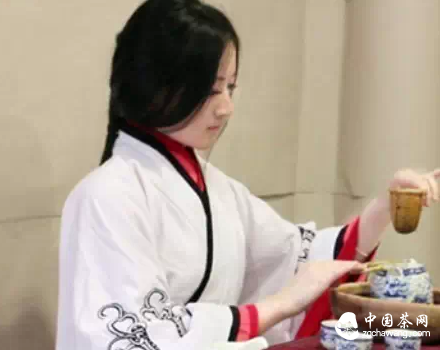
How to Drink Tea Correctly? Choose Tea According to Your Constitution
To preserve health through tea drinking, one must understand tea. Han Chi, a researcher at the Nutrition and Food Safety Institute of the Chinese Center for Disease Control and Prevention, said: "Each type of tea has different properties; one must choose tea suitable for oneself."
Select Tea by Type
Different types of Tieguanyin have different tea natures, allowing people to choose what suits them.
Zhengchao (Traditional Roast): Dry leaves appear dark, dull, and less vibrant, visually less appealing. Usually, the lid aroma of Zhengchao tea is not easily noticeable; even top-grade Zhengchao often has a subtle lid scent in the first brew, clearer in the second, and strongest in the third—a style with lingering aftertaste. However, in terms of aroma, Zhengchao often exhibits a subtle fragrance, generally less intense than Xiaqing tea. The tea soup aroma is also relatively elegant and understated.
Xiaoqing (Light Green): Dry leaves usually appear dark green with high vibrancy, visually appealing. Xiaoqing tea has a clear lid aroma; top-grade Xiaoqing may have a bold or subtle style, but it's easily perceptible—excellent ones have elegant aromas. However, in recent years, extremely sharp and overpowering lid aromas have become rare; the highest-grade teas encountered have extremely delicate, penetrating aromas. Such teas are very uncommon and not recommended for pursuit. Overall, Xiaoqing tea easily achieves clear, high lid aroma, making it most acceptable to tea drinkers.
Tuosuan (Sour Style): Dry leaves mostly appear green, with generally high vibrancy, visually not very different from Xiaoqing tea, making it hard to distinguish externally. Rinsing and smelling the leaves reveals obvious sourness; Tuosuan tea typically has a distinct "dragged" flavor. This type has fatal flaws, and its processing method holds no value for preservation.
Select Tea by Season
Tieguanyin is said to have "spring water and autumn fragrance." Spring tea offers better soup color and taste, while autumn tea has a high, lingering aroma, leaving a lasting impression! Summer, hot-season, and winter Tieguanyin are of lesser quality. There's no inherent superiority; it's a matter of personal taste. As long as it feels comfortable, both spring and autumn teas are fine.
Spring tea has the best soup taste among teas produced in different seasons, known as "spring water." It emphasizes freshness and sweet, refreshing soup, with a clear aroma, smooth and delicate soup, and a relatively light, less robust taste. During the spring tea growing season, the climate is mild with ample rainfall. After winter and spring growth, tea plants store abundant nutrients, young leaves have good stability, polyphenol content is suitable, and amino acids and pectin are plentiful. Thus, spring tea has a golden or orange-yellow soup color, a slightly bitter taste that turns sweet after bitterness, a strong and lasting aroma, and a mellow, sweet, fresh flavor.
Autumn tea has a high, sharp aroma, known as "autumn fragrance." It emphasizes "yun" (charm), with a rich aroma, flavorful taste, and good sweet aftertaste, though lacking some vibrancy. Autumn tea grows in cool, clear weather with long sunshine; temperatures transition from warm to cool, favoring the formation and accumulation of aromatic substances. Also, due to lower temperatures during processing, tea farmers can more actively and reasonably adjust oxidation techniques. Thus, although autumn tea has small buds and thin leaves, slender strips, it shows emerald green color, slightly golden soup, exceptionally high aroma, clear and brisk fragrance, and a pure but slightly coarse entry.
Summer and hot-season teas, due to high temperatures, low humidity, significant changes in soil conditions, and quick moisture loss from leaves, result in less nutrient supply to tea plants, smaller leaves, and teas that are short, hard, and stiff in appearance, with low aroma and rough, astringent taste.
Incorrect Drinking Methods Harm Nutrition
Regarding the biggest "mistake" in modern tea drinking, Zhao Yingli warns that steeping tea all day in a large cup with a handful of leaves is most inadvisable. This way, one cannot taste the tea's true flavor, and long steeping may lead to the leaching of heavy metals, harming health. Tea drinking must separate tea leaves from water; even without professional tea ware, one can use a teapot or cup with a strainer.
Additionally, "not rinsing new tea, not discarding leftover tea, and not cleaning tea stains" are common errors. Whether tender new tea or precious aged tea, surfaces may have pesticide residues or dust mite contamination; it's best to "rinse" by discarding the first infusion. Some people avoid cleaning tea stains from pots, thinking it nurtures the pot. In fact, tea stains are not only unhealthy but also affect the tea's taste.