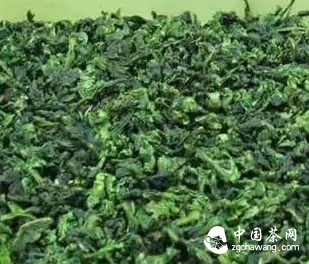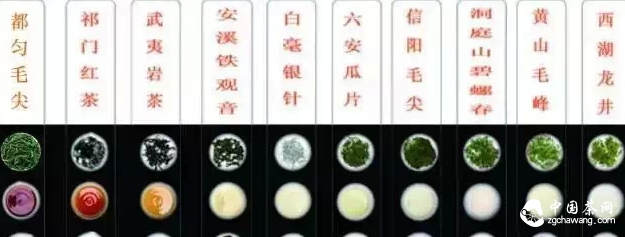
In recent years, as people have grown increasingly fond of tea leaves, many counterfeit products have emerged among the top ten famous teas. So, how can one identify the authenticity of these top ten teas? The following introduces the main characteristics and methods for identifying counterfeits of these ten famous teas.
1. Dongting Biluochun
Produced in Dongting Mountain, Biluo Peak, Taihu Lake, Wuxian County, Jiangsu Province. It features silvery buds, one bud and one leaf, with a total length of 1.5 cm. There are 58,000 to 70,000 buds per 500 grams. The buds are curly with white hairs, and the leaves are curly and bluish-green. The infused leaves are tender, even, and bright. Counterfeits often have one bud and two leaves, uneven bud and leaf lengths, and appear yellow.
2. Duyun Maojian
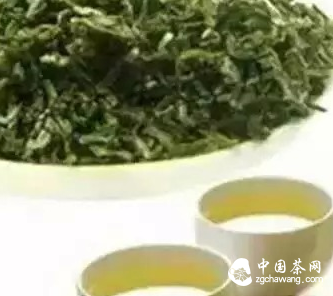
Produced in Duyun County, Guizhou Province. The tea leaves are tender green, even, small, short, and thin, with one bud and one leaf just unfolding, resembling sparrow tongues, 2 to 2.5 cm long. The appearance is tightly thin, curly, with visible fine hairs, and a green, moist color. The intrinsic aroma is fresh, tender, and sweet. The liquor is clear, and the infused leaves are evenly tender green. Counterfeit tea leaves have uneven infused leaves and a bitter taste.
3. Xinyang Maojian
Produced in Cheyun Mountain, Xinyang, Henan Province. Its appearance is tightly thin, round, glossy, straight, with a silvery-green hue hinting at jade green. The intrinsic aroma is fresh. The infused leaves are evenly tender green, typically with one bud and one leaf or one bud and two leaves. Counterfeits are curly in shape with yellowish leaves.
4. West Lake Longjing
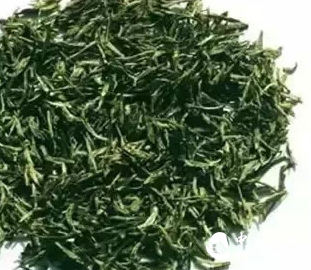
Produced in the West Lake area of Hangzhou, Zhejiang Province. The tea leaves are flat-shaped, tender, neatly striped, uniform in width, greenish-yellow in color, and smooth to the touch, with one bud and one leaf or two leaves; the bud is longer than the leaf, generally under 3 cm. The buds and leaves are evenly formed into small, delicate clusters without stems or fragments. Longjing tea has a clear fragrance, while counterfeit Longjing tea often has a grassy smell, more stems, and is not smooth to the touch.
5. Junshan Yinzhen
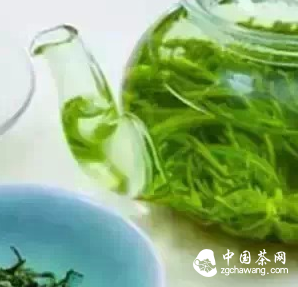
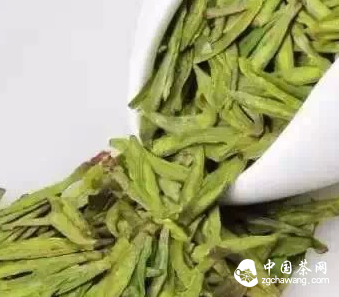
Produced in Junshan, Yueyang, Hunan Province. Made from unopened, plump, tender bud heads. The bud heads are stout, straight, even, covered with fine hairs, and have a golden, bright color. The aroma is fresh, the tea liquor is light yellow, and the taste is sweet and refreshing. When brewed, the bud tips appear to rush towards the water surface, stand upright suspended, then slowly sink to the bottom of the cup, resembling fresh bamboo shoots emerging from the soil or silver knives standing upright. Counterfeit Yinzhen has a grassy smell, and the buds do not stand upright after brewing.
6. Huangshan Maofeng
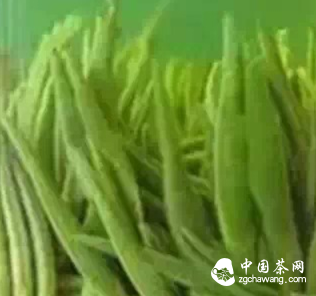
Produced in Huangshan, She County, Anhui Province. Its appearance is tender, slightly curly, with plump, even buds showing fine hairs, somewhat resembling sparrow tongues. The leaves are golden-yellow; the color is tender green, oily, and moist. The aroma is fresh, the liquor is clear, apricot-yellow, bright, the taste is mellow and sweet with a lingering aftertaste. The infused leaves show buds and leaves forming clusters, thick and bright. Counterfeit tea appears earthy yellow, tastes bitter, and the infused leaves do not form clusters.
7. Wuyi Rock Tea
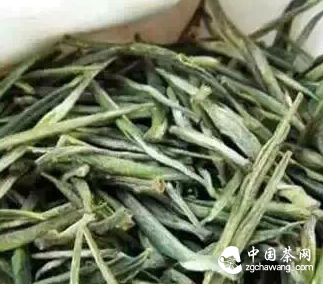
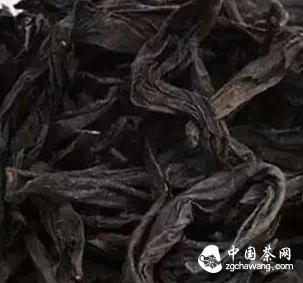
Produced in Chong'an County, Fujian Province. The appearance features stout, tightly knit, even strips with a twisted strip shape, commonly called "dragonfly head." The back of the leaf has frog skin-like granular texture, commonly called "toad back." The intrinsic aroma is rich and lasting, the taste is mellow, bitter-sweet, smooth, and refreshing. The liquor is orange-yellow, clear, and beautiful. The infused leaves are even and bright, with crimson edges or red spots, the central leaf flesh is yellow-green, and the veins are light yellow. It can withstand 6 to 8 or more infusions. Counterfeit tea starts bland, lacks depth, and has a dull color.
8. Qimen Black Tea
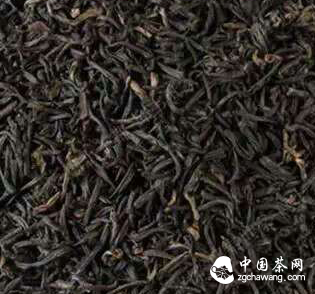
Produced in Qimen County, Anhui Province. The tea color is棕红色 (brownish-red), cut to 0.6 to 0.8 cm. The taste is rich, strong, mellow, and fresh. Counterfeit tea often contains artificial pigments, tastes bitter and astringent, is thin in flavor, and the leaf strips are uneven in shape.
9. Liuan Guapian
Produced in Qiyun Mountain, Liuan and Jinzhai counties, Anhui Province. Its appearance is flat, each piece without buds or stems, the leaves are green and glossy, slightly overlapping upwards, resembling melon seeds. The intrinsic aroma is fresh and high, the water color is jade green, the taste is sweet with a lingering aftertaste, and the infused leaves are thick, bright, and clear. Counterfeits taste more bitter and are比较黄 (more yellow in color).
10. Anxi Tieguanyin
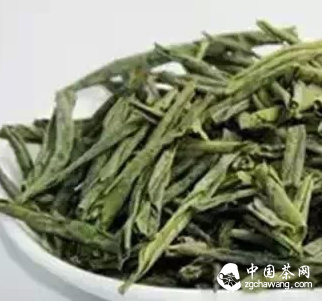
Produced in Anxi County, Fujian Province. The leaf body is heavy as iron, beautiful as the Goddess of Mercy (Guanyin), mostly spiral-shaped, with a sandy green, glossy color and a natural orchid fragrance. The liquor is clear and golden-yellow, the taste is mellow, sweet, and beautiful, slightly bitter upon entry but immediately turning sweet, and it withstands multiple infusions. The infused leaves unfold, showing green with red edges, plump and bright, with each tea cluster attached to a stem. Counterfeit tea leaves are long and thin, the strips are coarser, lack the green and red edges, and lose their fragrance after three infusions.