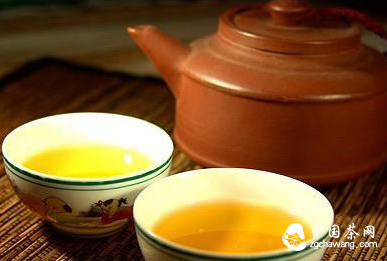
Are you familiar with Oolong tea?
Compared to green tea, which term do you hear more often between these two names?
In fact, Oolong tea and green tea are the same; another name for Oolong tea is green tea. Below, the tea expert will guide you through understanding Oolong tea from three aspects: its origin, aroma types, and purchasing standards, to see what kind of tea Oolong tea is.
1. Origin of Oolong Tea Oolong tea's predecessor was Beiyuan tea, the earliest tribute tea in Fujian Province, with a history of over a thousand years. Rather than asking where Oolong tea originates, it is more appropriate to ask where various types of Oolong tea come from. As everyone knows, there are many varieties of Oolong tea, and its origins are quite extensive. If a specific answer is required, the tea expert must tell you that Oolong tea最早 originated in Fujian Province. Currently, there are three main types of Oolong tea: Fujian Oolong, Guangdong Oolong, and Taiwanese Oolong. Main Origin of Oolong Tea—Fujian Province
Taking Da Hong Pao as an example from Fujian Province, Da Hong Pao is a type of Oolong tea and can be considered a treasure. It is produced in Wuyi Mountain, Fujian Province. Wuyi Mountain is not only known for its beautiful scenery but also for producing极品 tea leaves. Da Hong Pao is known for its durability in brewing, retaining its osmanthus fragrance even after multiple infusions, deserving the title of "King of Tea." Main Origin of Oolong Tea—Guangdong Province
Fenghuang Dancong is produced in Chaozhou, Guangdong, and can be considered a representative of Guangdong Oolong tea. Fenghuang Dancong is famous for its elegant appearance, rich aroma, and refreshing taste. It is also durable in brewing. The aroma is持久, with a slightly bitter入口, but offers endless回味. Its pleasant and unique fragrance is long-lasting and unforgettable. Main Origin of Oolong Tea—Taiwan
"Oriental Beauty" refers to Dongding Oolong tea produced in Lugu Township, Taiwan. It was移植 from Wuyi Mountain in Fujian Province to Taiwan and developed there. Its外形 is hemispherical with整齐条索. After brewing, the汤色 is relatively bright, and the aroma resembles osmanthus fragrance. 2. Four Aroma Types of Oolong Tea It is said that Tie Guan Yin has aroma types, but Oolong tea also has them. The aroma types of Oolong tea are categorized based on the quality of their fragrance: delicate floral-fruity, floral-fruity, aged-fire, and aged-fire coarse. Below, the tea expert will briefly explain the characteristics of these four aroma types. Oolong Tea Aroma Type One: Delicate Floral-Fruity
This is one of the better varieties among Oolong teas. The茶香 of this type resembles peach or orchid fragrance. The茶味 is smooth,细腻, and elegant. Oolong Tea Aroma Type Two: Floral-Fruity
Compared to the first aroma type, although it has the清香 of peach, the茶味 is not鲜爽 and smooth with a细腻 feeling. It belongs to the second category of Oolong tea. Oolong Tea Aroma Type Three: Aged-Fire
This type of tea belongs to the third category of Oolong tea. Although the tea leaves of the aged-fire aroma type are not very coarse, the茶香味 appears relatively厚重. Oolong Tea Aroma Type Four: Aged-Fire Coarse
Its quality is the lowest among Oolong teas. Although it undergoes high-temperature roasting, it cannot completely remove the coarse flavor. 3. Purchasing Standards for Oolong Tea We also know that in today's society, many things are of inferior quality冒充 good ones, and tea is no exception. So, what aspects should be paid attention to when purchasing Oolong tea, and what技巧 are there for buying Oolong tea? Purchasing Standard One: Tenderness and Color
The tenderness of tea leaves is very important. When purchasing, check the tenderness of the tea leaves. The color of the tea leaves is also important, as the quality of processing technology can be reflected in the color. Purchasing Standard Two: Aroma
We can also judge the quality of Oolong tea leaves from their aroma. Place the tea leaves in your hand and闻 the茶香 to see how the fragrance is. If the tea leaves have a醇香 and持久 aroma, it indicates good tea. If there are other异味, it is not good tea. Be careful when purchasing. Purchasing Standard Three: Appearance
The appearance of tea leaves is relatively easy to辨别 the quality of tea. Good tea leaves are relatively uniform in外形规格, whether in length, size, or shape, generally consistent. If不一致, it indicates混合物 and is not good tea. Purchasing Standard Four: Brewing
Brewing can also be used to judge the quality of a tea. Good tea can be judged by the color and aroma of the茶汤. At the same time, tasting it yourself can easily determine the quality of the tea leaves.