From the historical development of the six basic tea categories, China is the homeland and origin of tea, and also the earliest creator of various tea types with 'different degrees of fermentation.' At least before 1600 AD, Chinese ancestors mastered the methods of fermenting tea, but they 'did not know the reason why.' In other words, Chinese ancestors could produce tea, even excellent tea, without necessarily understanding the true meaning of 'tea fermentation.'
The broad definition of tea fermentation generally refers to the primary reaction where the oxidation of catechins (forming color and taste) drives the oxidative breakdown of 'unsaturated fatty acids' and 'amino acids,' forming aromas and many other known and unknown chemical reactions.
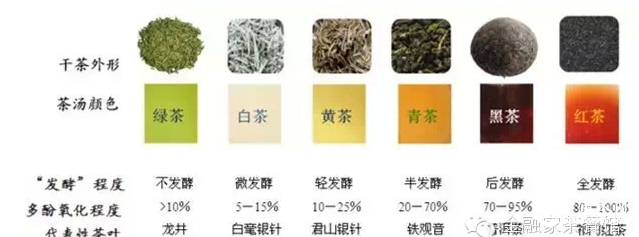
Scientifically defining fermentation degree is rarely or almost never used in Western literature. Terms like Wenshan Baozhong tea having a 10-20% fermentation degree, Baihao Oolong tea 50-60%, Tieguanyin tea or Dongding tea 15-30%, and White tea <10% are of very limited and debatable significance. This definition最早 appeared in Taiwan and is not cited in Western literature. Such a definition is for explanatory convenience, using terminology for laypeople, not a very scientific definition.
Generally, fermentation affects fresh tea leaves in the following ways:
Color Change
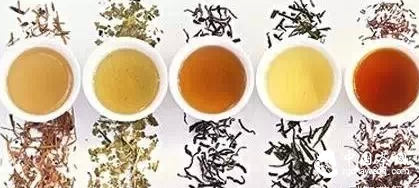
Unfermented tea leaves are green. After fermentation, they turn reddish. The more fermentation, the redder the color becomes. Both the leaves themselves and the brewed tea liquor exhibit this color change. Therefore, by observing whether the tea liquor color leans green or red, we can gauge the tea's fermentation degree.
Aroma Change
Unfermented tea has a vegetal aroma. Light fermentation, around 20%, transforms it into a floral aroma. Slightly heavier fermentation, around 30%, turns it into a nutty aroma. Even heavier fermentation, around 60%, results in a ripe fruity aroma. Complete fermentation yields a sugary aroma.
Taste Change
The less fermented the tea, the closer it is to the flavor of the natural plant. The more fermented it is, the further it moves from the natural plant's flavor.
Given the effects of fermentation on fresh leaves, the rest depends on the tea maker's intention. If aiming for a flavor closest to the natural plant, then prevent fermentation, resulting in green tea, vegetal tea, known in the market as 'Green Tea.'
If one prefers less greenness and desires some change, allow light fermentation, e.g., 20%. This produces tea liquor that is greenish-yellow, with a floral aroma, still quite close to the natural plant flavor. This is what the market calls 'Baozhong,' 'Dongding tea,' etc.
What about slightly heavier fermentation? Around 30%, it becomes honey-yellow tea liquor, nutty tea, somewhat distant from the original plant flavor, known as 'Tieguanyin,' 'Shuixian,' etc. If heavily fermented, e.g., 60%, it becomes orange-red tea liquor, ripe fruity aroma, quite far from the original plant flavor, known as 'Baihao Oolong.' Complete fermentation results in red tea liquor, sugary aroma, the most artificial flavor—'Black Tea.'
What happens after reaching the desired fermentation level?
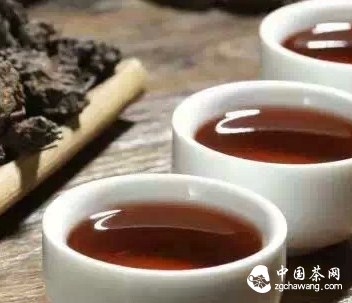
Kill-green (shaqing) fixes the fermentation at that level. Besides the pure oxidation fermentation described above, there is another category of tea that is not oxidized. After kill-green and rolling, the leaves are piled (a process called 'wodui'). As the leaves are still moist, they generate heat and promote microbial growth, causing another form of fermentation in the leaves. The liquor turns deep red, and the taste becomes厚重 and mellow. After drying, this is commonly known as 'Pu-erh Tea.' To distinguish it from the pre-kill-green fermentation, this post-kill-green fermentation is called 'post-fermentation.'