Recently, I have been frequently drinking white tea, which I describe as a quiet tea with medicinal properties. After several tastings, I have grown quite fond of it.
White tea lacks the fresh fragrance of green tea, the mellow richness of Pu-erh tea, and the high, aromatic notes of Tieguanyin. Instead, it offers an extremely serene and gentle character, with a light, slightly sweet taste. Part of its flavor can be described, while another part remains ineffable; here, I will speak of the describable part.
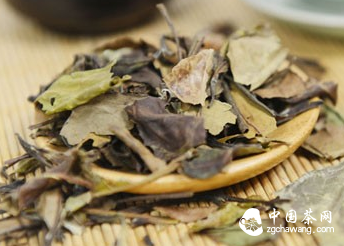
I often characterize it as a tea that carries the scent of the sun—a warm, subtle aroma that lingers around the lips and teeth. This is not without reason: the processing of white tea involves no frying or rolling, only sun-drying or gentle oven-drying. This not only gives the tea leaves a silvery, snow-like appearance covered with fine white hairs but also imparts a warm, sun-kissed fragrance, evoking images of shy tea trees basking in sunlight on mountain slopes.
According to research, the name "white tea" has a history of nearly nine hundred years. Emperor Huizong of Song (Zhao Ji) dedicated a section to white tea in his Da Guan Cha Lun (completed between 1107 and 1110, named after the "Daguan" era): "White tea is a distinct variety, different from ordinary tea. Its branches spread out, and its leaves are thin and glossy. It grows occasionally in forested cliffs, not by human effort. Those who have it number no more than four or five families; those that grow are no more than one or two plants; the production is limited to two or three cakes. The buds are few, making steaming and roasting particularly difficult. A slight misstep in firing turns it into ordinary tea. It requires exquisite craftsmanship and precise control to achieve a jade-like purity, unparalleled by others. Lightly roasted versions exist, but their quality is inferior."
Clearly, its production method involved steaming and pressing into cake tea, differing from modern white tea processing. The white tea mentioned in Da Guan Cha Lun refers to wild white tea grown on the tea mountains of the Northern Garden Imperial Tea Plantation during the early period. The royal tea garden was then located in the Northern Garden of Jian'an Prefecture, Fujian (present-day Jian'ou County, Fujian). Records also show that in the early Jiaqing period of the Qing Dynasty (1769), bud tea was picked to make Silver Needle tea; in 1885, Fuding Big White Tea was used to produce White Hair Silver Needle.
Thus, the origin of white tea is somewhat debated in the tea world. Some argue it dates to the Song Dynasty based on historical records; others say it originated in the Ming and Qing Dynasties based on processing techniques; yet others believe it predates green tea, suggesting it existed before the Song Dynasty, citing its medicinal efficacy. From a tasting perspective, I believe its origin in the Ming and Qing Dynasties is more accurate.
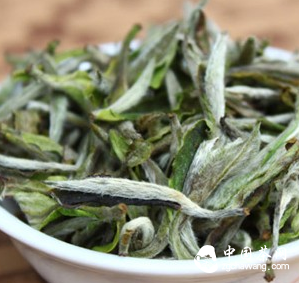
Regardless of its history, what I drink are simply sun-dried varieties like White Hair Silver Needle, White Peony, and Shou Mei.
White Hair Silver Needle is a precious and top-grade variety of white tea. It has a delicate, subtle fragrance and an exquisite appearance—silvery white, needle-like, embodying the most perfect characteristics of white tea. Brewed in a glass cup, it resembles watching a ballet, breathtakingly beautiful.
The most commonly consumed white tea is White Peony. It is difficult to appreciate its charm from its elegant name alone. In water, its leaves and buds dance together, releasing their fragrance slowly with each infusion. Its composure is the most typical demeanor of the white tea family, something only truly experienced through tasting.
The most interesting is Shou Mei. As the saying goes, "All that glitters is not gold." But Shou Mei is the opposite—it teaches you not to judge a tea by its appearance! Its aroma is simple, or rather, pure and mellow. Warm and unhurried, it releases the essence of nature accumulated over time into your cup, embodying an immensely generous selflessness... Every time I drink Shou Mei, I often gaze at the floating and sinking broken leaves in contemplation—a surprise and a philosophy, truly demonstrating that the Dao is everywhere!
Besides the above varieties, common white teas include New Craft White Tea, which undergoes light rolling after withering. It is described as having "a soup flavor like green tea without its freshness, like black tea without its astringency, rich, mellow, clear, and sweet." There are also lesser-known white teas like Lijiang Spring White Tea and Xiantai Big White, which I have yet to taste.
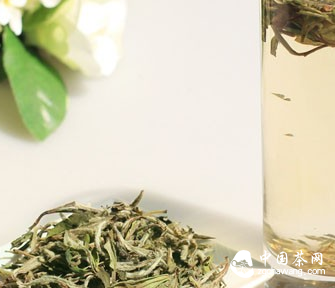
As for the various health benefits of white tea, I will not elaborate here. Of course, this is an important reason why I drink it frequently.
At this point, some tea friends might ask why I haven't mentioned Anji White Tea. As mentioned in previous tea writings, China's six major tea categories are classified by processing method. Anji White Tea belongs to the green tea category—a semi-baked and roasted green tea named for its emerald green color and visible white hairs. It exhibits typical green tea characteristics: a clear, fragrant liquor, tender green, bright, whole leaves when brewed, and a fresh, sweet, refreshing taste. Interested tea friends might enjoy comparing and tasting them side by side—it's quite fascinating.
In fact, the joy of tea must be personally savored and contemplated by each individual.