Tea snacks not only emphasize sensory enjoyment in color, aroma, taste, and form but also value cultural depth. For example, in Yangzhou, the "Red Chamber Tea Snacks" based on the classic novel "Dream of the Red Chamber" were introduced at the "Sun Moon Bright Teahouse." The variety is rich and diverse, including 25 types such as Pine Nut and Goose Oil Rolls, Crab Roe Delicacies, and Ruyi Lock Pieces. Each variety carries profound cultural connotations, allowing customers to learn about little-known preparation methods and story allusions while tasting. For instance, Pine Nut and Goose Oil Rolls are mentioned in Chapter 41 of "Dream of the Red Chamber," "Tasting Plum Blossom Snow Tea in the Green Lattice Nunnery," where Grandmother Jia invites everyone to "have some snacks casually": "After the feast in the Embroidered Pavilion, maids brought two boxes of snacks. One box contained two steamed varieties: Pine Nut and Goose Oil Rolls and Lotus Root Starch Osmanthus Cake..."
I. Emphasizing the Flavor Effect of Tea Snacks
1. Tea Snacks Should Complement the Tea's Character
When drinking tea leisurely, the principle for pairing tea snacks can be summarized in a small rhyme: "Sweet with green, sour with red, seeds with oolong." Sweet with green means pairing sweet foods with green tea, such as various sweet cakes or pineapple cakes with green tea. Sour with red means pairing acidic foods with black tea, such as fruits, lemon slices, or preserves with black tea. Seeds with oolong means pairing savory foods with oolong tea, such as melon seeds, peanuts, or olives with oolong tea.
2. Tea Snacks Should Be Visually Appealing
Compared to traditional pastries, tea snacks are more exquisitely made, focusing on color and shape, and emphasizing visual appeal. For example: Crystal Butterfly Dumplings, translucent and shyly delicate, have "butterfly whiskers" made from shark fin needles quickly inserted after steaming, appearing lifelike—a stroke of genius. The all-vegetarian filling shows缤纷 colors through the transparent thin wrapper, pleasing to the eye. Another example: traditional tea snack Shrimp Dumplings appear晶莹透亮 in small, delicate bamboo steamers, with the fresh shrimp filling revealing a shy pink,隐约可见. They are tender yet elastic to the bite. Since water chestnut paste is added to the filling, a crisp texture remains amidst the shrimp's smoothness, seemingly特意留住春天. Innovated from shrimp dumplings, "Green Meadow White Rabbit Dumplings" use minced pork and fresh shrimp as filling, shaped into little white rabbits, with ham as eyes and coriander as a base on the plate, resembling a group of rabbits playing on grass...
3. Tea Snacks Should Be Savory
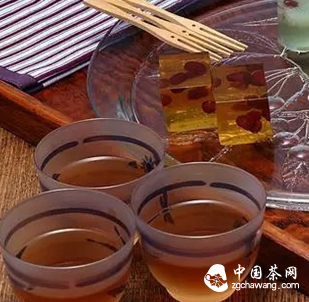
Tea snacks are meant to be chewed slowly and savored carefully, so they should be highly品尝性. For example: "Lychee Red Step-by-Step Cake" is made by mixing Lychee Black Tea broth with water chestnut powder, creating a treat with alternating red and white layers. Part of the tea broth is mixed with water chestnut powder, sugar, and condensed milk to make a milk paste; the remaining broth is cooked with sugar and starch paste into a tea broth paste. The two pastes are steamed in layers, chilled, and then molded into various shapes. Chewing slowly reveals a cool, smooth texture with a subtle lychee black tea fragrance lingering in the mouth, perfectly paired with a cup of black tea for a long回味. Another example: Durian Puff has a crust as thin as a cicada's wing, lightly brushed with oil and sprinkled with sesame seeds. Gently biting through the outer layer is like eating a freshly opened durian—the amount of durian filling is unexpectedly generous, and the rich aroma spreads on the tongue, capturing the essence of durian perfectly. Meanwhile, Dragon Pearl Sesame Rolls,酥炸 with Longzhu花 tea leaves, are made by wrapping fillings like minced pork, shrimp, and carrot in glutinous rice skin, rolling them into a "日" shape, brushing with egg yolk, sesame seeds, and Longzhu tea leaves, and frying until golden brown. The tea leaves镶嵌 on the outer crust,星星点点, make it crispy and易碎, leaving a lingering fragrance on the lips and teeth.
4. Tea Snacks Should Be Diverse
China has a wide variety of tea snacks with diverse flavors. In terms of regional styles, there are the Beijing-Shandong flavors of the Yellow River basin, Northwest flavors, the Jiangsu-Yangzhou and Sichuan-Hunan flavors of the Yangtze River basin, the Cantonese-Fujian flavors of the Pearl River basin, as well as Northeast, Yunnan-Guizhou, Hubei-Henan, and various ethnic minority styles. The selection space for tea snacks is vast. Under the general guiding principle of "matching dry and moist, diverse flavors," one can choose from traditional snacks like spring rolls, potstickers, dumplings, shaomai, steamed buns, tangyuan, baozi,家常饼, or silver ear羹, or opt for innovative tea snack varieties developed for different teas. For example: Tea Jelly is made by精心调入 four different tea flavors (black tea, green tea, jasmine tea, oolong tea) into jelly, without添加色素 or preservatives, offering a unique taste and纯天然健康食品. There are also tea-flavored melon seeds, tea milk candies, and more.
II. Considering Regional Habits of Tea Snacks
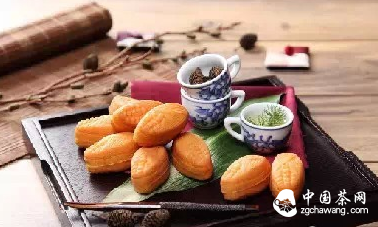
The regionality of tea snacks mainly stems from local dietary habits. For example: In the闽南 region of Fujian Province and the潮汕 region of Guangdong Province, many people enjoy drinking gongfu tea. Brewing gongfu tea emphasizes strength and aroma, so it is always accompanied by small snacks. These snacks are quite讲究, not only tasty but also elegantly shaped, no larger than a small mooncake. They mainly include mung bean paste pies, coconut cakes, mung bean cakes, etc., as well as the闽南特色 "Taro Jujube," made by steaming taro into a paste, adding some seasonings, and deep-frying until crispy outside and soft inside, sweet and delicious. There are also various puffed snacks and preserves. When family or friends gather to品茶 and尝点, the atmosphere is joyful and harmonious. In Guangdong, morning tea is called "one pot, two pieces"—one pot of tea with two types of dim sum. The tea is清饮, with accompaniments served separately, allowing one to feel full without losing the pleasure of tea tasting.
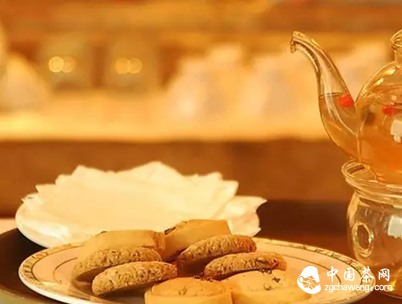
Another example: Old Beijing also had many teahouses, different from those in the south. Pure清茶馆 were fewer, while storytelling teahouses were popular. Tea drinking was secondary; listening to评书 was the main event, so tea snacks were mostly casual nibbles like melon seeds. However, in Beijing, there was a type of teahouse called "Red Stove Teahouse," where tea snacks were more systematic, influenced by Qing Dynasty宫廷文化. These teahouses had red stoves for baking饽饽, making all Manchu and Han pastries—small and exquisite, including "Big Eight Pieces" and "Small Eight Pieces," mainly Beijing's Ai Wowo, honey cakes,排叉,盆糕,烧饼, etc. Customers could enjoy tea while tasting the snacks.
III. Reflecting the Cultural Depth of Tea Snacks
Tea snacks not only emphasize sensory enjoyment in color, aroma, taste, and form but also value cultural depth. For example: In Yangzhou, the "Red Chamber Tea Snacks" based on the classic novel "Dream of the Red Chamber" were introduced at the "Sun Moon Bright Teahouse." The variety is rich and diverse, including 25 types such as Pine Nut and Goose Oil Rolls, Crab Roe Delicacies, and Ruyi Lock Pieces. Each variety carries profound cultural connotations, allowing customers to learn about little-known preparation methods and story allusions while tasting. For instance, Pine Nut and Goose Oil Rolls are mentioned in Chapter 41 of "Dream of the Red Chamber," "Tasting Plum Blossom Snow Tea in the Green Lattice Nunnery," where Grandmother Jia invites everyone to "have some snacks casually": "After the feast in the Embroidered Pavilion, maids brought two boxes of snacks. One box contained two steamed varieties: Pine Nut and Goose Oil Rolls and Lotus Root Starch Osmanthus Cake..." In Chapter 62, it is also mentioned: "On Baoyu's birthday, Fang Guan herself ordered lunch from the kitchen, which included four Cream Pine Nut Rolls..." Among them, Cream Pine Nut Rolls also appear in the推出的 "Red Chamber Tea Snacks."
Another example: In Chapter 41 of "Dream of the Red Chamber," pastries in the Jia Mansion are described as being made with a special silver mold, pressing rice flour into over 40 shapes like chrysanthemums, plum blossoms, and water caltrops, each only the size of a bean. No wonder Granny Liu, during the meal, saw each small pastry as玲珑剔透, wanting to eat it yet舍不得,特意 picking a peony-shaped one to take back for乡下妇女 to use as a pattern for embroidery.