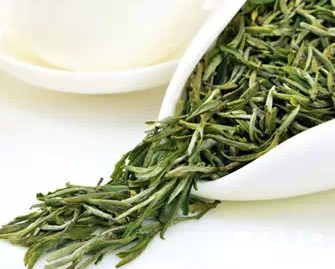
With its elegant color, slightly bitter taste, and subtle, lingering aroma, the character of green tea closely aligns with the ancient Chinese definition of a humble gentleman. Hence, green tea enjoys the reputation of being a "gentleman among teas," long revered by literati.
Chinese tea can be divided into two main categories: basic tea and processed tea. Basic tea is further classified into six types based on fermentation degree: green tea, oolong tea, black tea, dark tea, yellow tea, and white tea. Processed tea mainly includes scented tea and compressed tea. Among the six major tea types, green tea boasts the greatest variety, production volume, and cultivation range in China. There are over a hundred varieties of green tea, with the "Top Ten Famous Chinese Teas," led by West Lake Longjing, being classic representatives.
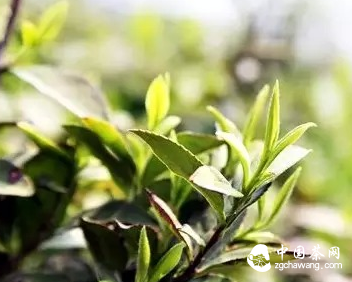
Green tea is the world's earliest tea variety. The ancient practice of sun-drying and storing wild tea leaves can be seen as the beginning of green tea processing in a broad sense, dating back at least three thousand years. However, true green tea processing began in the 8th century with the invention of the steam-fixation method.
The transformation from fresh tender leaves to finished tea involves steps like picking, fixation, rolling, and drying. This entire process is not only visually pleasing but also a typical example of China's uniquely creative tea-making techniques. Over thousands of years, generations of insightful tea farmers have continuously researched and discovered that, based on different drying and fixation methods, green tea can be further categorized into pan-fired, oven-dried, sun-dried, and steam-fixed green teas. Among Chinese teas, green tea stands out for the complexity and number of its processing steps.
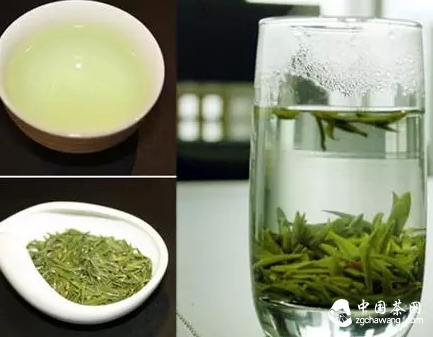
When boiling water is poured into the cup, the withered, dry tea leaves seem to come to life. That distinctive plant fragrance gradually permeates the air. The originally brown dried leaves slowly unfurl, turning green—elegant in color, slightly bitter in taste, with a subtle, mellow, and enduring aroma. Such characteristics of green tea closely match the ancient Chinese definition of a humble gentleman. Therefore, green tea holds the reputation of a "gentleman among teas," long esteemed by literati. The Tang Dynasty poet Lu Tong, famous for his poem "Walking Brush: Thanks to Imperial Censor Meng for Sending New Tea," depicted green tea masterfully: "One bowl moistens lips and throat; Two bowls dispel loneliness and gloom; Three bowls search the withered gut, finding only five thousand scrolls of words; Four bowls induce light sweat, letting life's injustices disperse through the pores; Five bowls purify flesh and bone; Six bowls connect to divine spirits; Seven bowls cannot be consumed, only feeling a cool breeze rising under both arms..."
West Lake Longjing reigns supreme because it achieves the ultimate essence of green tea: "vibrant color, rich aroma, sweet taste, beautiful shape." Scholars describe the beauty of Longjing thus: the flavor is sweet, fresh, mellow, and harmonious; the aroma is elegant and clear; the liquor is jade-green and translucent; the brewed leaves are tender, forming buds ("flags") and young leaves ("spears") that interlace pleasingly, offering great visual delight.
Green tea's unique taste comes from being an unfermented tea, which preserves more of the natural substances from the fresh leaves. It contains various nutritional components like tea polyphenols, catechins, chlorophyll, caffeine, amino acids, and vitamins. These natural nutrients have special effects in preventing aging, cancer, and tumors, as well as in sterilization and anti-inflammation, surpassing other tea types.
Precisely because of this, green tea, with its health preservation and health care benefits, is increasingly sought after by modern people pursuing health.