Tea leaves come in a wide variety, each with its own unique character. Beginners or collectors need to understand them.
The Family Members of Fine Tea
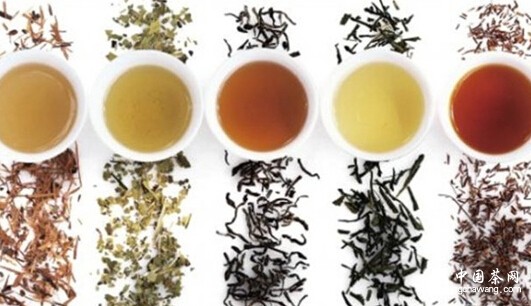
Chinese tea can be divided into six major categories: green tea, black tea, oolong tea, white tea, yellow tea, and dark tea. They are distributed across China's four major tea regions: the Jiangbei Tea Region, Jiangnan Tea Region, Huanan Tea Region, and Xinan Tea Region.
Green Tea
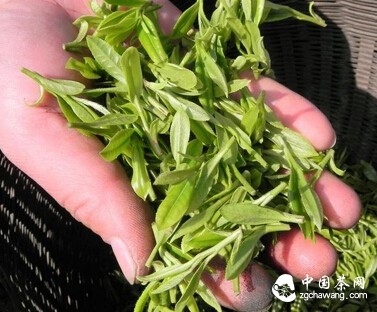
Made from new shoots of tea plants through typical processes such as fixation, rolling, and drying, it is a non-fermented tea. Green tea has clear soup and green leaves, a strong astringent taste, and fresh aromas like chestnut or floral. Green tea is the largest tea category in China by production volume, mainly produced in Zhejiang, Anhui, Jiangxi, and other provinces. Representative teas include West Lake Longjing, Xinyang Maojian, and Biluochun.
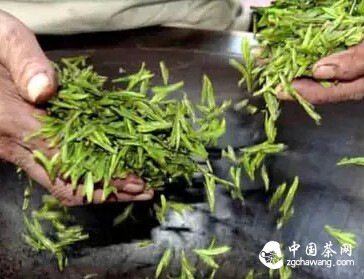
Tea production in China began with green tea, with a history of over three thousand years. Since the Tang Dynasty, steam fixation was used to make compressed tea. By the Song Dynasty, loose-leaf steamed green tea appeared. In the late Song Dynasty, the steaming method was introduced to Japan, where it is still preserved today. By the Ming Dynasty, China invented the pan-firing method, gradually phasing out the steaming method.
Black Tea
Made from suitable new buds and leaves of tea plants through typical processes such as withering, rolling, fermentation, and drying, it is a fermented tea. The soup color is predominantly red, hence the name black tea. High-quality black tea has a rich, transparent red soup. When brewed in a white porcelain cup, a golden ring appears on the cup wall, and the taste is mellow and sweet.
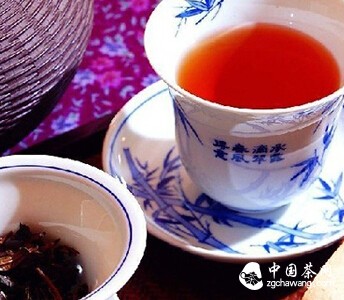
Black tea can be divided into Souchong black tea, Congou black tea, and broken black tea. It is the second-largest tea category in China. Representative teas include Dian Hong and Yixing black tea.
Oolong Tea
Oolong tea, also known as blue tea, is a semi-fermented tea and a uniquely distinctive category among China's major tea types. Oolong tea combines the processing methods of green and black teas. Its quality lies between green and black tea, possessing the strong, fresh taste of black tea and the fresh, fragrant aroma of green tea, often praised as "green leaves with a red border."
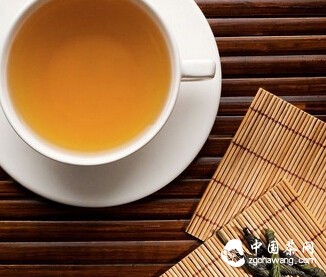
Depending on the degree of fermentation, the color, aroma, and taste of oolong tea vary. There are many types, such as Dongding Oolong, which has a low fermentation level and a taste closer to green tea; Phoenix Dan Cong has a rich aroma of orchids and gardenias.
The pharmacological effects of oolong tea are particularly notable in fat decomposition, weight loss, and body shaping. In Japan, it is called the beauty tea or fitness tea. Representative oolong teas include Wenshan Baozhong tea, Anxi Tieguanyin, Dongding Oolong tea, and Wuyi Dahongpao.
White Tea
It is a lightly fermented tea and a special treasure among Chinese tea categories. It is named for the finished tea leaves being covered with white down, resembling silver or snow. The processing of white tea generally involves two steps: withering and drying, with the key being withering. The characteristic of white tea processing is that it neither destroys enzyme activity nor promotes oxidation, preserving the downy fragrance and refreshing taste. When brewed, it has a rich, clear aroma and a light sweetness, with a pale yellow soup color.
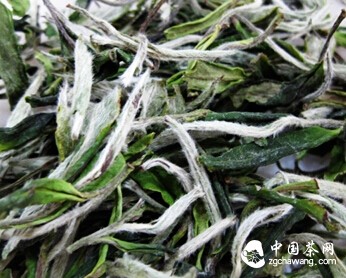
White tea has excellent heat-clearing and anti-inflammatory effects. As the saying goes, "Three years is tea, seven years is treasure." It has become popular in Europe in recent years. Starbucks recently launched a tea series, with White Peony, a type of white tea, being the first recommendation. White tea is mainly produced in Jianyang, Fuding, Zhenghe, Songxi, and other counties in Fujian Province. Main varieties include White Peony and Baihao Yinzhen.
Yellow Tea
It is a fermented tea and a specialty of China. The production of yellow tea is similar to green tea, but it includes an additional step called "men dui" (sealed pile fermentation). This process is the main characteristic of yellow tea production and the fundamental difference from green tea. It was discovered during pan-fired green tea production that if drying was insufficient or delayed after fixation and rolling, the leaf color would turn yellow, leading to the creation of this new category—yellow tea.
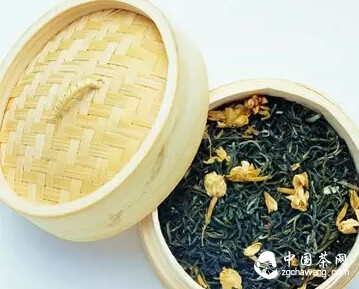
High-quality yellow tea, such as Junshan Yinzhen, shows the leaves rising and falling three times during brewing. The soup color is golden yellow, the taste is lightly sweet, and the aroma is not very pronounced. Yellow tea is divided into three categories based on the tenderness of the fresh leaves and the size of the buds: yellow bud tea, yellow small leaf tea, and yellow large leaf tea. Representative teas include Mengding Huangya and Huoshan Huangya.
Dark Tea
This is a unique tea category with a very long production history, dating back to the Ming Dynasty. It has a long history and large sales volume, being an essential daily beverage for ethnic minority brothers and sisters in China's border regions, such as Tibetans, Mongolians, and Uyghurs. During processing, the fresh leaves undergo pile fermentation and turn dark, hence the name dark tea.
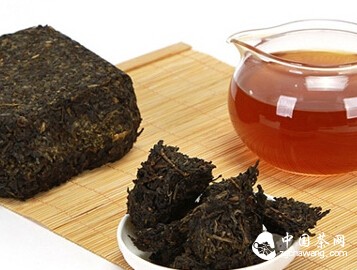
Dark tea can be brewed directly or compressed into pressed tea, such as various brick teas. Brick tea is suitable for making milk tea. Adding brewed brick tea to hot milk results in a brownish-red color with a natural sweetness without adding sugar. Dark tea is mainly produced in Hunan, Hubei, Sichuan, Yunnan, and Guangxi. As it is primarily sold to border regions, pressed tea made from dark tea is also called border-sale tea. Representative teas include Hunan pressed tea.
Re-processed Tea
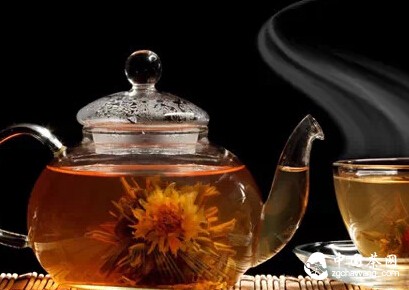
Beyond the six major tea categories, tea has another important branch: re-processed tea. Products made from the raw materials of the basic tea categories (green, black, oolong, white, yellow, and dark tea) through further processing are called re-processed tea. This includes scented tea, pressed tea, extracted tea, fruit-flavored tea, and medicinal health tea, each with different tastes and effects. Representative teas: scented tea includes Jasmine tea and Zhulan scented tea; pressed tea includes Tuocha and Liubao tea.
Identifying Authentic Tea Leaves
Many tea enthusiasts have likely stepped on "landmines" when first entering the tea world, buying fake tea or inferior tea passed off as high-quality. Actually, with some knowledge of identification methods, picking good tea is not that difficult.
Simply put, to distinguish new tea from old tea, you can look at three aspects.
1. Observe the Color and Luster
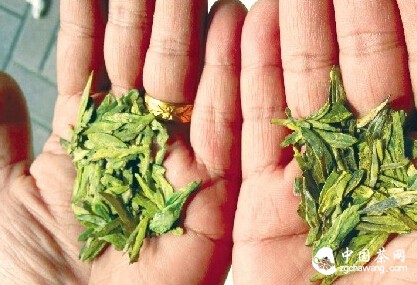
New tea has a dry, loose appearance and fresh color. Old tea appears tight, dark, and soft. When selecting tea, the appearance color should be pure and lustrous for good quality, and mixed and dull for inferior quality. The soup color of tea should be bright and clear for good tea, and dark and deep for poor tea.
2. Discern the Aroma
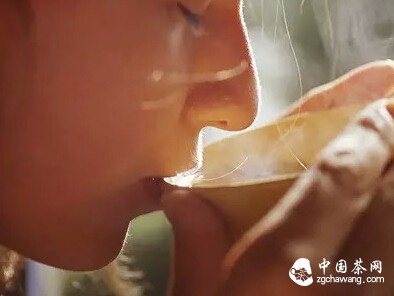
For most teas, the intensity of aroma weakens over time, and the fragrance changes from fresh and rich to low, stuffy, and muddy. However, for oolong tea and dark tea, if stored properly, the aroma can become richer and more fragrant over time.
3. Taste the Flavor
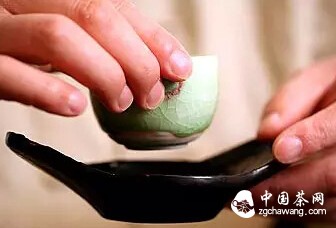
Except for oolong tea and dark tea, new tea has a mellow, fresh, and brisk taste, while old tea tends to be bland and not refreshing.
Besides inferior quality due to long storage, counterfeit tea may involve processing non-tea leaves or mixing them with real tea. For identification, first, cup a handful of dry tea in your hands and smell its scent. Tea with the inherent fresh fragrance of tea leaves is real; tea with a grassy, fishy, or other strange odor is likely fake. After roasting over fire, the scents of real and fake tea become even easier to distinguish.
Additionally, grab a handful of tea leaves and spread them on a white porcelain plate for careful observation. Tea with pure, uniform color is real. If the color is杂乱 (chaotic), uncoordinated, or looks inauthentic, it should be suspected as fake tea.
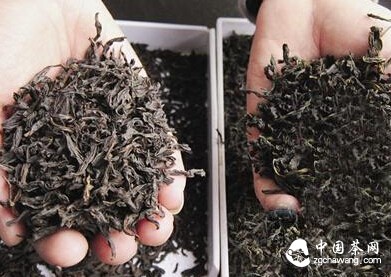
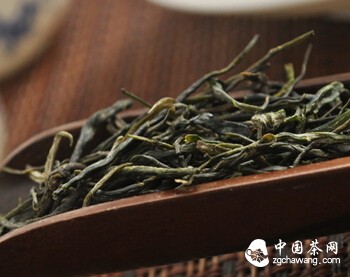
If identification through color and aroma is still uncertain, it is recommended to observe the brewed leaves (tea base). Although the size, color, and thickness of tea tree leaves vary depending on variety, season, tree age, growing conditions, and agricultural techniques, certain morphological features are common to all tea leaves and not found in other plants:
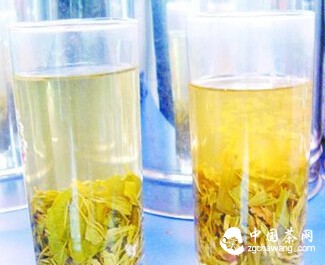
Tea tree leaves have raised veins on the back, with the main vein prominent and extending 7 to 10 pairs of lateral veins. The lateral veins curve upward in an arc about one-third from the leaf edge, connecting with the lateral veins above to form a closed network vein system.
The downy hairs on the back of tea leaves, when observed under a magnifying glass or microscope, except those on the main vein, mostly have short bases and a large curvature, typically bent at a 45° to 90° angle. Tea leaves are arranged spirally and alternately on the stem, while leaves of other plants are usually arranged oppositely or in clusters.
The serrations on tea leaves are dense and deep on the upper part, sparse and shallow on the lower part, and smooth near the petiole with no serrations. In contrast, leaves of many other plants have serrations all around the edge or no serrations at all.
Text/Li Ke (Zhihu)