Root, when I see the word "root" in my mind in relation to pure fragrance, perhaps I am actually referring to "Qi." "Qi," some call it energy, some call it subtle substance. No one can fully capture the existence of "Qi" as a complete entity; we are merely using different words to describe it, attempting to pin it down, trying to understand it through language and thought. However, the simplest way to know it is through bodily perception.
Qi lives in the discourse of a group of tea drinkers—Tea Qi.
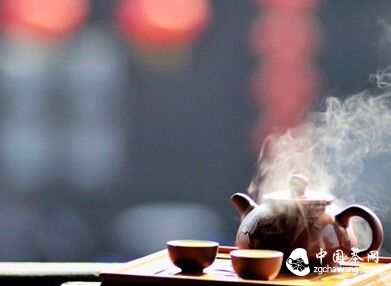
Even though the effects of "Tea Qi" manifest differently in this group of tea drinkers—through varying physiological reactions and cognitive biases—it does not prevent everyone from sensing its existence. Those who can feel "Tea Qi" are people who have access to good tea. Those who often drink good tea don't need reminders; over time, they naturally abstract this term from their accumulated sensory experiences to describe it, thus becoming consciously aware of its existence. Those who don't often have good tea, if guided by others while drinking good tea and consciously focusing their attention on how the good tea affects their sensory organs, can also quickly come to know the existence of this thing called "Tea Qi."
I didn't know about the concept of "Tea Qi" before, even though I had long read Lu Tong's verses: "searching the withered intestines, inducing light sweat, all dispersing through the pores, a cool breeze rising under both arms." This is because he did not abstract the term "Tea Qi," and before that, I hadn't been fortunate enough to encounter this term in books. Additionally, in daily life, I didn't have that much good tea to drink to accumulate enough experience to become aware of its existence. It wasn't until I joined a tea company, during a session where my boss and another tea circle elder were drinking tea, that I had the privilege of accompanying them, drinking tea and listening to their conversation. The elder said, when drinking good tea, one really doesn't want to speak, as the Tea Qi would escape from the mouth. Hearing this, I felt enlightened. While she and the boss chatted, I, the idle bystander, kept my mouth closed, trying to feel what this "Tea Qi" the elder mentioned actually was.
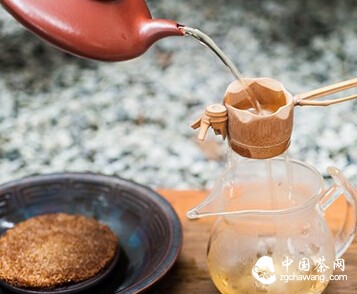
At that time, two teas were brewed: one called "Oriental Red" (aged 5 years at the time of drinking) and one called "Special Old Bush." The transformation of these two teas in the mouth was fascinating; it was also my first time feeling the Qi of tea. "Oriental Red," upon entering the mouth, had a rich, mellow tea soup wrapped around a thread of vigorous force. It was as if time had worn away the surface harshness of the tea, but the inherent energy sunk into the depths of the soup still retained its untamed nature. Immediately, this untamed energy exploded, rushing and colliding against the walls of the mouth, leaving a lasting impression that lingered for a long time. It lingered so persistently that when I subsequently drank the "Special Old Bush," I thought it was because of the former that I couldn't perceive the aroma and taste of the "Special Old Bush."
When I drank the "Special Old Bush," I could only feel its tea soup's texture, like smooth jade turning into liquid, but there was no notable aroma or strong tea taste. For a Chaozhou native accustomed to strong tea, this didn't feel like drinking tea at all; it was like a Chengdu person eating a plate of steamed seafood, always feeling it's not satisfying enough. I felt that compared to the previous "Oriental Red," the "Special Old Bush" was simply too plain and unremarkable. However, I was surprised to discover the changes in my mouth. At that moment, it seemed a Qi was slowly gathering on my tongue, gradually creating a slight sense of weight on the tongue, as if that Qi was pressing against it, and it gathered more and more, pushing against the upper palate. At this point, my mouth held a ball of Qi, like holding a pearl, with an indescribable something impacting my mind, intoxicating my spirit.
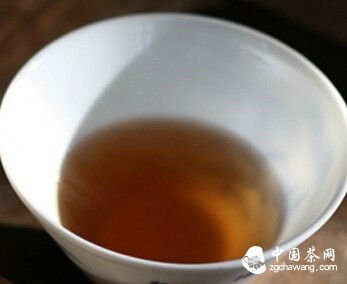
After that, whenever I wanted to feel Tea Qi, I would close my mouth, concentrate fully, turn my vision inward and listen internally. In this state of shutting out external distractions, I could "see" many aspects of the tea. For example, Tea Qi isn't only in the mouth; I could also "see" it in the nose. I saw aromas that were "coarse" and "fine." Coarse ones had a very noticeable granularity, jumping about restlessly within the gas, the mass of Qi uneven and bumpy, relatively stiff; some were like smoke from burning grass in a field, scattered and weak, swayed by air currents. Fine ones were even and long-lasting; some rose straight up like a cylindrical column of chimney smoke, relatively stiff; others were soft like silk, appearing to flow quickly with slight surface undulations, but the mass of Qi was homogeneous, sliding softly. Translating these visualizations into tea evaluation terminology might correspond to different grades of high aroma, high-pitched aroma, high-sharp aroma. No matter which language system or cognitive model we choose, we cannot fully capture "Tea Qi," just as we cannot fully capture this world. However, we each have our own set of methods; finding it and believing in it is enough.
No matter what form the Tea Qi I see in my nose takes, as long as it is pure fragrance, it must have a root supporting it. Even the lower-grade kind that is "scattered and weak" allows me to see this aroma's "root" growing from the tea leaves in the gaiwan. As for artificial fragrance, I simply don't know where it emanates from because I cannot see its "root." When I see the "root," I am simultaneously speaking of "Qi."