Tea friends often ask, "What kind of taste is the Meng Hai flavor?" Even after many explanations, many still don't fully understand. Besides drinking more and comparing more, it's essential to learn a bit more about the common knowledge of tea flavors to better appreciate the characteristics of Meng Hai tea and thus comprehend the "Meng Hai flavor."
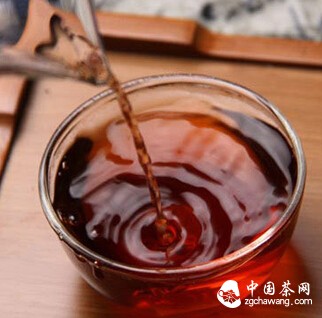
Meng Hai tea has a strong, mellow taste with both bitterness and astringency, exhibiting a thick and heavy feel. The most distinctive "Meng Hai charm" that often captivates tea drinkers is something many describe as "inexpressible in words." In fact, this charm can be described with simple terms: "coordination" and "the coordination of bitterness and astringency."
In Meng Hai tea, the coordination between "bitterness" and "astringency" is relatively good. The flavor is strong, with both bitterness and astringency present, but bitterness slightly dominates. The aftertaste in the mouth is primarily bitter, which is commonly referred to as Meng Hai tea being a "bitter-base tea."
Bitterness as an aftertaste often brings a cooling sensation and a sweet aftertaste (hui gan). Astringency as an aftertaste, due to its收敛性 (astringent) stimulating effect, can cause a feeling of dryness in the mouth, leading to a somewhat uncomfortable sensation.
Some teas from other regions also have strong flavors and are耐泡 (brew-resistant), but many tea friends feel something is off after drinking them, as if they lack "charm." Why? Actually, it's because the "coordination" of these teas is not good enough.
Often, in such teas, the bitterness is insufficient, leaning towards sweetness, while the astringency lingers too long, resulting in a lack of charm. Some have only bitterness without astringency, lacking生津 (saliva-inducing quality), giving an empty, watery feeling. Others have both weak bitterness and astringency, with slight sweetness but no strength; naturally, their charm can only be described as the charm of tastelessness.
In terms of the tea's内含物 (internal components), it mainly involves the ratio of three major types of substances: tea polyphenols (which contribute astringency and some bitterness), alkaloids (primarily caffeine, contributing bitterness), and amino acids (the source of freshness). The proportion of these three substances determines the tea's "coordination," or its charm. A reasonable ratio creates a unique charm. Here, saying "ratio" might sound人为 (artificial), but in reality, it is determined by "tea region, tea variety, timing, geography, and human factors."
Of course,通过合理的拼配技术 (through reasonable blending techniques) to address the charm of Pu'er tea is the mission of Pu'er tea refining factories. Pu'er tea formulas with excellent charm are favored by tea friends, which is one of the charms of Pu'er tea.