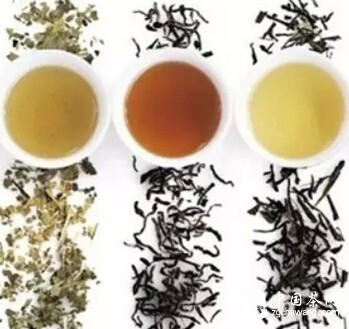
Green Tea
Green tea is the earliest tea category in history. The ancient practice of collecting and sun-drying wild tea leaves can be considered the beginning of green tea processing, dating back at least three thousand years. However, true green tea processing began with the invention of the steaming method in the 8th century AD. By the 12th century, the pan-firing method was invented, making green tea processing technology relatively mature, a practice that continues to this day and is constantly being refined.
Green tea is the largest tea category in China in terms of production volume. Its growing regions span all tea-producing provinces, municipalities, and autonomous regions, with Zhejiang, Anhui, and Jiangxi provinces having the highest output and best quality, serving as the main production bases for Chinese green tea. In the international market, Chinese green tea accounts for over 70% of trade volume, sold in over 50 countries and regions including North Africa, West Africa, France, the United States, and Afghanistan. Domestically, green tea sales account for over one-third of total domestic sales. Additionally, green tea is the primary raw material for producing scented tea.
Green tea, also known as non-fermented tea, is made from suitable fresh tea leaves through typical processes such as fixation (killing the green), rolling, and drying. It is named for the predominant green color of its dry leaves, infused liquor, and brewed leaves.
Green tea retains a high amount of natural substances from the fresh leaves. It preserves over 85% of tea polyphenols and caffeine, about 50% of chlorophyll, and suffers less vitamin loss, forming the characteristic "clear soup, green leaves, and strong astringent taste" of green tea. The latest scientific research indicates that the natural components retained in green tea have special effects on anti-aging, cancer prevention, anti-cancer, sterilization, and anti-inflammation, surpassing other tea categories.
Among Chinese green teas, there are the most famous varieties, known not only for their high aroma, long-lasting taste, and excellent quality but also for their unique shapes, possessing high artistic appreciation value. Based on different drying and fixation methods, green tea is generally classified into pan-fired, oven-dried, sun-dried, and steamed green tea.
Black Tea
Black tea is named for the predominant red hue of its dry leaves and infused liquor. It is made from suitable fresh tea buds and leaves through typical processes: withering, rolling, fermentation, and drying.
When first created, black tea was called "black tea" (literal translation of "乌茶"). Chemical reactions occur during black tea processing. The chemical composition of fresh leaves changes significantly; tea polyphenols decrease by over 90%, producing new components like theaflavins and thearubigins. Aromatic substances increase from over 50 types in fresh leaves to more than 300 types. Part of the caffeine, catechins, and theaflavins form complex compounds with a delicious taste, resulting in the quality characteristics of black tea: black dry leaves, red liquor, red brewed leaves, and a sweet, mellow flavor.
Based on different manufacturing methods, black tea is further divided into Souchong black tea, Congou black tea, and broken black tea.
Oolong Tea
Oolong tea, also known as blue-green tea or semi-fermented tea, is named after its legendary creator. It is a tea category with distinct characteristics among China's major tea classes. Oolong tea combines the processing methods of green and black tea, with its quality lying between the two. It possesses the strong, fresh taste of black tea and the fresh, fragrant aroma of green tea, earning it the reputation of "green leaves with a red border." Drinking it leaves a lingering fragrance in the mouth and a sweet, fresh aftertaste. The medicinal effects of oolong tea are mainly highlighted in fat decomposition, weight loss, and body shaping. In Japan, oolong tea is called the "beauty tea" or "slimming tea."
There is also a magical legend about the origin of oolong tea. It is said that during the Yongzheng era of the Qing Dynasty, in Nan'yan Village, Xiping Township, Anxi County, Fujian Province, there was a tea farmer and skilled hunter named Su Long. Because he was dark and strong, the villagers called him "Wu Long" (Black Dragon). One spring, Wu Long went up the mountain to pick tea with a tea basket on his waist and a gun on his back. At noon, a river deer suddenly passed by. Wu Long shot at it, but the wounded deer fled desperately into the forest. Wu Long chased closely and finally captured the prey. By the time he carried the deer home, it was already evening. Wu Long and his whole family were busy slaughtering and tasting the game, completely forgetting about tea processing. The next morning, the family remembered. Surprisingly, the fresh leaves left overnight had developed red edges and emitted a阵阵清香. The tea made from these leaves tasted exceptionally fragrant and rich, without any of the usual bitterness. After repeated experiments and careful refinement, through processes like withering, shaking, semi-fermentation, and baking, they finally created the new tea category with excellent quality—Oolong tea. Anxi thus became the famous hometown of oolong tea.
Yellow Tea
During the processing of pan-fired green tea, it was discovered that if the drying after fixation and rolling was insufficient or untimely, the leaf color would turn yellow, leading to the creation of a new category—yellow tea.
The production of yellow tea is similar to green tea, with the key difference being an additional "men dui" (smothering or piling) process. This smothering process is the main characteristic of yellow tea production and the fundamental difference from green tea. Green tea is non-fermented, while yellow tea belongs to the fermented tea category.
Based on the tenderness of fresh leaves and the size of buds and leaves, yellow tea is divided into three categories: yellow bud tea, yellow small leaf tea, and yellow large leaf tea. Yellow bud tea mainly includes Junshan Yinzhen, Mengding Huangya, and Huoshan Huangya. Yellow small leaf tea mainly includes Beigang Maojian, Weishan Maojian, Yuan'an Luyuan tea, Huangxiaocha from West Anhui, Zhejiang Pingyang Huangtang, etc. Yellow large leaf tea includes Huang tea from Huoshan, Jinzhai, Liu'an, Yuexi in Anhui and Yingshan in Hubei, and Guangdong Dayeqing, etc.
White Tea
White tea belongs to the lightly fermented tea category and is a special treasure among Chinese tea classes. It is named for its finished tea, which is mostly buds covered with white hairs, resembling silver or snow. White tea has a long history; its elegant name has appeared for over 880 years. Its main varieties include White Peony (Bai Mudan) and Silver Needle (Baihao Yinzhen).
The production areas of white tea are mainly in some counties and cities of Fujian Province. The terrain features undulating hills, with a mild climate and abundant rainfall year-round. The mountainous soil is primarily red and yellow, mainly cultivating excellent tea plant varieties such as Fuding Da Bai Cha, Zhenghe Da Bai Cha, and Shui Xian.
The processing of white tea generally involves two steps: withering and drying, with the key lying in withering. Withering is divided into indoor withering and outdoor withering. It should be flexibly managed according to the climate. On clear spring/autumn days or non-muggy, clear summer days, indoor withering or compound withering is best. The refining process involves removing stems, flakes, withered leaves, reddened leaves, and dull leaves, then baking over low heat until thoroughly dry, using only a hint of fire aroma to complement the tea fragrance. When the moisture content reaches 4-5%, it is packed while hot. This method neither destroys enzyme activity nor promotes oxidation, preserving the pekoe aroma and a fresh, brisk taste.
Dark Tea
Dark tea has its unique standards and characteristics in terms of fresh leaf selection, processing techniques, and requirements for color and quality, forming a tea category distinct from others,独占一个“黑”字.
How do green fresh tea leaves turn into dark tea? The earliest dark tea was produced in Sichuan, made from green maocha (rough tea) steamed and compressed into border-sale tea (tea for frontier regions). Sichuan tea needed to be transported to northwestern regions. Due to inconvenient transportation and difficulties, its volume had to be reduced by steaming and compressing into lumps. During the lump-making process, the tea underwent over twenty days of moist piling. Therefore, the color of the rough tea gradually turned from green to black. The finished lump tea had a dark brown color and formed the tea's unique flavor profile—this is the origin of dark tea.
The picking standard for dark tea is often one bud with five to six leaves, featuring coarse leaves and long stems. Its basic processing flow involves high-temperature fixation, rolling, piling for color development, and drying. Because dark tea generally uses relatively coarse and old raw materials, coupled with a long piling fermentation time during processing, its color is dark or dark brown, hence the name dark tea. Due to differences in production regions and processes, dark tea is divided into Hunan dark tea, Hubei old green tea, Sichuan border tea, and Yunnan-Guangxi dark tea. Among these, Yunnan dark tea is made from Yunnan green maocha through a post-fermentation process of piling and then drying, collectively referred to as Pu-erh tea. Loose Pu-erh tea is a variety within the dark tea category known for its strong, mellow, and aged aroma.