Walking into a tea shop on the street, the shopkeeper, who was brewing tea, warmly greeted me to taste. After two sips, the shopkeeper asked if I could tell where the tea was from and how it tasted. I said I couldn't tell. The shopkeeper then continued, "This is from a famous mountain region, but there was a minor issue during processing; the 'killing the green' wasn't quite到位, and the 'rolling' was a bit too heavy, so...". However, this tea simply didn't taste like the mountain region he mentioned that I had tried before. Having sold tea leaves for a few years, flipped through a few tea books, and heard terms like 'killing the green, rolling' a few times, I could tell the nonsense behind the shopkeeper's "professional" explanation. But the shopkeeper certainly didn't know I was also a tea seller and directly used such "advanced" vocabulary. Recalling similar vocabulary heard from tea shop owners in Shenzhen and Guangzhou, I hadn't paid much attention at the time. Thinking back now, I couldn't help but sigh, Guangzhou and Shenzhen are truly developed areas for tea sales, where terms like 'killing the green, rolling...' have become popular—probably to "kill" your clarity and "roll" you into confusion.
So today, let's talk about these basic tea processing techniques like "killing the green" and "rolling". What do these tea-making terms actually mean? How do these processes affect the final quality of the tea?
The black tea, green tea, white tea, oolong tea, etc., that we drink daily all come from a perennial evergreen woody plant called the tea tree. But regardless of the type, all tea is processed from the buds and leaves picked from the tea tree. Based on the systematic nature of production methods and quality, and the main internal changes during processing, especially the degree of oxidation of polyphenols, tea is typically classified into six major categories: green tea, black tea, yellow tea, white tea, dark tea (oolong tea), and dark tea.
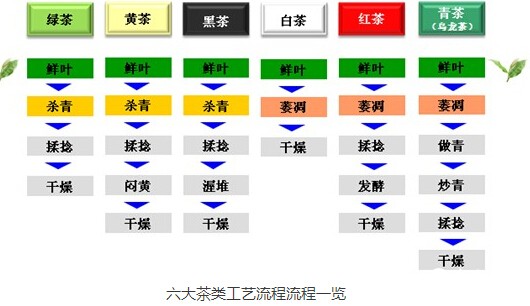
The basic production methods for the six major tea types are composed of selecting several steps from the six processes: killing the green, withering, rolling, "fermentation" (or doing green), piling/menhuang (wo dui and men huang), and drying. Three types start with killing the green, the other three start with withering, and the final step for all is drying. Different combinations of processes form different tea types. Although the processes are similar, different technical measures within a process lead to different product qualities. There exists a dialectical relationship between quantitative and qualitative changes.
1. Killing the Green (Sha Qing)
Killing the green is one of the key initial processing steps for tea. "Green" refers to the fresh leaves. The main purpose is to use high temperature in a short time to destroy the activity of polyphenol oxidase in the fresh leaves, inhibiting the enzymatic oxidation of polyphenols. This allows the internal components to undergo non-enzymatic changes, forming the color, aroma, and taste characteristics of green tea, dark tea, and yellow tea. Simultaneously, the leaves become soft under high-temperature moisture loss, facilitating rolling. Additionally, killing the green removes the grassy smell of fresh leaves and releases a pleasant fragrance.
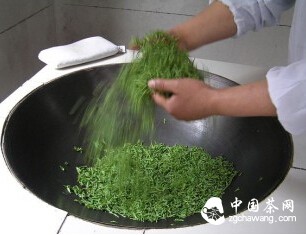
Pan-firing (Killing the Green)
2. Withering
Withering is the first process in making black tea, white tea, and oolong tea. It involves spreading and air-drying the fresh leaves to allow moderate moisture loss and transformation of internal components, making the leaves soft for shaping and developing tea aroma. Withering can be divided into natural withering and trough withering.
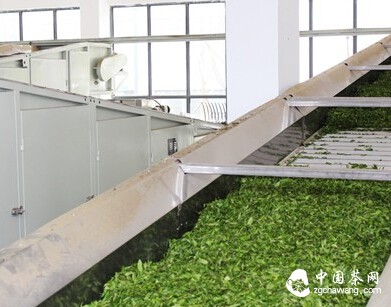
Withering Trough
3. Rolling
Rolling is the process for initial shaping. It mainly uses external force to break the tissue cells of the tea leaves, causing the tea juice to flow out and adhere to the surface of the strips, enhancing the concentration of color, aroma, and taste. It also curls the buds and leaves into strips, improving the aesthetic appearance of the tea.
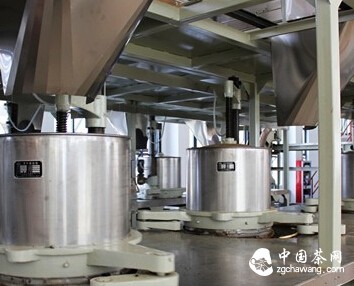
Rolling Machine
4. Fermentation
During fermentation, the rolled leaves are spread to a certain thickness. The tea polyphenols in the leaves undergo oxidation and polymerization under the action of polyphenol oxidase, etc., producing specific colors, tastes, and aromas. Controlling the degree of fermentation allows for different sensory expressions in the tea. In fact, during the tea-making process, fermentation is continuously at work starting from the rolling stage.
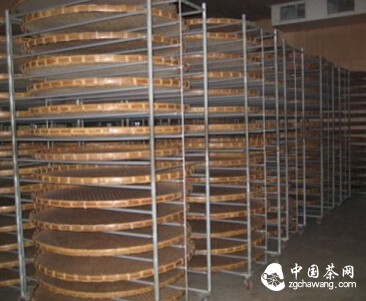
5. Drying
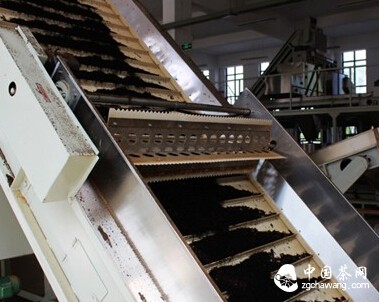
Drying is the final step in the initial processing of all six major tea types. Besides removing moisture to achieve sufficient dryness for storage and long-term drinking, the drying process also further forms the tea's unique color, aroma, taste, and shape based on the previous steps.
From ancient times to the present, tea making has never been simple. Good tea requires the combination of high-quality fresh leaves and exquisite skill. Some say "good tea is met by chance, not sought," and for those who appreciate fine tea, this is indeed true.