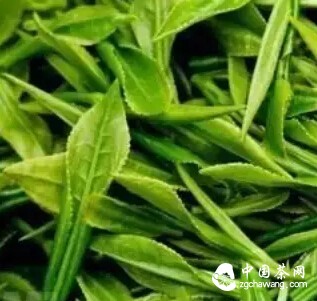
"In March spring breeze, tribute tea time, all follow red flutes to the mountains. At dawn in the roasting room, vermilion doors open, baskets and boxes gradually reveal new buds." This is a scene described by a Tang Dynasty poet of tea farmers picking and making new tea in spring. Moreover, there are records from the Tang Dynasty of picking and making "pre-Qingming tea" as tribute during the spring equinox. The excellence of pre-Qingming tea seems to be a consensus reached since ancient times. But somehow it has turned into "buying tea must be the earliest and the tenderest." These early spring teas come with overwhelming momentum, as if missing them means losing the chance to taste good tea. But is high-quality tea really the earlier and tenderer, the better?
Misconception One: The Earlier, the Better
The most serious misconception about spring tea is that everyone thinks the earlier it is picked, the better its quality. Actually, this is not the case. After three to four months of rest in winter, the tea tree's roots buried deep in the soil absorb ample mineral nutrients, making the tea buds sprouting in spring plump, emerald green in color, with soft leaves rich in vitamins and other nutrients, strong aroma, fresh and refreshing taste, and rich variations. Moreover, tea trees in spring generally have no pest damage or pollution, so the quality of tea picked in the first flush is often the best of the year.
However, "first flush" does not mean "early spring." As long as it is the first growth and first picking in spring, it is considered first flush tea. It is not true that the earlier it is picked, the better. All things grow according to their own laws; only at a certain time is it optimal. If picked too early, the tea's new buds have not fully unfolded, and the accumulation of effective nutrients is insufficient. The tea made will not only have a lighter aroma but also astringent and bland taste, and it will not be durable for multiple infusions. Nowadays, most people blindly seek "earliness," rushing the process, which disrupts the spring tea market and takes us further away from good tea.
Misconception Two: Pre-Qingming Tea Is the Best
Many people now broadly assume that any tea picked and made around the Qingming Festival is called pre-Qingming tea. Actually, this is not accurate. Pre-Qingming tea is a term used in the Jiangnan tea region of China to refer to different stages of spring tea according to solar terms. The main categories of pre-Qingming tea are green tea and a small amount of red tea, while teas like Tieguanyin, Dahongpao, and Pu-erh do not have pre-Qingming tea.
Although spring tea from regions like Yunnan, Guizhou, and Sichuan is also picked and made before Qingming, it cannot be called pre-Qingming tea. This is because most areas in the southwest and south China tea regions are located in southern China, where temperatures rise early in spring, and tea picking often starts during the Spring Festival. Taking Pu-erh tea as an example, Ban Zhang emphasizes aroma, while Yi Wu emphasizes taste. Therefore, the Ban Zhang area is picked earlier, around late March, while Yi Wu is best picked after Qingming.
Misconception Three: Drink Early, Enjoy Early
Finally, Old Zhang shook his head and said, "Some people are too impatient; they can't wait to drink the new tea as soon as they buy it, and end up with an upset stomach!" Newly picked tea has a short storage time and contains relatively high levels of unoxidized polyphenols, aldehydes, and alcohols. These substances have little impact on healthy individuals, but for those with poor gastrointestinal function, especially those with chronic gastrointestinal inflammation, they can irritate the gastrointestinal mucosa. People with originally weak gastrointestinal function are more likely to trigger stomach problems. Therefore, it is best to store new tea for about half a month before drinking it.
After hearing all this, I realized there is so much to know about spring tea. Before this, even I thought spring tea was truly the earlier, the better—feeling that the earlier, the fresher. But it turns out this is not the case at all. It really broadened my knowledge.
Soon, fresh spring tea will be on the market, and everyone wants to taste it quickly. But as consumers, what we should focus on is the quality of the tea—whether it is genuine spring tea and new tea. Relying solely on the time of market availability as a criterion to judge tea quality is unscientific. Therefore, for spring tea, seeking "newness" is not as good as seeking "quality." For the sake of good tea, let's wait patiently!