Specifically for the autumn tea Tieguanyin produced in Anxi, what are the different characteristics of tea from different production areas, and how to successfully buy it? Today, we focus on introducing the respective characteristics of autumn Tieguanyin tea from the three most famous tea production areas in Anxi: Xiping, Xianghua, and Gande townships, as well as the representative producing villages within them.
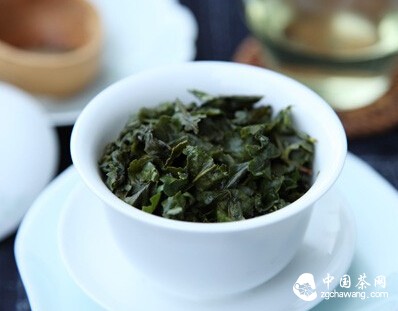
1. Gande Tea
Strong Fragrance, Light Broth with Slight Acidity For tea drinkers in Quanzhou city, most are familiar with Gande tea. This tea, viewed by some tea experts, is also called 'reform tea' or 'market route tea.' It has been quite popular in some regions and among certain groups in recent years, with its biggest characteristic being a strong tea fragrance.
【Characteristics】
The tea produced in Gande Town has secured an important position in the tea market in recent years due to its 'distinctive features,' namely the 'orchid aroma' and 'Guanyin rhyme.' Summarizing its characteristics, there are mainly the following points: First, its aroma is rich and intense. Whether smelling the lid cup, tasting the broth, or even when uncovering the lid during brewing, the strength of its fragrance can almost fill the room, making one eager to try it. Second, the color of the broth is relatively light and clear, especially for the first and second brews; after the third brew, the broth color turns yellowish-green, clear and pure to the bottom. Finally, when the broth enters the mouth, careful tasting can detect a slight acidity, giving a special taste profile where sourness contains fragrance and fragrance contains sourness.
Gande tea undergoes a slightly shorter fermentation time during processing compared to traditional methods, resulting in a slightly green color and a fresh feeling. There are two explanations for its acidity: one is insufficient fermentation, and the other is that this acidity precisely reflects the 'Yun' (rhyme/charm). As for the strong fragrance, analysis suggests it is due to Xianghua's unique tea garden environment and innovative methods used during tea processing.
【Identification Techniques】
Compared to Xiping and Xianghua tea, Gande tea is relatively easier to identify. The key points are: first, the broth color is light green and the aroma is显著 (pronounced); second, a slight acidity can be felt upon tasting.
2. Xianghua Tea
Pure Taste, Mellow Broth, Strong Sweet Aftertaste Xianghua tea has long been renowned. Most production areas feature high mountains and dense fog. The tea processing methods are traditional, resulting in uniquely high-quality tea, most notably characterized by a strong sweet aftertaste.
【Characteristics】
The typical characteristics of Xianghua tea are mainly reflected in three aspects: First, pure taste, meaning the tea flavor fills the mouth upon entry, with few other off-flavors. Second, mellow broth, meaning the tea soup is thick and substantial, with a viscous feeling, commonly called 'good tea water.' Third, strong sweet aftertaste, meaning after swallowing the tea soup, the feeling left in the mouth, teeth, and tongue is clear, sweet, and refreshing, strongly persistent, making one savor it for a long time, reluctant to let it go. The recognized reasons for the formation of Xianghua tea's quality characteristics are threefold: first, pure and high-quality tea plant varieties; second, unique planting environment; third, most adhere to traditional processing methods, especially emphasizing moderate fermentation.
【Identification Techniques】
To identify Xianghua tea, one must grasp the key tricks. Simpler methods include: First, carefully taste whether the sweet aftertaste is持久 (long-lasting). When swallowing the soup, keep a little in the mouth for a moment, then stir the tongue against the teeth. After swallowing, open the mouth. If a fresh, sweet taste remains for a long time, it is undoubtedly Xianghua tea. Second, observe the tea soup. A relatively稠 (thick) broth without异味 (off-flavors) can be used as a reference for identifying Xianghua tea.
【Purchasing Guide】
Xianghua Township is not only vast in area but also has extensive tea cultivation. The correct and relatively safe method to choose authentic Xianghua tea is, of course, to buy tea from representative village tea areas.
It is reported that there are three representative tea area village clusters in Xianghua: The first cluster: Xiangdi and Xianghua villages; The second cluster: Shishi Village and Doukeng Village; The third cluster: Fuxin Village and Gaoshan Village. One can first go to Anxi county town, then to Xianghua Township's location, and then, depending on road conditions, either drive or take other transportation into the villages. However, it is reported that the township government location has a large tea market. If one has sufficient experience, tea can also be selected and purchased there.
3. Xiping Tea
Xiping is the birthplace of Anxi Tieguanyin. Rich broth, clear 'Yun' (rhyme/charm), but not very fragrant is the tea quality of the tea produced there. In recent years, Xiping Tieguanyin belongs to the lower-end tea category, with market prices generally around 50 yuan. The characteristic of Xiping tea in recent years is its 'Benshan' variety.
【Purchasing Guide】
Good tea from Xiping is not found in every one of its 26 administrative villages. The公认 (recognized) most representative tea areas are distributed in two regions: North Mountain and South Mountain.
The North Mountain region has three quite representative administrative villages: Longkan Village, Longping Village, and Baiping Village. The South Mountain region also has three representative administrative villages: Liaoyang Village, Shangyao Village, and Liaoshan Village.
It is reported that if driving to buy tea and hoping to enter tea farmers' homes directly to purchase, the route is: Anxi County Town → Xiping Town Area → Various representative villages (Note: Some villages are at high altitudes, making car access inconvenient; if taking public transport, one can go from Anxi county town to Xiping town area, get off, hire a motorcycle to enter the villages. There are corresponding buses near Anxi China Tea Capital).