China has many types of tea, and some famous tea varieties are now widely cultivated, making it difficult to label them as genuine or fake. For example, Longjing tea is grown as far as Wengyuan near Guangzhou, where tea farmers from Zhejiang have contracted tea mountains to cultivate it. Another example is Tieguanyin, which is now grown in counties surrounding Anxi. When these production areas use tea seedlings from the original region and employ traditional processing techniques, the resulting tea cannot be simply called fake Longjing or fake Tieguanyin. When the national standard for Pu'er tea was formulated, the phrase "produced in Yunnan" alone sparked intense debate due to the significant interests involved.
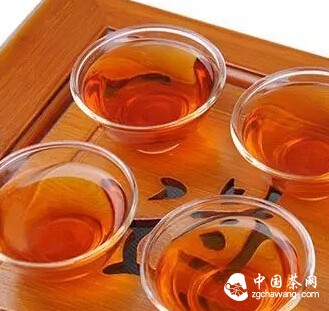
Jin Jun Mei is different. It originated from the imaginative ideas of some tea enthusiasts, and its original variety is Zhengshan Xiaozhong, but the harvesting requirement changed to using only bud tips. The rise of Jin Jun Mei has only occurred in the last three to five years. Its production area is extremely limited, and its quality is unquestionable, so I believe its price of ten to twenty thousand yuan is actually reasonable. What is abnormal is the market's response. Jin Jun Mei is not suitable for ordinary tea merchants to use for business purposes because of its high purchase price and slow sales. Attracted by the huge price difference, there has been a phenomenon of using tea buds from other regions to produce black tea冒充 as Jin Jun Mei. This is not unique to China; it happens all over the world.
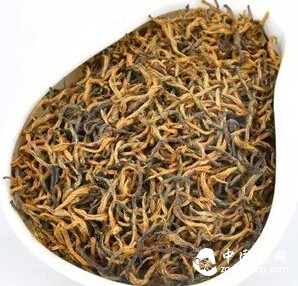
The problem is that the raw material for Jin Jun Mei—Tongmu Cai Cha—is not cultivated in every production area. The geographical and climatic conditions of Tongmu Pass cannot be replicated. The so-called Jin Jun Mei produced elsewhere cannot compare to the original in terms of taste or quality. In such cases, I certainly consider it fake. In my view, there are only two types of Jin Jun Mei: one is genuine, and all others are fake. There is no grading system.