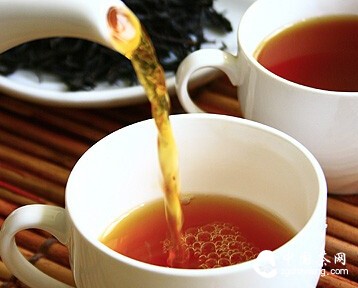
▶ Black tea is named for its dark red dried leaves, reddish infusion after brewing, and transparent red liquor. Its production process involves first withering and rolling, then fermentation until the tea leaves turn red, followed by drying, making it a fully fermented tea. Traditional Chinese medicine considers that teas have different thermal properties; black tea is warming and more suitable for drinking in winter.
Originating in Fujian, black tea began in the Ming Dynasty and flourished in the Qing. The earliest produced was Xiaozhong black tea, a smoked, strip-shaped tea. From Xingcun village in Fujian, it was called "Xingcun Xiaozhong" or "Zhengshan Xiaozhong". Dried over pine wood smoke, it has a distinctive pine-smoky aroma. This evolved into Gongfu black tea, also a strip-shaped type, such as Anhui's "Keemun" (Qihong) with its rose-like fragrance and sweet, mellow taste; Yunnan's "Dianhong" with its bright red liquor and rich, full-bodied flavor. Others include Fujian's "Minhong", Hubei's "Yihong", Jiangxi's "Ninghong", Hunan's "Huhong", Sichuan's "Chuanhong", Guangdong's "Yuehong", Zhejiang's "Yuehong", and Jiangsu's "Suhong".
Chinese black tea spread to India and Sri Lanka in the 19th century, where they developed "broken black tea" (CTC - Crush, Tear, Curl), where leaves are cut, fermented, and dried into short strips, granules, small flakes, or fine particles. It can be brewed directly or with added sugar and milk. China began producing broken tea in the 1960s, with Yunnan, Guangdong, Guangxi, and Hainan producing high-quality broken black tea from large-leaf varieties. In recent years, more varieties have emerged, such as Suzhou's Biluohong, Hangzhou's Longjinghong, Chaozhou's Fenghuanghong, Taiwan's Xiaozhonghong, and Kenya's Niyahong, creating a vibrant landscape.
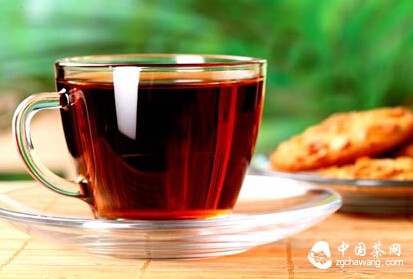
Zhengshan Xiaozhong, Gongfu Black Tea, Broken Black Tea
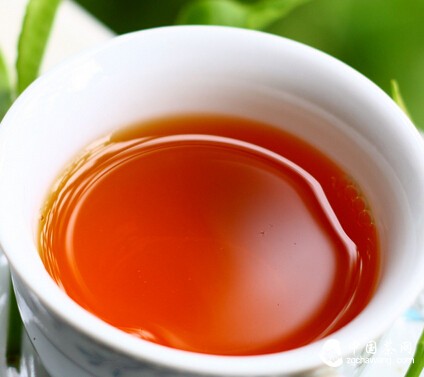
▶ How to brew a good pot of black tea?
1. Warm the Bowl
Using a warmed, moist porcelain bowl better releases the dry fragrance of black tea, known as the "pre-infusion aroma".
2. Water Temperature
Black tea can generally be brewed with near-boiling water (100°C), but for Xiaozhong and broken teas which release flavor quickly, 90-95°C is sufficient.
3. Pouring Water
Pour the water slowly.
4. Decanting
When decanting, leave a slight gap with the lid, tilt the bowl at about 85 degrees, and perform the action decisively and precisely.
5. Water
Mountain spring water is preferable.
6. Vessel
Brewing with a porcelain lidded bowl or a glass cup allows you to appreciate both the aroma and the color.
7. Snack
Hawthorn cake paired with black tea, with a hint of sweet and sour seeping into the tea flavor, offers a unique taste.