▶ Lie One: Yunnan Pu-erh Tea is Divided into Large-leaf and Small-leaf Varieties
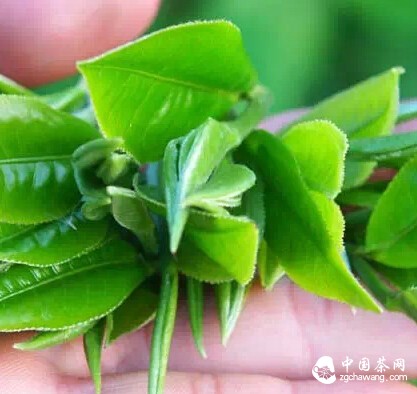
Some merchants, to cover up the issues of their counterfeit or inferior tea, make a fuss about large-leaf or small-leaf varieties, even claiming that small-leaf tea can also be Pu-erh. According to the widely accepted definition of Pu-erh tea, only sun-dried large-leaf tea from Yunnan can be processed into Pu-erh tea, possessing the tea quality that offers more benefits to the human body.
Truth: Tea cakes made from small-leaf varieties are not called Pu-erh tea.
▶ Lie Two: Imperial Palace Pu-erh Tea Drunk by Emperors
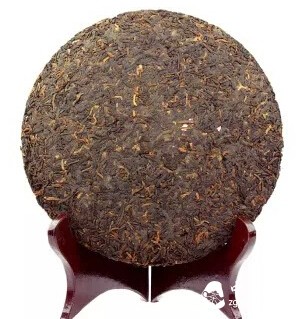
A type of "Imperial Palace Pu-erh" is popular on the market, but in fact, emperors deep in the palace never drank Imperial Palace Pu-erh, and Imperial Palace Pu-erh was never offered as tribute to the imperial court. The Imperial Palace Pu-erh commonly seen on the market is generally ripe tea made from very tender tea leaves.
Truth: The earliest ripe tea was born in the 1970s. It is generally believed that the concept of "Imperial Palace Pu-erh" first appeared after 1999.
▶ Lie Three: Raw Tea Slowly Transforms into Ripe Tea Over Time
"How many years for raw tea to turn into ripe tea?" The concept of "raw turning ripe" has been circulating among the public for a long time, even tracing back to several Taiwanese tea masters from the early days of Pu-erh's popularity.
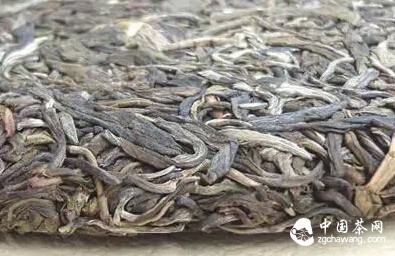
Truth: In fact, raw Pu-erh tea will never become ripe Pu-erh tea no matter how long it is stored. Raw tea stored for a long time only becomes aged raw tea. Ripe tea is made through the pile-fermentation process. Aged raw tea and ripe tea only share some overlapping characteristics: not bitter/astringent, and having a reddish, thick liquor. However, time cannot replace process. It's like old rice only becomes aged rice and will never become cooked rice.
▶ Lie Four: Yunnan Pu-erh Tea is Divided into Arbor and Bush Types
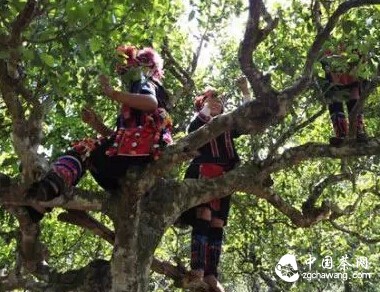
One cannot directly say this practice is wrong because it's actually another botanical issue. Anyone who has investigated Yunnan Pu-erh knows that in Yunnan Pu-erh tea regions, tea is only distinguished by old tree, big tree, and terrace tea. There is no distinction like the arbor and bush types mentioned in the north. Some avant-garde views even believe that all Pu-erh tea is arbor tea. Terrace tea is artificially kept from growing too tall for easier management, hence forming what we now see as bush-like tea. Judging from the tea tree and rootstock, terrace tea should also belong to arbor tea.
Truth: The terms arbor and bush are merely concepts演绎 (deduced) by tea dealers to differentiate their different products, even wishfully classifying terrace tea as bush tea. The only purpose is to raise the price of arbor tea. For beginners in Pu-erh, the so-called "bush tea" from dealers might be more suitable, saving tuition fees, but be careful not to buy fake tea!
▶ Lie Five: Arbor Tea is Definitely Better in Quality Than Bush Tea
This is also a very generalized statement. It should be said that the geographical and climatic environments of the entire Lancang River basin are similar. Whether terrace tea or big tree tea, arbor tea or bush tea, they all possess good growth and ecological environments. However, the final formation of tea quality also depends on many aspects, such as processing and craftsmanship issues. Tea of similar quality can differ greatly due to different processes. Another point is that the aroma and inner quality of tea from different tea regions are also different. Comparisons should only be made between teas from the same region and the same time period. It is absolutely meaningless to compare terrace spring tea from Menghai with big tree autumn tea from Pu'er.
Truth: Comparisons must have a principle: only conduct quantitative analysis of similarities and differences between teas from different regions during the same period, or make longitudinal comparisons of teas from the same region at different times. Generalized comparisons are meaningless. If a dealer compares teas for some purpose, there might be their own benefits tied to it.
▶ Lie Six: Terrace Tea is Inferior to Big Tree Tea, Let Alone Old Tree Tea
Again falling into the bottomless pit of time, location, and tea regions. Any comparison must have a prerequisite. One cannot vaguely state that one type of tea is inferior to another; there are too many factors that can influence this. If a tea shop owner keeps praising a certain type of tea without reason and belittling others, you should be more vigilant. Maybe they want to忽悠 (hoodwink) you!
Truth: When unable to distinguish between terrace tea, big tree tea, or wild tea, choose what's right, not what's expensive.
▶ Lie Seven: The Price Difference Between Terrace and Old Tree Tea Lies in Quality
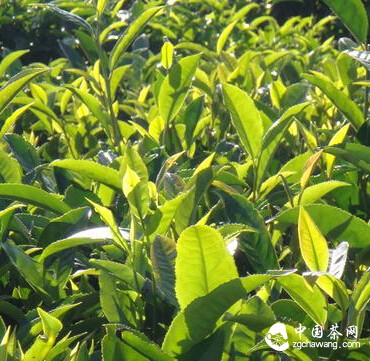
This is an irresponsible statement. The price of Ban Zhang terrace tea from the same period might be higher than that of big tree tea from some other tea regions. One reason is the quality of the tea leaves themselves, another is the issue of yield. The high price of big tree tea is mainly due to its relatively low yield. Scarcity increases value. With many people competing for the limited raw materials from big or old trees, it's no wonder the price is high. To truly judge from a quality perspective, scientific testing and analysis are required.
Truth: Regardless of old tree, big tree, or terrace, choose what you like. If seeking spiritual satisfaction beyond taste and health, buy the scarce old tree or big tree tea, but the prerequisite is you must understand Pu-erh. From a practical standpoint, go for terrace tea. After all, the working class lives by frugality.
▶ Lie Eight: Wild Tea is Definitely Superior to Wild-grown Tea
Have you noticed that all concepts are set to distinguish quality and price levels? This also determines the "well-intentioned" misleading by tea merchants to promote a certain tea. Due to the limited quantity of truly wild tea, a later practice was invented: letting artificially cultivated tea gardens grow wild. Generally, wild-grown tea has more favorable objective conditions for better quality than directly cultivated gardens, but it's not a necessary condition.
Truth: Whether wild or wild-grown, again, conceptual things are not important. Good tea is for drinking; what suits you is good.
▶ Lie Nine: The Raw Material for Pu-erh Tea is Sun-dried Large-leaf Tea from Yunnan
Conceptually, this statement is fine. But in rainy Yunnan, ensuring all tea leaves after fixation are naturally sun-dried is somewhat impossible. Many tea leaves are dried by baking or steaming. Therefore, sun-dried tea is only a relative concept. Some teas emit a strong smoky smell when first brewed, naturally due to smoke contamination during fixation and drying.
Truth: Understanding the processing flow of Pu-erh tea allows one to appreciate the differences at each stage, highlighting the importance of Pu-erh craftsmanship.
▶ Lie Ten: Pu-erh Tea is Divided into Raw Tea and Ripe Tea
Raw and ripe Pu-erh tea are only relative concepts. Conventionally, Pu-erh tea that has undergone pile fermentation is called ripe tea, while tea without pile fermentation is called raw tea. The difference lies only in the production process, which affects quality. However, unless there are major issues with the process, it generally doesn't cause too significant an impact.
Truth: Pile fermentation accelerates the aging of Pu-erh tea. It takes away some things from Pu-erh but also赋予 (endows) it with some beneficial elements. Raw tea maintains some advantages of traditional Pu-erh, experiencing its depth through time transformation. There is no absolute boundary between raw and ripe tea, only a difference in process.
▶ Lie Eleven: Large Factories are Definitely Better than Small Workshops
This is a false proposition. One can only say large factories have the equipment conditions to make good tea, but these conditions are not necessary for making good tea. Just like good dishes can be made in large hotels, but banquets can also be prepared at home. However, with the strict implementation of QS certification, large factories are more justified, while small workshops face being取缔 (banned). Small workshops need to make many adjustments and improvements to survive and meet overall development demands.
Truth: Traditional Pu-erh processing relied on purely manual labor or small workshops. But modern food safety and hygiene requirements necessitate a clean and sanitary operating environment, especially for food consumed directly. In terms of quality, tea from large factories may not necessarily be better than that from small factories. The key lies in the raw materials purchased. Delicious dishes cannot be stir-fried from rotten vegetable leaves. Therefore, choosing tea shouldn't只看出身 (only look at origin); the most important thing is to look, drink, and taste.
▶ Lie Twelve: Pu-erh Tea Storage is Divided into Dry Storage and Wet Storage
The storage of Pu-erh tea directly affects its aging. Traditionally, Pu-erh tea only had dry storage, not wet storage. Wet storage arose from unscrupulous tea merchants seeking quick profits. Wet storage is an artificial ripening process that违背 (violates) the natural aging规律 (law) and should not be promoted. A clean, ventilated storage environment is the prerequisite for good transformation of Pu-erh tea.
Truth: Rather choose cheap dry-stored tea than buy throat-drying wet-stored goods.
▶ Lie Thirteen: Pu-erh Raw Materials are in Short Supply; Many Factories Can't Get Them
A non-essential commodity, a product whose market is just beginning to grow and mature, is far from reaching a state of scarcity. It's normal for个别 (individual) factories not to obtain certain grades of特优 (special premium) raw materials, but it's not so紧张 (tight) that they can't buy any raw materials. In an era of economic富裕 (affluence), Pu-erh tea is not an irreplaceable type of tea, so there is no situation of having no materials to use.
Truth: Hyping raw material scarcity is无非 (nothing more than)寻找 (seeking) more ample reasons for their own tea price increases. Don't take it too seriously, but don't ignore it completely either.
▶ Lie Fourteen: Pu-erh Tea Becomes More Fragrant and Valuable with Age
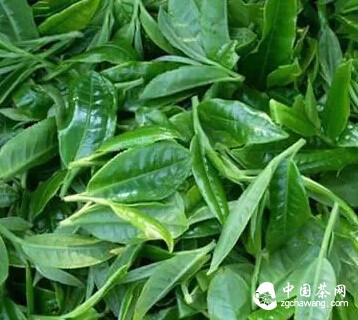
Investing in stocks is不如 (not as good as) investing in Pu-erh tea. Pu-erh is the only tea without a shelf life; it becomes more valuable with age.
Truth: Due to its special properties, Pu-erh tea can indeed become more fragrant within a certain年限 (time limit). However, Pu-erh is merely a beverage, not something that can be (or is不太适合 not very suitable for) used as a money-making tool for speculation. Some people can make a small profit by收藏 (collecting) Pu-erh, but this doesn't mean普通 (ordinary) Pu-erh can be bought like stocks.
▶ Lie Fifteen: Pu-erh Tea's Price Has Long Been Inconsistent with Its Value, Hence the Sudden Surge
High-quality Pu-erh tea has long been徘徊 (lingering) at low prices; now it has begun to回归 (return) to its true value.
Truth: Like unrecognized talent, the price of any commodity is not determined by its value but by supply and demand. In the past, few people drank Pu-erh, the market supply exceeded demand, and selling cheap was normal. Now that Pu-erh is popular, it's reasonable for少量稀缺 (a small amount of scarce) tea products to fetch a good price. Value inconsistency cannot be the sufficient and necessary condition for a price surge.
▶ Lie Sixteen: Pu-erh Tea's Health Benefits Are Due to Superior Raw Materials
Pu-erh tea's good growth and ecological environment create its excellent quality. Pile fermentation and post-fermentation maintain Pu-erh's characteristics and also bring good health benefits.
Truth: Any tea can produce beneficial components after fermentation. Effects like lowering血脂 (blood lipids), lowering血压 (blood pressure), weight loss,美容 (beautification), preventing动脉硬化 (arteriosclerosis), and even抗癌 (anti-cancer) are not unique to Pu-erh tea. In terms of raw materials, Pu-erh was just廉价的边销茶 (cheap border-sale tea); locals never drank it. Even today, many Yunnan people don't drink Pu-erh,一是 (firstly) due to price,一是 (secondly) due to drinking habits.
▶ Lie Seventeen: The Older the Pu-erh, the Greater the Health Benefits
The longer Pu-erh is stored, the better its quality. Various aged teas are the首选 (first choice) for health and养生 (wellness).
Truth: Relevant experts believe that for tea over 40 years old, the effective components have almost completely disappeared. Yet now the market is满天飞 (flooded) with aged tea: 30, 40, 70, 80-year-old teas比比皆是 (are found everywhere). "It can be said that 99% of the aged tea sold on the market is fake." Pu-erh is just an ordinary daily necessity among油盐酱醋茶 (oil, salt, sauce, vinegar, and tea). The aged tea left today were all leftovers back then. During times of war and hardship, who would consciously精心呵护 (carefully nurture) a tea cake? Now the market has many such Pu-erh teas that以次充好 (pass off inferior as good), even many regions sell Pu-erh made from报废的 (scrapped) green tea, black tea, or oolong tea to冒充 (impersonate) it."
▶ Lie Eighteen: All Pu-erh Tea is Produced in Pu'er City
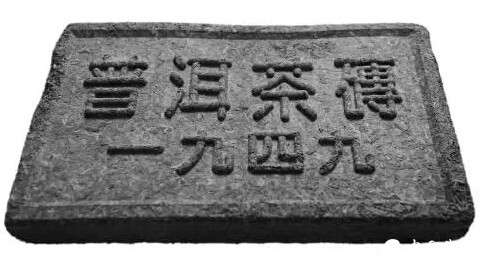
Pu-erh tea is全部产自 (all produced in) Pu'er City, Yunnan.
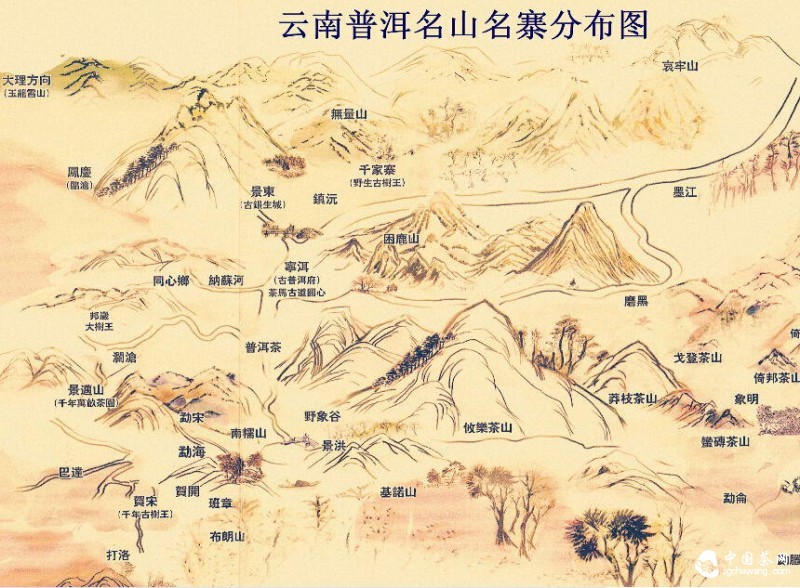
Truth: The main production areas of Pu-erh tea are: Pu'er production area, Lincang tea area, Baoshan tea area, and Xishuangbanna tea area.