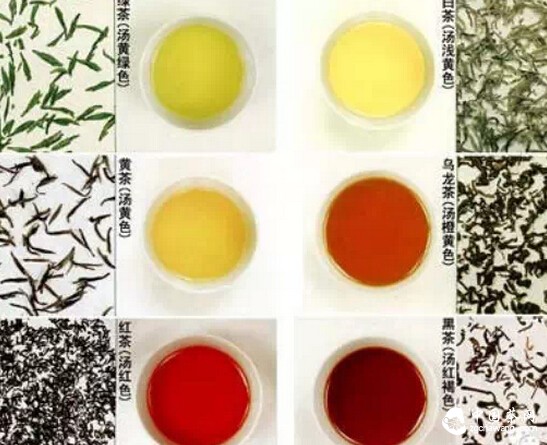
Tea processing technology has developed through a long historical process and complex evolution. The emergence of each category of tea has correspondingly driven innovation in tea-making techniques. Tea leaves alone are insufficient to carry the entire tea culture; it is the tea-making craftsmanship passed down through generations that expresses the connotation and profound depth of tea.
Green Tea Production and Classification
The most distinctive quality characteristic of green tea is its "three greens": green leaves, green liquor, and green brewed leaves. Green tea has many varieties. Based on the fixation (kill-green) method, it can be classified into pan-fired green tea and steamed green tea. Based on the drying method, it can be divided into pan-fired, sun-dried, and oven-dried green tea. Based on quality, it can be categorized into famous premium green tea and大宗 green tea (bulk green tea).
Green tea is made from fresh tea leaves. Its main processing steps include fixation (kill-green), rolling, and drying.
Fixation (Kill-green): This is one of the primary processing steps. Its main purpose is to use high temperature in a short time to deactivate the polyphenol oxidase in the fresh leaves, inhibiting enzymatic oxidation of polyphenols and preventing the leaves from turning red. Simultaneously, the leaves become soft under high-temperature moisture loss, facilitating rolling. Additionally, it removes the grassy smell and promotes the formation of tea aroma. The fixation must be thorough and even, ensuring old leaves are not burnt and tender leaves are not under-processed. Fixation is a key step in shaping the form and quality of green tea.
Rolling: The purpose of rolling is to appropriately破坏 the tissue of the fresh leaves, causing the tea juice to exude, while also curling the leaves into strips, shaping the tea's appearance. This step mainly uses external force to破坏 the tea leaf cells. After the tea juice exudes, the finished tea's flavor becomes richer and more aromatic.
Drying: The purpose of drying is to evaporate moisture from the tea leaves, enhance the tea's aroma, and fix its shape. The main drying methods include pan-firing, baking, and sun-drying.
White Tea Production and Classification
White tea is a unique tea category in China, evolving from the Song Dynasty's "three-color fine buds" and "silver thread water芽". Its most notable characteristic is "silver leaves and pale liquor". Based on tea plant variety and leaf picking standards, white tea can be divided into bud tea and leaf tea. Bud tea mainly includes Baihao Yinzhen (Silver Needle), while leaf tea includes Baimudan (White Peony), Shou Mei, and Gong Mei.
White tea processing mainly involves two steps: withering and drying. Withering is divided into indoor and outdoor withering, depending on the climate. Withering is the main reason white tea is covered with fine white hairs (pekoe). After withering, there is no rolling step, so the tea juice exudes slowly. However, this method does not破坏 the enzymatic activity in the tea leaves, allowing white tea to retain its natural freshness and delicate aroma.
Yellow Tea Production and Classification
Yellow tea is another unique Chinese tea. Its primary characteristic is "yellow liquor and yellow leaves". Based on the tenderness of the picked leaves and the size of the buds/leaves, yellow tea can be classified into three types: yellow芽 tea, yellow small leaf tea, and yellow large leaf tea. Representative yellow芽 teas include Junshan Yinzhen, Mengding Huangya, and Huoshan Huangya. Representative yellow small leaf teas include Beigang Maojian, Luyuan Maojian, Pingyang Huangtang, and Weishan Baimaojian. Representative yellow large leaf teas include Huoshan Huangdacha and Guangdong Dayeqing.
Yellow tea processing mainly includes withering, fixation, rolling, yellowing (menhuang), and drying. Among these, fixation and yellowing are crucial steps forming the unique quality of yellow tea.
Fixation: The purpose is to evaporate some moisture from the fresh leaves,钝化 polyphenol oxidase activity, dissipate the grassy smell, and form the pure aroma characteristic of yellow tea.
Yellowing (Menhuang): The purpose is to cause chemical changes in the tea components through warm, moist heat. This step is key to forming the yellow liquor and yellow leaves of yellow tea.
Oolong Tea (Qing Cha) Production and Classification
Oolong tea (Qing Cha) originated in Fujian Province and is a distinctive Chinese tea. It combines characteristics of both green tea and black tea, possessing the fresh fragrance of green tea and the mellow, thick taste of black tea. The brewed leaves often show the characteristic "green leaves with red edges". Based on origin and manufacturing techniques, oolong tea can be classified into Northern Fujian Oolong, Southern Fujian Oolong, Guangdong Oolong, and Taiwan Oolong.
Oolong tea processing mainly involves sun-withering, indoor-withering (cooling),做青 (tumbling/shaking), fixation, rolling, and baking.
Sun-withering: The purpose is to dissipate部分 moisture from the fresh leaves, inducing chemical changes in the leaf substances, thereby破坏ing chlorophyll and removing the green, grassy odor. This is done under sunlight.
Indoor-withering (Cooling): This is natural withering done indoors. It involves spreading the sun-withered leaves in a cool indoor area to dissipate heat and allow moisture to redistribute, preparing for the next step.
做青 (Tumbling/Shaking): Also called摇青. After withering, leaves are placed in a滚筒式摇青机 (rotary tumbling machine) where they rub and collide against each other. This damages the cell tissue at the leaf edges, forming the characteristic "green leaves with red edges".
Fixation: The purpose is to use high temperature to stop enzymatic activity, thereby terminating fermentation, preventing further reddening of the leaves, further enhancing the tea aroma, and stabilizing the tea's quality.
Rolling and Baking: These steps are for shaping the tea into球形 (ball shape) or条索形 (strip shape), squeezing out tea juice to make the liquor more aromatic and full-bodied.
Black Tea Production and Classification
Black tea has a history of over 400 years, primarily originating in the Wuyi Mountain area of Fujian. Among the six major tea categories, it undergoes the deepest enzymatic oxidation of茶多酚 (tea polyphenols). Based on historical sequence of production and degree of processing, black tea can be divided into three types: Souchong black tea, Congou black tea (工夫红茶), and broken black tea (红碎茶).
Black tea processing mainly involves four steps: withering, rolling, fermentation, and drying. Souchong black tea adds two extra steps: pan-firing (过红锅) and smoke-drying (熏焙).
Withering: Spreading and air-drying fresh leaves to allow moderate moisture loss and transformation of内含物 (internal components), making the leaves soft for easy shaping and preparing them for rolling and fermentation.
Rolling:破坏ing leaf cells, squeezing out tea juice, tightening the tea strips, creating conditions for full fermentation;同时 shaping the tea into an attractive, tight strip form.
Fermentation: Enzymatic oxidation changes occur in polyphenols and other components, generating yellow and red substances, forming the black tea's characteristic "red liquor and red leaves" quality.同时,大量 aroma and flavor compounds are generated, increasing the finished tea's aroma and鲜浓度 (fresh intensity of flavor).
Drying: Evaporating moisture, tightening the tea strips, further enhancing aroma, thickening the flavor, and baking to a low moisture content to prevent aging and deterioration.
Pan-firing (过红锅): A special process for making Souchong black tea. Its main purpose is to stop fermentation, preserving the大量 beneficial components generated during fermentation, avoiding over-fermentation, making the tea liquor more mellow, and enhancing the aroma of Souchong black tea.
Smoke-drying (熏焙): Placing the tea on racks in a drying room, with un-dried pine wood burning underneath. As the pine smoke rises and is absorbed by the tea, the dried leaves acquire a unique pine aroma.
Dark Tea Production and Classification
Dark tea uses relatively the most mature raw material among the six major tea categories. The finished tea has a dark brown or oily black color, mainly due to the long pile-fermentation time. Based on production region and processing techniques, dark tea can be classified into Hunan dark tea, Sichuan border tea (边茶), Hubei old green tea (老青茶), and Yunnan-Guangxi dark tea (e.g., Pu-erh).
Dark tea processing mainly involves four steps: fixation, rolling, pile-fermentation (渥堆), and drying.
Fixation: Stir-frying at high temperature quickly until the leaves turn dark green.
Rolling: After fixation, the leaves are rolled and sun-dried to become the raw material tea for dark tea.
Pile-fermentation (渥堆): Piling up the rolled tea leaves, maintaining a certain temperature and humidity, covering with a damp cloth, and allowing fermentation to occur.
Drying: If making compressed tea, when the leaves become soft, they can be pressed and dried.