Not red, then green—this is most people's first impression of tea. Interestingly, however, the world of tea is not so black and white. Between green and red, there is another type—Qing Cha (dark tea)—does the name sound unfamiliar? Then try another: Oolong Tea—this 'name' is renowned enough.
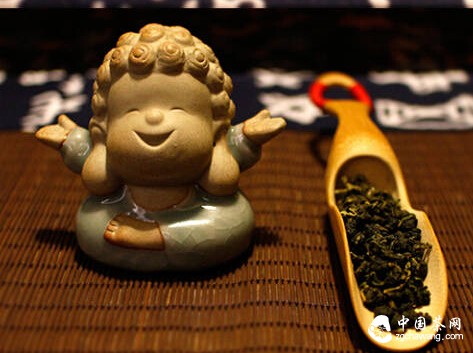
The Origin of the Name Oolong Tea
What legendary stories lie behind the origin of Oolong tea? How 'accidental' is Oolong tea? Compared to the distinct characteristics of black tea and green tea, what gentle and elegant qualities does it possess?
Oolong Tea Was Already a Tribute Item in the Song Dynasty
Despite their completely different names, Oolong tea and green tea actually share the same roots, born from the same tea plant. The reason it is said to be between green and black tea lies in its unique processing method: partial fermentation, which precisely combines the production techniques of both green and black tea.
Due to this special processing, Oolong tea's quality also draws on the advantages of both green and black tea, possessing the fresh fragrance of green tea and the rich flavor of black tea. Even its appearance is a combination of the two, earning the reputation of having 'green leaves with red edges.'
As one of China's six basic tea categories, the exact time of Oolong tea's emergence is still debated in academia, but one point is undisputed: Oolong tea originated in the Wuyi Mountains of Fujian.
Su Shi (1037-1101) wrote in his 'Ode to Tea Poem': 'Have you not seen, the tiny buds by the Wuyi stream, favored by Ding and Cai in succession, each striving with new ideas to win favor, this year's contest tea fills the official tribute.' The Wuyi tea mentioned here is the precursor of Oolong tea, indicating that as early as the Song Dynasty, Wuyi tea was already a tribute item. Later, in the sixth year of the Dade era of the Yuan Dynasty (1302), a Royal Tea Garden was established by the fourth bend of the Wuyi Nine-Bend Stream, producing five thousand 'dragon ball' cakes exclusively for tribute. From then on, the fame of Wuyi tea gradually expanded, reaching its peak.
William Ukers' 'All About Tea' also records Oolong tea: In 1607, the Dutch East India Company first transported tea from Macau to Europe for sale. Initially, it was Japanese green tea, later replaced by Chinese Wuyi tea. Thus, Oolong tea became fashionable overseas.
Oolong Tea Indeed Arose from an 'Accident'
Beautiful things always inspire people's imagination, and Oolong tea is no exception. There are many different legendary versions about the origin of its name. Some say it was named after a place, others after a tea plant variety; some stories involve the Dragon Prince, others connect to heroes; some attribute it to a fortunate mistake, others to the collective wisdom of ordinary people.
One particularly interesting story tells of a young man named 'Long' (Dragon) hundreds of years ago in Nanyan Village, Anxi's Xiyang Township, who made a living growing tea and hunting. Because he was dark-skinned all over, villagers called him 'Wu Long' (Black Dragon). One day, Wu Long went up the mountain to pick tea. At noon on his way home, he caught a river deer. Upon returning home, he was so busy slaughtering the deer that he forgot to process the tea. It wasn't until the next morning that he discovered the tea leaves left overnight. Wu Long hurriedly started roasting them. Unexpectedly, this seemingly withered tea, when brewed, turned out to be exceptionally fragrant and sweet. He pondered carefully and finally understood the secret: it turned out the tea leaves in the basket underwent 'rocking' (yao qing) from the jostling during the run home, and then 'cooling' (liang qing) after being left overnight, which is why the final tea tasted so special.