Tea is a favorite of many people. There are many types of tea, each with differences in taste and color. Therefore, when choosing tea, one should not do so arbitrarily, as this would not benefit one's health when drinking it. Longjing tea, chrysanthemum tea, and rose tea all have their own benefits. As for Zhuyeqing tea, many people are not very clear about it.
How is Zhuyeqing tea? This type of tea is helpful in improving various aspects of the human body, but it should be consumed in moderation to avoid harming one's health.
How is Zhuyeqing Tea?
Zhuyeqing is a good tea. Judging whether Zhuyeqing is a good tea requires considering the tea-making process and the harvesting time. The climate on Mount Emei is warm and humid. Zhuyeqing is generally harvested before the Qingming Festival. At this time, the spring tea buds are plump and contain more nutrients.
The favorable natural geographical environment and climate determine the quality of Zhuyeqing tea leaves. Zhuyeqing is a good tea.
Zhuyeqing was developed by monks from the Wannian Temple on Mount Emei and has deep connections with Buddhism.
After harvesting, the fresh leaves are sorted and then undergo high-temperature de-enzyming, triple roasting and cooling, using techniques such as shaking, scattering, grasping, pressing, and strip-shaping for drying.
This gives the tea leaves characteristics of being flat, straight, smooth, emerald green, and noticeable with fine hairs, resembling bamboo leaves. They are then baked to enhance the tea fragrance. The finished tea has a beautiful appearance and excellent intrinsic quality.
The tea-making process for Zhuyeqing tea requires high skill. The fact that Zhuyeqing is a good tea is closely related to its production techniques.
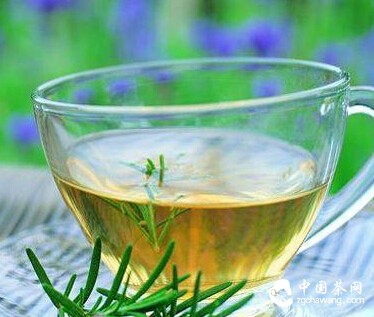
Zhuyeqing is a green tea with effects such as anti-cancer, anti-aging, anti-arteriosclerosis, weight loss, radiation protection, refreshing, diuretic, hangover relief, skin whitening, and caries prevention.
From its origin, tea-making process, and the inherent benefits of Zhuyeqing itself, it is evident that Zhuyeqing is indeed a good tea. Scientific consumption can provide health benefits.
How to Better Brew Zhuyeqing Tea
Brewing Zhuyeqing Tea Step 1: Choosing Utensils
Zhuyeqing tea is generally brewed using glass cups or white porcelain cups because transparent tea utensils allow people to appreciate the posture of the tea leaves and share the enjoyment with others.
Brewing Zhuyeqing Tea Step 2: Cleaning Utensils
Cleaning utensils means washing the tea set you plan to use for brewing. Rinse the tea set with boiling water to increase the cup's temperature, which is beneficial for brewing Zhuyeqing tea.
Brewing Zhuyeqing Tea Step 3: Placing Tea
Generally, the amount of Zhuyeqing tea leaves is one-fifth of the container's capacity. Use a tea spoon to evenly distribute the leaves into each cup.
Brewing Zhuyeqing Tea Step 4: Initial Steeping
Initial steeping can be done using the "top pouring method" or "middle pouring method." Generally, these two methods can be used for brewing high-quality Zhuyeqing tea.
Brewing Zhuyeqing Tea Step 5: Number of Infusions
Zhuyeqing tea can be infused about three times. Pay attention to etiquette during the brewing process. The posture while brewing should be graceful, showing welcome to guests.
Brewing Zhuyeqing Tea Step 6: Appreciating the Tea
After brewing is complete, you can first observe the posture of the tea leaves and appreciate their natural beauty, though this is mainly for high-grade, famous, and superior Zhuyeqing tea.
Brewing Zhuyeqing Tea Step 7: Tasting the Tea
Before tasting, first smell the aroma of the tea. Then take a small sip, press the tip of your tongue against the gum ridge and inhale, savoring the sweetness of the tea.
How to Identify Zhuyeqing Tea
1. Tenderness
Tenderness is the basic factor determining quality. The saying "assess the shape when dry, assess the leaves when wet" refers to tenderness. Generally, tea leaves with good tenderness easily meet the shape requirements of that tea category (e.g., Longjing's "smooth, flat, straight"). Additionally, you can judge by whether the tea has sharp tips. Good sharp tips and visible fine hairs indicate good tenderness and good workmanship. If the raw material's tenderness is poor, no matter how good the workmanship, the tea strips will lack sharp tips and fine hairs. However, tenderness should not be judged solely by the amount of fine hairs, as the specific requirements vary for different teas. For example, the finest Shifeng Longjing has no fine hairs on its surface. Furthermore, fine hairs are easily faked; many are artificially added. Using bud and leaf tenderness with many fine hairs as a criterion is only suitable for "fine-haired" teas like Maofeng, Maojian, and Yinzhen. It should be mentioned here that even the tenderest fresh leaves should have at least one bud and one leaf just unfurled. The practice of片面 picking only the bud heart is inappropriate because the bud heart is an underdeveloped part, with incomplete internal components, especially very low chlorophyll content. Therefore, one should not单纯 pursue tenderness by using only bud hearts to make tea.
2. Strip Shape
Strip shape refers to the specific external specifications of various teas, such as the strip shape of roasted green tea, the round shape of pearl tea, the flat shape of Longjing, the granular shape of broken black tea, etc. For long strip teas, observe tightness, straightness, plumpness, roundness/flatness, and weight; for round teas, observe the tightness, uniformity, weight, and solidity of the granules; for flat teas, observe the smoothness and是否符合 specifications. Generally, tightly wound, heavy-bodied, round (except for flat teas), and straight strips indicate tender raw materials, good workmanship, and superior quality. If the shape is loose, flat (except for flat teas), broken, and has smoky or burnt odors, it indicates old raw materials, poor workmanship, and inferior quality. Taking the green tea strip standard in the Hangzhou area as an example: Grade 1: Fine, tight, with sharp tips; Grade 2: Tight, fine, still with sharp tips; Grade 3: Still firm; Grade 4: Still tight; Grade 5: Slightly loose; Grade 6: Coarse and loose. Thus, tight, firm, and with sharp tips are considered superior.
3. Color and Luster
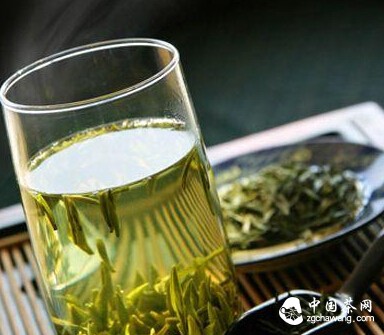
The color and luster of tea leaves are closely related to the tenderness of the raw materials and the processing technology. Different teas have certain color requirements, such as black tea being dark and glossy, green tea being emerald green, oolong tea being bluish-brown, and dark tea being dark and oily. However, regardless of the tea category, good tea requires consistent color, bright luster, and a glossy, lively appearance. If the color is uneven,深浅不同, dull, and lacks luster, it indicates that the raw materials are of mixed嫩度, the workmanship is poor, and the quality is inferior.
The color of tea leaves is also greatly influenced by the tea plant's origin and season. For example, high-mountain green tea has a green color略带 yellow, appearing lively and bright; low-mountain or flatland tea has a deep green color with luster. Improper techniques during tea processing can also often lead to劣变 in color and luster. When purchasing tea, one should judge based on the specific type of tea being bought. For example, for Longjing, the best Shifeng Longjing's pre-Qingming tea is not emerald green but has a natural beige color,呈现嫩黄. This is a major characteristic of Shifeng Longjing,明显区别于 other Longjing in color. Because Shifeng Longjing commands an extremely high price, tea farmers may create this color to冒充 Shifeng Longjing. The method is to slightly over-roast the tea leaves during processing to turn the leaf color yellow. The difference between real and fake is that real Shifeng is even, smooth,淡黄嫩绿, with a茶香中带有清香; fake Shifeng has松而空 corners, is rough,偏黄色, and has a茶香带炒黄豆香. Without multiple comparisons, it is indeed not easy to judge. But once brewed, the difference becomes very obvious. Over-roasted fake Shifeng completely lacks the馥郁鲜嫩 fragrance that Longjing should have.
4. Integrity and Brokenness
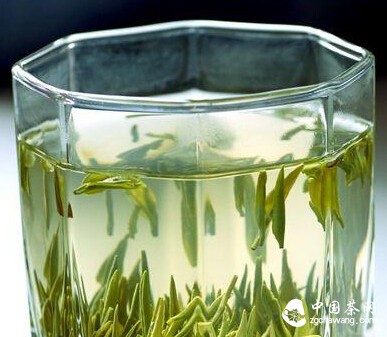
Integrity and brokenness refer to the外形 and degree of breakage of the tea leaves. Uniform integrity is good; brokenness is次. A more standard tea evaluation involves placing the tea leaves on a tray (usually wooden). Under the effect of rotational force, the leaves form ordered layers according to shape size, weight, thickness, and integrity. The coarser and stronger ones are on the top layer, the tight, fine, and heavy ones are concentrated in the middle layer, and the broken and small ones settle at the bottom layer. For all tea categories, having more middle-layer tea is good. The top layer generally has more coarse old leaves, with lighter taste and liquor color; the bottom layer has more broken tea, which often results in too strong a taste and darker liquor color when brewed.
5. Purity
This mainly refers to how much茶片,茶梗,茶末,茶籽, and impurities mixed in during processing, such as bamboo屑, wood chips, lime,泥沙, etc., are present in the tea. Tea with good purity contains no impurities. Additionally, you can identify tea by its dry fragrance. No matter what kind of tea, it should not have off-odors. Each tea has a specific aroma. Dry fragrance and wet fragrance are also different and need to be determined based on the specific situation. Greenish odor, smoky burnt味, and熟闷味 are all undesirable. The easiest way to判别茶叶质量 is through the taste, aroma, and leaf/liquor color after brewing. So, if possible, try to sample the tea after brewing when purchasing. If you have a particular preference for a certain tea, it's best to look up some information about that tea to accurately understand the characteristics of its color, aroma, taste, and shape. Compare each tea you buy. After doing this many times, you will容易很快掌握关键之所在. There are countless varieties of domestic tea. For non-professionals, it is不太可能 to judge the quality of every type of tea; one can only choose their favorite few. Generally, tea from its origin is more authentic, but due to differences in tea-making skills, the quality of tea can vary.
Through the above introduction, we have a good understanding of how Zhuyeqing tea is. This type of tea can be chosen with confidence. It causes no harm to various aspects of the human body. At the same time, drinking this tea also has skin-whitening effects. Women can choose this tea放心, without harming their health.