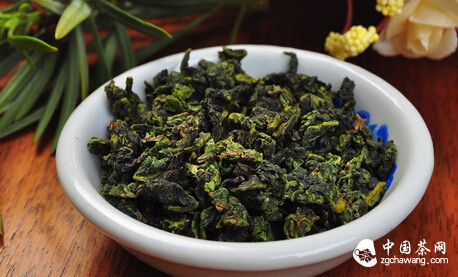
There have always been suspicions that the high aroma of tea leaves is due to the addition of flavorings during the processing, especially for some high-aroma varieties of tea. While it sounds amusing, it is an issue that demands our serious attention.
China is the homeland where tea was first discovered and utilized. For thousands of years, the Chinese people have plucked buds and leaves from this natural plant and, based on the characteristics of different tea varieties and using different processing techniques, produced green tea, black tea, oolong tea, white tea, yellow tea, and dark tea. Since tea leaves themselves contain chemical components that produce aromatic substances, these chemicals are transformed into a wide variety of distinct fragrances through different processing methods, without any need to add external substances. It can be said that the aroma of tea is the most natural fragrance in nature. Among them, the elegant orchid fragrance of Tieguanyin comes from its natural varietal aroma, unique regional characteristics, and exquisite processing craftsmanship. For millennia, ordinary people have understood this principle.
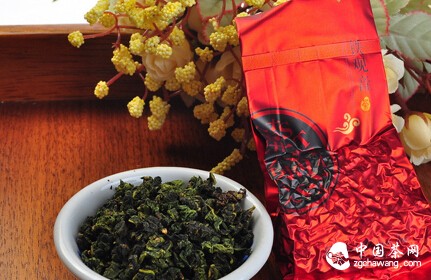
According to national food additive regulations, among all 28 categories of food, tea is the only one that neither requires nor permits the addition of any substances. Oolong tea varieties contain the most balanced proportions of multiple biochemical compounds. Additionally, oolong tea varieties contain more special substances such as carotenoids, giant starch granules, mature scale glands, medium-fat particles, and a thicker waxy layer, which form the foundation for oolong tea's unique aroma and flavor profile. Tieguanyin has a high content of free amino acids and a high proportion of ester-type catechins among total catechins, contributing to its profound and lingering "yin yun" (rhymic charm).
Anxi is located between the southeastern coast and the Daiyun Mountain Range, where maritime and mountainous climates interweave. The convection of northwest winds from Zhangping and southeast winds from Quanzhou Bay creates significant day-night temperature variations. Simultaneously, the red-yellow soil in Anxi is acidic, with a pH of 4.5-6.5, and is rich in minerals and trace elements. Furthermore, Anxi has a long frost-free period, suitable rainfall, and high altitudes in inner Anxi. All these unique geographical conditions provide superior prerequisites for the formation of Tieguanyin's aromatic compounds. Once away from this specific locale, the conditions change, and the potential for producing high-aroma Tieguanyin is lost.
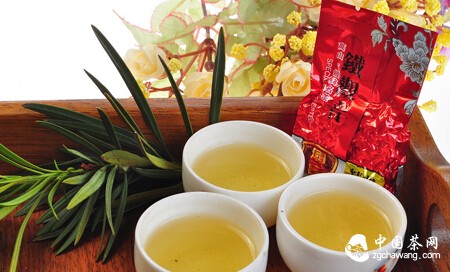
Even with the material basis and geographical conditions for Tieguanyin's aroma, without refined processing techniques, its high fragrance cannot be achieved. Among all tea processing methods, Tieguanyin's is one of the most difficult and complex. The 'making green' process is key to the formation of Tieguanyin's aroma. It involves multiple alternating rounds of shaking and cooling the leaves at night after sun-withering in the evening. Through enzymatic oxidation, aromatic compounds in the tea leaves continuously develop until fixation the next day. Throughout the entire process of Tieguanyin—plucking, withering, shaking, cooling, fixing, rolling/wrapping, and drying—no external substances are added, yet it results in a fragrant and mellow Tieguanyin.
As is widely known, historically and to this day, there has never been any instance discovered of flavorings being added during Tieguanyin production. Tieguanyin's aroma is naturally generated through processing; it requires no addition, and there is no way to add it.