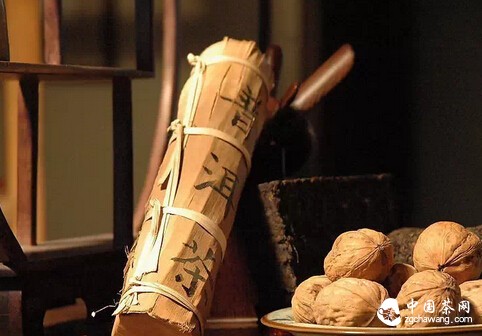
Citizens dining at restaurants or having morning tea might notice that almost every establishment serves Pu-erh tea to customers. However, some 'Pu-erh' brews a deep brown, murky liquor that tastes not mellow but sometimes even harsh on the throat. Are these truly authentic Pu-erh teas? Is the skyrocketing price of Pu-erh reasonable? As consumers, how should we approach Pu-erh tea?
Identifying Pu-erh Tea Depends on Origin and Cleanliness
Is the tea generally served in restaurants and eateries Pu-erh? It can be judged from two aspects: first, look at the place of origin; second, see if the brewed tea is clean.
Only tea produced near Xishuangbanna Prefecture in Yunnan is genuine Pu-erh tea. Tea trees planted elsewhere, even if of the same variety, cannot match the quality due to inferior natural conditions compared to Yunnan, making them misnamed and substandard. Furthermore, some unscrupulous merchants engage in fraud, transporting tea leaves from Guizhou, Fujian, and other parts of Yunnan to Xishuangbanna to sell as counterfeit Pu-erh, which consumers must guard against.
Additionally, if the brewed tea is turbid, not mellow on the palate, and feels harsh on the throat, it is clearly not real Pu-erh. Authentic Pu-erh is clear and transparent, free of impurities, with a tea liquor color resembling red wine. It leaves a sweet, pleasant aftertaste (hui gan, hui tian) and offers an excellent mouthfeel. Drinking it can calm the nerves and soothe the mind, without causing sleeplessness. Ripe Pu-erh (shu cha) is suitable for almost all people to drink.
Most Pu-erh Experiences 'Value Correction'
In recent years, news about the inflated prices of Pu-erh tea has frequently appeared in the media, astonishing both longtime tea lovers and newcomers with its 'sky-high' prices. In reality, within the industry, speculators are mainly hyping only two brands among the many Pu-erh brands. Most others have simply returned from an undervalued state to a normal price level.
Comparing the average price of new Tieguanyin or Longjing tea at around 300 yuan per jin, the price of most new Pu-erh tea at 250-300 yuan per jin cannot be considered excessively high. Pu-erh tea was previously undervalued by the market due to lack of large-scale promotion. As consumers gradually discovered its excellent taste and other qualities, its price began to rise slowly. This should not be called 'artificial inflation' but rather a 'value correction.' As for the few hotly sought-after brands, their high status is due to their long history and limited production, leading some merchants to buy, hoard, and speculate on them in large quantities. However, this does not represent the entire Pu-erh market trend.
Consumers Should Not Blindly Follow the Trend
Many uninformed consumers believe that higher age means higher price and better tea quality, but this is not entirely correct. Consumers should base their choices on their actual situation, seeking quality Pu-erh within a reasonable price range.
Some unscrupulous merchants, aiming to profit from the recent general price increase of Pu-erh, often accelerate the fermentation of raw tea (sheng cha) and ripe tea (shu cha) using high temperature and high humidity. In just 3-4 months, they can produce tea that looks like it has been aged for 10 years. This kind of tea is called 'wet storage tea' (shi cang cha) within the industry and is undrinkable. It not only tastes bad but can also harm health. It is suggested that consumers should not overly pursue age when buying ripe tea; generally, ripe tea aged 2-3 years already tastes quite good. While raw tea tastes best after more than 10 years of aging, such tea circulating in the market is already quite scarce, with prices exceeding 8000 yuan per jin.
As China's tea market is relatively chaotic, consumers need to be especially cautious. It is best to first gain a detailed understanding of Pu-erh tea from various media reports before purchasing. Due to a poor harvest of Pu-erh this year and an already opened consumer market fueled by media publicity, a significant price drop is currently unlikely, making it unwise to hold off buying. When purchasing, go to reputable stores with a complete variety. Check if the tea has a 'Quality Inspection Certificate' issued by the Ministry of Agriculture's Agricultural Product Quality Supervision and Testing Center. Tea produced after 2005 should have this certificate. Some higher-quality brands also have a 'Collection Certificate,' which is an important basis for purchase.
Relevant personnel suggest that consumers buying and storing raw tea themselves is also a good option: one can purchase a batch of raw tea monthly or annually for storage, 'drinking last year's tea this year.' Even if a wrong purchase is made due to unfamiliarity, the loss is limited.