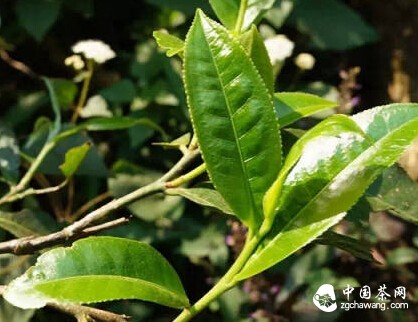
Spring Tea
In the Jiangnan tea region, Spring Tea is harvested from February to April in the solar calendar, with the tea picked within 15 days after the Qingming Festival considered the finest. Yunnan originally has no distinct spring, summer, autumn, and winter seasons, only dry and rainy seasons. Influenced by Central Plains culture, it has adopted the classification of seasonal teas. Due to the特殊性 of Yunnan's climate, the so-called Spring Tea season differs slightly from that in the general Jiangnan tea region. In Yunnan, Spring Tea broadly refers to fresh leaves picked from after the Lunar New Year until before the rainy season arrives, i.e., from mid-February to mid-May.
Grain Flower Tea (Autumn Tea)
In the Jiangnan tea region, around the seventh month of the lunar calendar, when "立秋" (Beginning of Autumn) arrives and the grain flowers bloom, turning the rice fields golden, the tea picked after the Spring Tea and the second flush (Summer Tea) is called "Grain Flower Tea." Yunnan also refers to Autumn Tea as "Grain Flower Tea." For the same reason as with Spring Tea, Yunnan arguably should not have so-called "Grain Flower Tea." This is because the Autumn Tea in Yunnan should be harvested after the rainy season ends, meaning from late September to before the end of November, which differs greatly from the "grain flower" season in the Jiangnan region. From a personal perspective, considering Yunnan's climate characteristics, the third flush of Pu-erh tea should still be rainy season tea, and the final picking of the fourth flush should more appropriately be called "Autumn Tea."
Pre-Rain Tea
Yunnan has no four seasons, only dry and rainy seasons. During the dry season from October to the end of May, the spring rain falls around early April. The tea leaves picked before this are called "Pre-Rain Tea." Due to climatic factors—low temperatures and little rainfall—the characteristics of "Pre-Rain Tea" are thin and short leaves, pronounced aroma, a slightly bitter taste, and a strong, heavy quality.
Some believe Pre-Rain Tea is of better quality, a notion originating from the concept in the Jiangnan tea region. In Yunnan, however, the relatively low temperatures and dryness in February and March negatively affect tea tree growth and leaf quality. In the Yunnan Pu-erh tea region, from February to the end of May, before the rainy season is预计 to come, there are 3-4 pickings. The best quality tea leaves are反而 harvested during the second picking after the spring rain in early April, which is the third picking after the start of spring. The rain helps transport nutrients within the soil, and the rising temperatures and sunshine benefit tea tree growth, making the leaves thicker, more tender, and pliable.
Rainwater Tea
Strictly speaking, it should only be called "Rainwater Tea," not "Rainy Season Tea." While Yunnan's climate is divided into dry and rainy seasons, it does not rain every day during the rainy season, nor is it always sunny during the dry season. Tea picked during the spring rain in April is also called Rainwater Tea. So-called "Rainwater Tea" refers to tea picked and processed while it is raining. Typically, the characteristics of Rainwater Tea include a relatively dull and unclear liquor color, a liquor偏绿 (tending green), a more bitter and淡薄 (thin) taste lacking厚重 (depth and weight), a less pronounced aroma, and stems that are more prone to becoming糜烂 (soggy) and not柔韧 (pliable).
As the Pu-erh tea process is divided into two stages—from picking to完成晒青毛茶 (finished sun-dried green毛茶) is the first stage, and from晒青毛茶 to紧压成品包装 (compressed finished product packaging) belongs to the second stage. If it rains during the first stage, challenges arise regarding the raw tea leaf material, the killing-green temperature, and the drying of the毛茶. In the second stage, the challenge is how to dry the compressed finished product. With modern concepts and technology, most of these difficulties can be overcome, maintaining a certain level of tea quality.