Pu-erh tea paste is produced by processing and fermenting the large-leaf tea varieties native to Yunnan, then separating the fibrous material from the tea juice through a special method, and finally reprocessing the extracted tea juice to recreate a higher-grade solid instant tea.
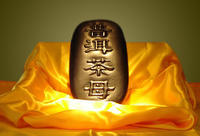
In fact, by examining the history of Chinese tea development, especially the evolution of tea processing techniques, it becomes clear that Pu-erh tea paste evolved from the tea paste making methods of the Tang and Song dynasties, representing a continuation of those earlier traditions.
In Chinese history, the Tang Dynasty was a significant period for the development of tea and tea culture, often described as the era where "tea flourished." Lu Yu's Classic of Tea, the establishment of tea taxes, tea-horse trade, and the emergence of both local and official tributes of tea all indicate unprecedented prosperity in the tea industry during the Tang.
During this time, tea paste also quietly appeared as a tribute item, though initially through local offerings rather than official imperial production.
Tribute tea in the Tang Dynasty came in two forms: local tributes and official imperial tea. Local tributes were voluntary offerings of fine tea from regional officials to the court, considered a form of local tribute. According to the New Book of Tang · Geography, Lujiang Commandery (present-day Hefei, Lu'an in Anhui) offered tea to the imperial court in the third year of the Wude era (620 AD), which was the first such recorded tribute in the Tang Dynasty. Official imperial tea, on the other hand, involved tea gardens established directly by the court, overseen by officials for exclusive production of tribute tea. In the fifth year of the Dali era (770 AD), the Tang court established the Guzhu Tribute Tea Garden at the border of Changxing in Huzhou and Yixing in Changzhou.
Tea paste emerged via the local tribute route. According to Wu Renchen's Spring and Autumn Annals of the Ten Kingdoms, as early as the second year of the Tongwen era under the Southern Tang's Min Kangzong (937 AD), tea paste from Jianzhou was offered as tribute, described as "tribute tea paste from Jianzhou, uniquely crafted, wrapped with golden threads, called 'Nai Zhong'er,' totaling eight pieces." This passage reveals several points: first, the term "tea paste" officially appears; second, it was adorned with golden threads, indicating its preciousness; third, the quantity was extremely limited—only eight pieces—unlike other tribute teas measured in bulk, highlighting its rarity.
Thus, from its debut, tea paste possessed a distinguished status unmatched by other tribute teas. It can be argued that this special prestige placed it among the finest tribute items, earning it a place in historical records.
So, how was tea paste made in the Tang Dynasty?
By carefully studying Lu Yu's Classic of Tea and Tang-era tea processing techniques, a preliminary conclusion can be drawn: the emergence of tea paste was directly related to the cake tea production method of the time.
The technique of steaming and forming tea cakes was well-developed in the Tang Dynasty and remained the mainstream method of tea processing through the Song Dynasty. Lu Yu summarized this process in fourteen characters in his Classic of Tea: "pluck, steam, pound, shape, bake, string, seal." The steps of "steaming, pounding, shaping" easily separated some tea juice from the fibrous material, leading to a paste-like substance through oxidation. Lu Yu observed this phenomenon and mentioned the term "paste" multiple times in his work, using phrases like "fear the loss of its paste," "the one with exuded paste appears glossy," and "the one containing paste appears wrinkled." He believed that truly good tea must have a wrinkled appearance, indicating it "contains paste"—meaning it retains most of its tea juice and rich flavor. The top-ranked tea in the Classic of Tea, "Hu Xue" (Barbarian Boots), was noted as a representative of "containing paste and appearing wrinkled."
However, it should be noted that although Lu Yu recognized the "paste" formed from exuded tea juice during cake tea production as a valuable component, he did not completely separate the tea juice from the fibrous material. The "paste" remained on the surface of the tea cake, still somewhat distant from the true concept of "tea paste." Even later locally tributed "tea paste" did not fully depart from the tea's original form, remaining in a "paste-containing" state. The Tang-era Supplement to the National History records over a dozen official tribute tea varieties, among which "Yonghu Paste-Containing Tea from Yuezhou" is listed.