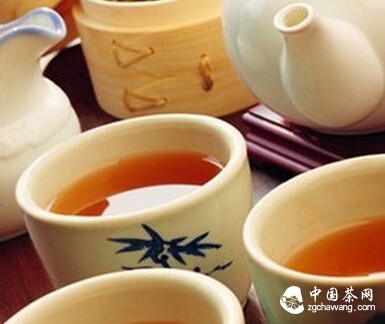
Different countries have unique interpretations of the profound tea culture. The Chinese practice "serving tea to guests" and "using tea instead of wine," enjoying tea while listening to opera. The Japanese have the elaborate "tea ceremony." The British are accustomed to afternoon tea, referring to evening as "tea time." Americans typically use tea bags to brew their tea... Regardless of the country, there are specific requirements for the type of tea, tea ware, water temperature, and steeping time, with particular emphasis on timing.
Recently, an article in the American magazine "Prevention" stated that research has found the longer black tea steeps, the more beneficial it is for health. Jeffrey Blumberg, a professor of nutrition at Tufts University in the USA, explained that a longer steeping time allows the health-beneficial flavonoids to fully dissolve, recommending a minimum of 5 minutes.
Shen Hong, a national top-grade tea taster, told our reporter that for other types of tea leaves, steeping time is also crucial. The following introduces brewing methods for several common teas. Biluochun has small and tender buds and leaves. Only with the perfect steeping time can one achieve a clear, green infusion with a mellow flavor. If steeped too long, the liquor will turn yellow, and its freshness will be significantly compromised. When brewing, pour hot water first, then add the tea leaves, and steep for two to three minutes.
Before brewing Longjing tea or Huangshan Maofeng, first pour a little hot water into the cup to rinse the leaves. After detecting a faint, fresh aroma, add more water, cover the cup, and steep for 4 minutes. This duration ensures better taste and effective release of beneficial compounds. When drinking, do not wait until the cup is empty to refill; instead, add more water when half-finished to maintain a rich flavor.
Pu'er tea belongs to dark tea. Generally, after steeping for 5 minutes, its aroma emerges. Compared to compressed tea cakes, loose-leaf Pu'er releases its flavor more easily. "Older is more fragrant" is widely recognized as the defining characteristic that distinguishes Pu'er from other tea categories. Precisely because of this, the most important step in brewing Pu'er is rinsing the tea: first, place the leaves in the cup, pour in boiling water, wait a moment, discard the water, then pour in fresh boiling water and cover the cup. This way, the second infusion not only filters out impurities from the leaves but also results in a more mellow and aromatic brew.
Furthermore, other factors can influence the effects of tea. For example, adding lemon juice to black tea can increase its antioxidant content by up to 80%. Also, while milk tea is made using black tea as a base, combining black tea with milk may hinder the absorption of certain nutrients.