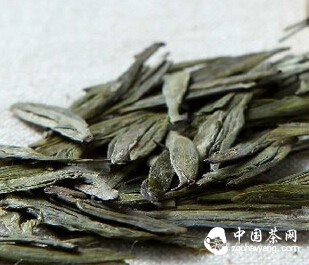
It is mainly based on seasonal changes and the intermittent growth of new shoots of the tea tree to distinguish spring tea, summer tea, and autumn tea. The harvesting time of each season's tea varies annually due to the influence of climate, variety, and cultivation management conditions.
The division of spring tea, summer tea, and autumn tea is primarily based on seasonal changes and the intermittent growth of new shoots of the tea tree.
Under China's climatic conditions, except for a few areas in the South China tea region, tea tree growth and tea leaf harvesting are seasonal in most tea-producing areas: the harvesting period in the Jiangbei tea region is from early May to late September, in the Jiangnan tea region from late March to mid-October, and in the Southwest tea region from late January to early December. Tea regions in subtropical and temperate zones, including the Jiangbei, Jiangnan, and Southwest tea regions, are usually divided into spring, summer, and autumn teas based on harvesting time. However, the standards for dividing seasonal teas are inconsistent. Some use solar terms: from Qingming to Xiaoman is spring tea, from Xiaoman to Xiaoshu is summer tea, and from Xiaoshu to Hanlu is autumn tea. Others use time: tea harvested before the end of May is spring tea, from early June to mid-July is summer tea, and after mid-July is autumn tea. In the South China tea region, due to its tropical location with unclear four seasons, tea is harvested almost year-round. Therefore, in addition to spring, summer, and autumn teas, there are also divisions based on the order of new shoot growth and harvesting time, such as first-round tea, second-round tea, third-round tea, and fourth-round tea.
Due to the influence of climate, variety, and cultivation management conditions, the harvesting time of each season's tea varies annually. Generally speaking, it gradually delays from south to north, with a difference of 3-4 months between the north and south. Furthermore, even within the same tea region or even the same tea garden, there can be a difference of 5-20 days between years due to climate, management, and other factors.
Because the tea seasons differ, the growth conditions of the tea tree vary. Therefore, even tea leaves harvested and processed from the same tea garden in different seasons show significant differences in both appearance and internal quality. Taking green tea as an example, due to moderate temperatures and ample rainfall in spring, coupled with the tea tree's long period of rest and recuperation from the previous autumn and winter, its internal nutrients are abundant. Therefore, spring tea not only has plump buds, green color, soft leaves, and prominent white hairs but also contains higher levels of effective components related to improving tea quality, especially amino acids and various vitamins. This makes the taste of spring tea fresher, the aroma stronger, and the health benefits more pronounced. Moreover, as there are generally no pest infestations during the spring tea period, no pesticides are needed, and the tea is pollution-free. Therefore, spring tea, especially early spring tea, often has the best quality among the year's green teas. Hence, many famous premium green teas, such as West Lake Longjing, Dongting Biluochun, Huangshan Maofeng, and Lushan Yunwu, all come from the early spring tea period. Summer tea, harvested during the hot season, grows rapidly—as the saying goes, "Tea grows thick overnight after Lixia"—but it easily ages. The content of amino acids and vitamins in the leaves decreases significantly, while the content of anthocyanins, caffeine, and tea polyphenols increases markedly, making the taste bitter and astringent. Autumn climate falls between spring and summer. In the later period of autumn tea, although the climate is milder, rainfall is often insufficient, causing the harvested tea leaves to appear rather withered and old. Particularly, after the harvesting of spring and summer teas, the tea tree's internal nutrients are somewhat depleted. Therefore, the harvested tea leaves contain fewer internal substances, resulting not only in a weak taste but also a low aroma and yellower leaf color. The saying "Autumn tea is good for its mild flavor" actually refers to the tea's "taste and weak flavor."
For black tea, due to the low temperature and high humidity during the spring tea period, fermentation is difficult. In contrast, the higher temperature and lower humidity during the summer tea period favor black tea fermentation and turning red. Especially because of the hot weather, the content of tea polyphenols and caffeine in the leaves increases significantly. Therefore, both the dry tea and the tea soup appear redder, and the taste is stronger. However, because the amino acid content in summer tea is reduced, it has a certain impact on the fresh and brisk flavor of black tea.
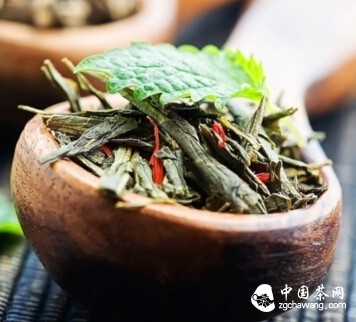
Quality Characteristics of Spring Tea, Summer Tea, and Autumn Tea
The quality characteristics of spring tea, summer tea, and autumn tea can be described from two aspects.
(1) Dry evaluation: Mainly judged by the three factors of dry tea: color, aroma, and shape. Green tea with a bright green color, black tea with a dark and glossy color, plump and heavy tea leaves with many white hairs, tightly rolled strips for green and black teas, round and tight pearls for gunpowder tea, and a rich aroma are the quality characteristics of spring tea.
Green tea with a dull gray color, black tea with a red and glossy color, light and loose tea leaves with wide and long tender stems, loose strips for green and black teas, loose pearls for gunpowder tea, and an aroma with a slightly coarse and old note are the quality characteristics of summer tea.
Green tea with a yellowish-green color, black tea with a dull red color, uneven leaf sizes, thin and lightweight leaves, and a relatively mild aroma are the signs of autumn tea.
When purchasing tea, you can also occasionally judge the season by the tea flowers or tea fruits mixed in the tea. If young tea fruits about the size of mung beans are found in the tea, it can be judged as spring tea. If the young fruits are close to the size of peas, it can be judged as summer tea. If the tea fruit diameter exceeds 0.6 cm, it can be judged as autumn tea. However, during autumn tea, the fresh tea fruit diameter has already reached about 1 cm, so there are generally few impurities. From late July to August, it is the tea flower bud stage, and from September to November, it is the tea tree flowering period. Therefore, if dried tea flower buds or dried tea flowers are found in the tea, it must be autumn tea. However, during the processing of tea leaves through screening and sorting, there are rarely any tea flowers or fruits mixed in. Therefore, when judging seasonal tea, a comprehensive analysis is necessary to avoid one-sidedness.
(2) Wet evaluation: Conducting a tea infusion evaluation for further judgment. Tea that sinks quickly after brewing, has a strong and lasting aroma, and a mellow taste; green tea soup that is greenish-yellow, black tea soup that is bright with a golden ring; tea leaves that are soft and thick in the infused leaves, with many normal buds and leaves, is spring tea.
Tea that sinks relatively slowly after brewing, has a slightly lower aroma; green tea with a slightly astringent and not very thick taste, bluish-green soup, and infused leaves mixed with copper-green buds; black tea with a strong but not brisk taste, dark red soup, and relatively bright red infused leaves; infused leaves that are thin and relatively hard, with many opposite leaves, is summer tea.
Tea with a low aroma after brewing, a bland taste, infused leaves mixed with copper-green buds, uneven leaf sizes, and many opposite leaves is autumn tea.