
According to modern scientific investigation, among populations with high tea consumption, the incidence of chronic diseases such as cardiovascular disease is lower. Scientists speculate that polyphenolic compounds in tea play a role. These polyphenolic compounds in tea are often called "tea polyphenols" and have antioxidant functions, capable of reducing oxidative damage to cells. However, proteins in milk may bind with polyphenolic compounds. Whether this binding affects the efficacy of drinking tea has attracted people's attention. Although the practice of adding milk to tea has a long history, perhaps because Europeans, who believe "what ancestors passed down must be right," are not as numerous, this issue has triggered many scientific studies. Testing this question in a test tube is not difficult. Scientifically, there are many methods to detect the antioxidant activity of a substance. Scientists use these methods to test brewed tea — unsurprisingly, the tea water has considerable antioxidant activity. If you add the amount of milk typically added by the British when drinking tea, the result — the antioxidant activity is greatly reduced!
This seems to suggest that milk can indeed inhibit the "health function" of tea. However, this inhibition is caused by the binding of milk and polyphenols. After drinking, proteins are broken down and digested, and polyphenols may be released. Can these polyphenols be absorbed? Do they still retain activity? These are more important questions.
So scientists needed to design other experiments to answer such questions. They recruited some volunteers, starved them overnight, first drew their blood, then gave them a cup of tea, and drew blood again every few tens of minutes. On one hand, the content of polyphenolic compounds in the blood could be directly analyzed. Tea polyphenols are a collective term for various substances, and the most important types can be analyzed. This method is intuitive but can only analyze known types of polyphenols, inevitably missing some unknown ones. On the other hand, the antioxidant activity of the blood could be directly tested. Then on another day, they repeated the process, but this time with tea to which milk was added.
The volunteers contributed many blood samples, allowing scientists to plot a curve describing the changes in polyphenol content (or antioxidant activity) in the blood before and after drinking tea. The results showed: after drinking tea, polyphenols and antioxidant activity in the blood gradually increased. Different types of tea peaked at different times, then gradually decreased until returning to the baseline level before drinking. That is to say, analyzing blood to detect whether tea polyphenols have entered the bloodstream is a reliable method.
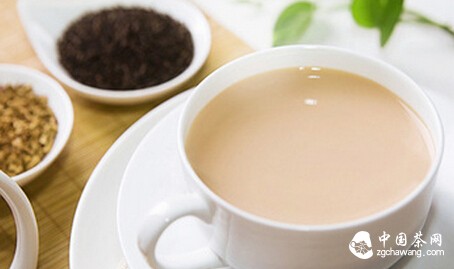
Italian scientists published a study whose results showed that when milk was added to tea, the antioxidant activity in the body was completely inhibited. This result was consistent with the test-tube results of other scientists. However, their own test-tube experiments showed that milk had no effect.
This result was somewhat unexpected, and other scientists conducted other experiments. In the May 1998 issue of the same journal, Dutch scientists published similar experiments. They directly tested the content of catechins—the most important tea polyphenols—in the blood. The result was: adding milk to tea had no effect on the absorption of catechins.
These two results are quite conflicting. However, this situation is not uncommon in the health field. If we selectively accept the conclusion we "expect," we can find support for both positive and negative conclusions. The question "Does milk affect the absorption of tea polyphenols?" still requires more experiments by other scientists to verify. In the subsequent 10-plus years, scientists from the Netherlands, India, and the UK published other experiments, all showing that milk does not affect the absorption of polyphenols from tea.
Thus, the issue seemed settled. However, this only proves that whether or not milk is added to tea, we can obtain the same amount of tea polyphenols. Whether these tea polyphenols, once in the body, actually exert a "health effect" is still unclear. Although epidemiological surveys show that people who drink more tea have a lower incidence of chronic diseases such as cardiovascular disease, this could entirely be due to other lifestyle factors of these individuals — for instance, they often eat healthier, etc. To demonstrate the "health effects" of drinking tea, more scientific data are still needed.
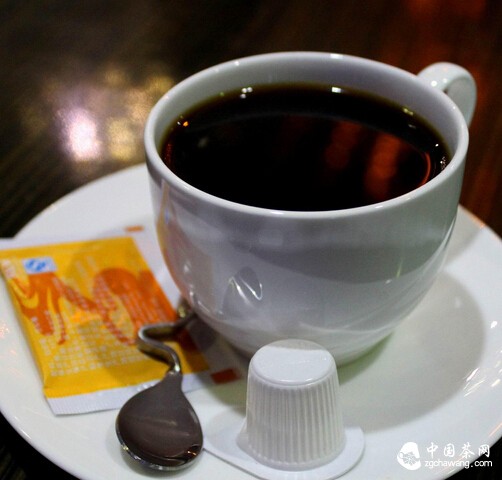
Because the polyphenol compounds in green tea are far higher than those in black tea, green tea is generally considered to have better "health effects." The U.S. Food and Drug Administration (FDA) once carefully analyzed 223 papers on "green tea and cancer prevention" and concluded that only a few studies could address the issue, but the results were inconsistent — some showed no effect, some showed a weak effect; and the studies that did show an effect were not subsequently replicated by other researchers. Therefore, the FDA concluded that green tea is "highly unlikely" to have an anti-cancer effect.
In fact, whether tea polyphenols can be absorbed, and whether they have health effects after absorption, is not that important. In any case, tea is still a very good beverage. It contains no sugar, no salt, has almost no calories, and allows us to happily drink water to quench our thirst — that is its best function. Its "health effects" may serve as topics for tea-time conversation.