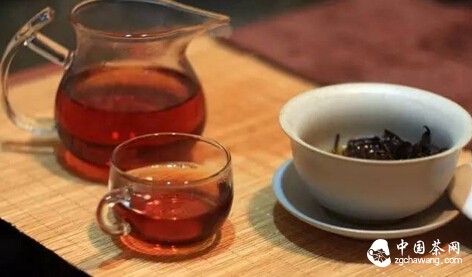
Why does the soup of Lapsang Souchong tea turn light black after being left for several hours?
During the production of black tea, from withering to fermentation, tea polyphenols in the fresh leaves are first enzymatically oxidized into theaflavins. Theaflavins then oxidize and polymerize into thearubigins, and thearubigins further oxidize and polymerize into theabrownins. The actual biochemical process is much more complex. In the final product, the color of black tea soup is primarily determined by three substances: theaflavins, which affect the brightness; thearubigins, which form the main color; and theabrownins, which influence the depth of the color.

Here, theabrownins deserve special mention. In black tea, theabrownins generally have a negative impact, causing the tea soup to appear dull and lack刺激. This is often the result of over-fermentation or anaerobic fermentation. However, theabrownins are key components in Pu-erh tea. They contribute to the reddish-brown or dark brown color of Pu-erh tea soup, reduce its astringency, and provide a sweet and mellow flavor.

The blackening of the tea soup is primarily due to an excess of theabrownins, as theabrownins are a negative factor affecting tea quality.
If the tea has been left for several hours, temperature drop might cause "clouding after cooling," a phenomenon where theaflavins combine with caffeine. However, given the blackish color of the soup, it indicates low levels of these compounds, making clouding less likely. Thus, it is again attributed to the dominance of theabrownins.
Additionally, considering the unique processing techniques of Lapsang Souchong, which include pan-firing and smoking, a higher content of theabrownins is normal. Overall, the light black color of Lapsang Souchong tea soup after several hours is still due to the action of theabrownins.