The training method is nothing more than to drink carefully, smell carefully, and compare in detail, while being objective about one's own perceptions. It is best to have someone taste tea with you, as it can not only compensate for deficiencies in one's own sense of taste but also facilitate the exchange of opinions.
There are generally three places where tea aroma appears.
The first is the aroma cup
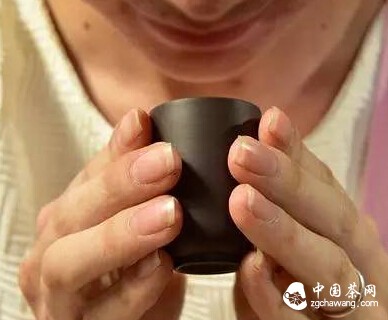
To smell the aroma from the aroma cup, start from the highest temperature. As the temperature gradually decreases, the aroma may change, and all changes should be captured. It is best to carefully smell even when the temperature drops to room temperature, as this not only allows you to appreciate the aroma of the tea leaves but also helps distinguish the quality of the tea and even the tea-making techniques.
At the highest temperature, there may be a pungent sensation. Only some teas release their aroma at the highest temperature when it is pungent. If this is the case, try to brew at an even higher temperature to unlock other unknown aromas.
After a few seconds, the aroma begins to emerge, transitioning from light to strong, and then from strong to light. This is the first layer of aroma. Afterwards, another aroma will slowly appear, also transitioning from light to strong and then to light. Layer upon layer, even at room temperature, there may still be aroma. This is what is meant by tea that leaves fragrance at the bottom of the cup.
When smelling the aroma, the sense of smell often becomes fatigued, meaning "one no longer smells the fragrance after prolonged exposure." Therefore, it is advisable to move the aroma cup away every few seconds to let the嗅觉接触新鲜空气, then smell again, to avoid being "in a room full of orchids" (desensitized).
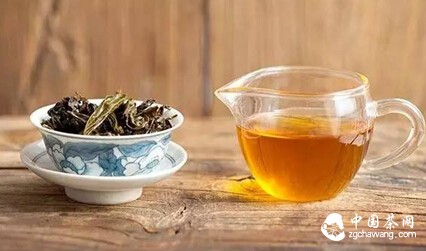
In today's teas, unless it is tea picked from three- to four-year-old plants, the fire energy (roast character) is too strong, making it difficult to smell the bottom-of-the-cup aroma! The heavier the roasting, the more the aroma diminishes.
Of course, when sampling tea for purchase, the aroma presentation is often masked by fire energy (tea that has just been roasted naturally has fire energy), so it is important to ask about the roasting time to properly evaluate after tasting. However, a better way to select tea is not by smelling the aroma but by tasting the flavor. Teas with strong flavors often have better aroma performance later. Certainly, freshly made tea with heavy roasting and sufficient aroma, maintaining a fresh feeling (aroma changes, flavor jumps, feels vibrant after drinking), is undoubtedly high-grade tea!
The second is the tea soup
Some teas may not reveal their aroma when smelled in the aroma cup or with a spoon, but upon drinking, the aroma becomes apparent. Of course, similar to the aroma cup, as the temperature decreases, the aroma may change. However, you might notice that the aroma upon drinking gradually diminishes after a month or two, due to internal reactions in the tea leaves, which is normal. It might even perform better in other aspects. In the past, some called this "loss of flavor." With a certain understanding of tea's post-fermentation, "loss of flavor" may not necessarily be a bad thing. If you feel the tea is worth preserving, storing it in the refrigerator can slow down its changes.
The third is the aroma in the mouth after drinking
After drinking, the aroma exhaled from the mouth.
You will notice a fragrance lingering in your mouth with each breath. For example, with Pu-erh tea, sometimes a certain aroma is not detected in the aroma cup or while drinking, but after drinking, a subtle fragrance is present.
The location where tea is drunk affects the aroma. Consider four places: indoors, high-ceilinged buildings, pavilions, and outdoors. If the wind is not strong and humidity is low, with similar altitude, the order of aroma perceptibility is: outdoors > pavilion > room with 5-6 meter ceiling > indoors. Thus, drinking tea and smelling its aroma are greatly influenced by the airflow in the environment.

The most sensitive area for aroma in the mouth is the junction between the upper palate and the nasal cavity. Therefore, when judging competition teas, judges take a small amount of tea soup into their mouths, slightly lower their heads, and inhale air from the left and right sides of their lips. When inhaling, the tea soup mixed with air churns at the junction of the mouth and nose, making it easier for the嗅觉 to perceive the tea's aroma. Of course, we can also do this while drinking tea.
But two suggestions: initially, the "stimulation" might be too strong, and it may take a year or so for the sense of smell to adapt; it is easy to choke, so take very little tea soup into the mouth, inhale air gently at first, and increase intensity once accustomed. After drinking the tea soup, actions like inhaling or swallowing in the mouth can help perceive the tea's aroma. Especially when drinking strong tea, the tea aroma gradually emerges through churning in the mouth.