
Tea drinking varies with the seasons, with the saying: "Drink green tea in summer, red tea in winter, and Oolong tea all year round."
Green tea is recommended in summer. It is bitter and cold in nature, capable of clearing heat, relieving summer heat, detoxifying, quenching thirst, and strengthening the heart. However, for consumers who prefer chilled tea beverages, as well as women and those with a cold stomach, Oolong tea is suggested as a better choice.

Autumn weather is dry, with "dryness prevailing," often causing dry mouth and throat. It is suitable to drink Oolong, Tieguanyin, and other green teas. Green tea has a moderate nature,介于 red and green tea之间, neither cold nor hot, making it suitable for autumn climate. Regular consumption can moisturize the skin, benefit the lungs, promote salivation, soothe the throat, effectively clear residual heat from the body, and restore fluids, which is greatly beneficial for health care in autumn. Green tea has a golden liquor, plump and even appearance, tightly rolled leaves, green and moist color, rich aroma, and a refreshing, sweet aftertaste.
Early autumn diet should be light. Oily foods can be paired with tea, among which barley tea and Oolong tea are more suitable. Especially for those who enjoy spicy foods, they can choose different flavors of chilled Oolong or barley tea to reduce heat and fire, such as Korean barley tea or Oolong tea. This is because the tea polyphenols in Oolong tea can adsorb油脂 and expel them from the body, and it also contains lipase that can decompose油脂, hence Oolong tea is said to dissolve fat.
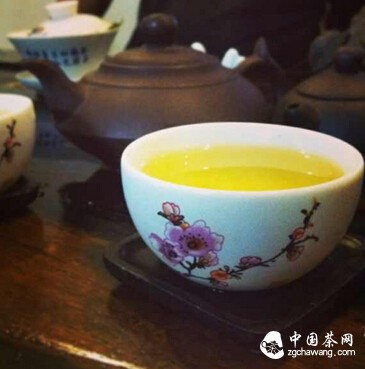
Tieguanyin is not only a precious natural beverage but also has excellent beauty and health care functions. Scientific analysis and practice have proven that Tieguanyin contains high levels of amino acids, vitamins, minerals, tea polyphenols, and alkaloids, with various nutritional and medicinal components. It has the effects of clearing the mind and improving eyesight, sterilizing and reducing inflammation, weight loss and beauty, delaying aging, preventing cancer, reducing blood lipids, lowering cholesterol, and decreasing cardiovascular diseases and diabetes. It is well-known and popular in Hong Kong, Macao, Taiwan, Southeast Asia, Japan, Europe, America, and other places, deeply loved by consumers.
Note: The buds and leaves of the tea plant, a woody plant in the Camellia family. Also known as bitter tea, Ming, Tu, wax tea, tea buds, bud tea, fine tea. Cultivated in various regions south of the Yangtze River in China. The tender leaves are harvested in spring, summer, and autumn, with the best time being around Qingming. Besides being used fresh, tea is generally processed and refined for use. Processed tea comes in many varieties, typically including green tea, black tea, and Oolong tea. Combined with their origins, there are famous teas such as Longjing, Tieguanyin, Qihong, Pu'er tea, Biluochun, Xinyang Maojian, Xiangpi Green, Qiqiang, Yunwu tea, Oolong tea, etc., each with unique flavors and characteristics.